
15-01-2026
Introduction
Are you a homebuyer, property investor, or someone considering remortgaging a timber framed house in the UK? Understanding your mortgage options for timber framed properties is crucial, as these homes are subject to unique lender criteria and can present both challenges and opportunities compared to standard brick or block construction. Whether you are purchasing your first home, expanding your investment portfolio, or looking to remortgage for a better deal or to fund improvements, knowing how lenders assess timber framed houses will help you navigate the process more confidently and avoid common pitfalls. This guide will help you understand the specific requirements, potential hurdles, and advantages associated with securing a mortgage on a timber framed property.
Key Takeaways
Yes, you can get a residential or buy to let mortgage on many timber framed houses in the UK, but lender criteria are stricter than for standard brick or block properties. The good news is that securing mortgages on timber framed properties has become considerably more straightforward in recent years as these homes have grown in popularity.
- Lender appetite depends heavily on three factors: the age of the property (pre-1970 vs modern timber frames), the type of external cladding (brick or stone vs exposed timber), and the surveyor’s comments on condition and resale potential.
- Some high street banks are comfortable with post-1970 timber frame construction that features brick or stone outer walls, while older properties or those with fully exposed timber cladding often require a larger deposit and a stronger overall borrower profile.
- Fox Davidson specialises in residential mortgages on non standard construction properties, including timber frame, and can approach both mainstream and specialist lenders on your behalf.
- Deposit requirements vary significantly based on construction type—modern timber frames with brick exteriors may be mortgageable from 5-10% deposit, while older or unusual constructions might need 15-25%.
- If you already have a timber framed property in mind or a purchase agreed, contact Fox Davidson early for tailored mortgage advice before making any legal commitments. We specialise in mortgages for timber framed houses.
What Is a Timber Framed House?
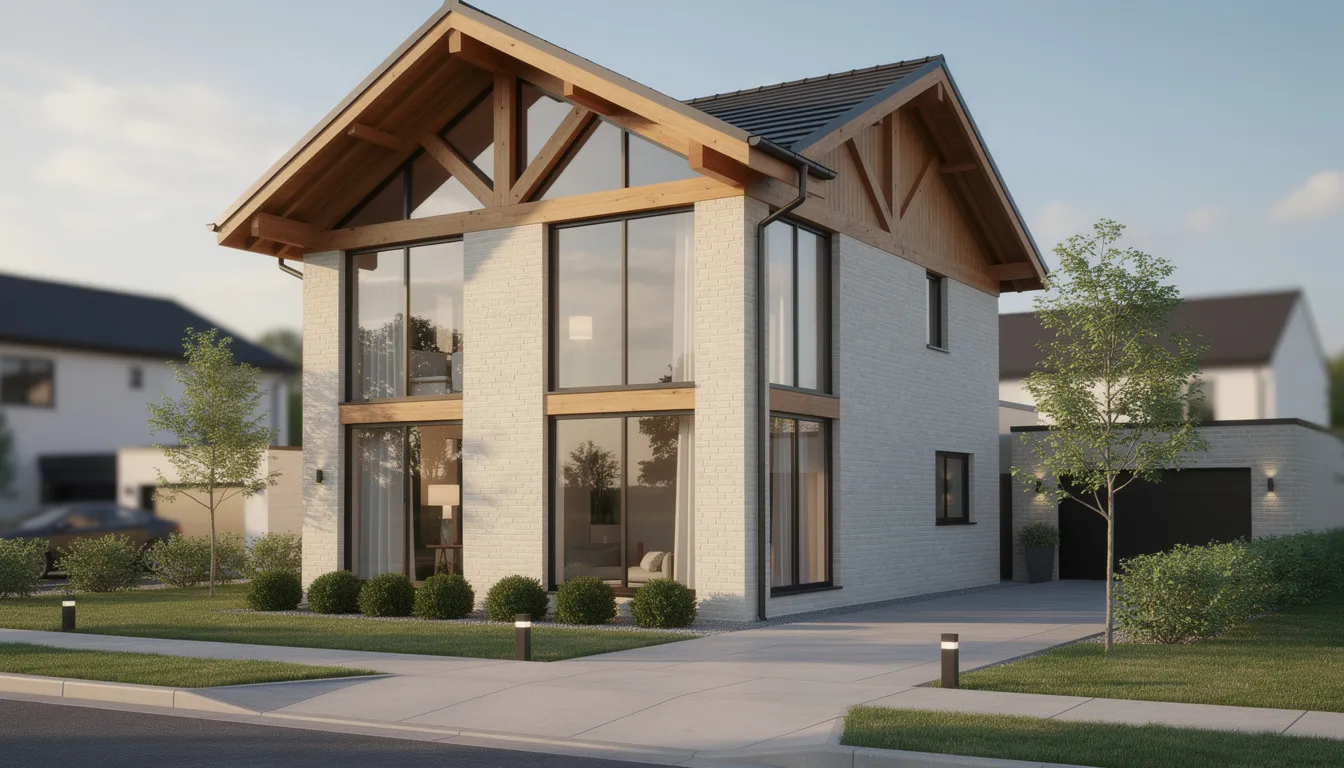
A timber framed house has a load-bearing structural frame made from timber, usually with an outer skin such as brick, stone, render, or timber cladding. Unlike traditional masonry construction where brick or block walls carry the weight of the building, the timber frame itself provides the structural integrity.
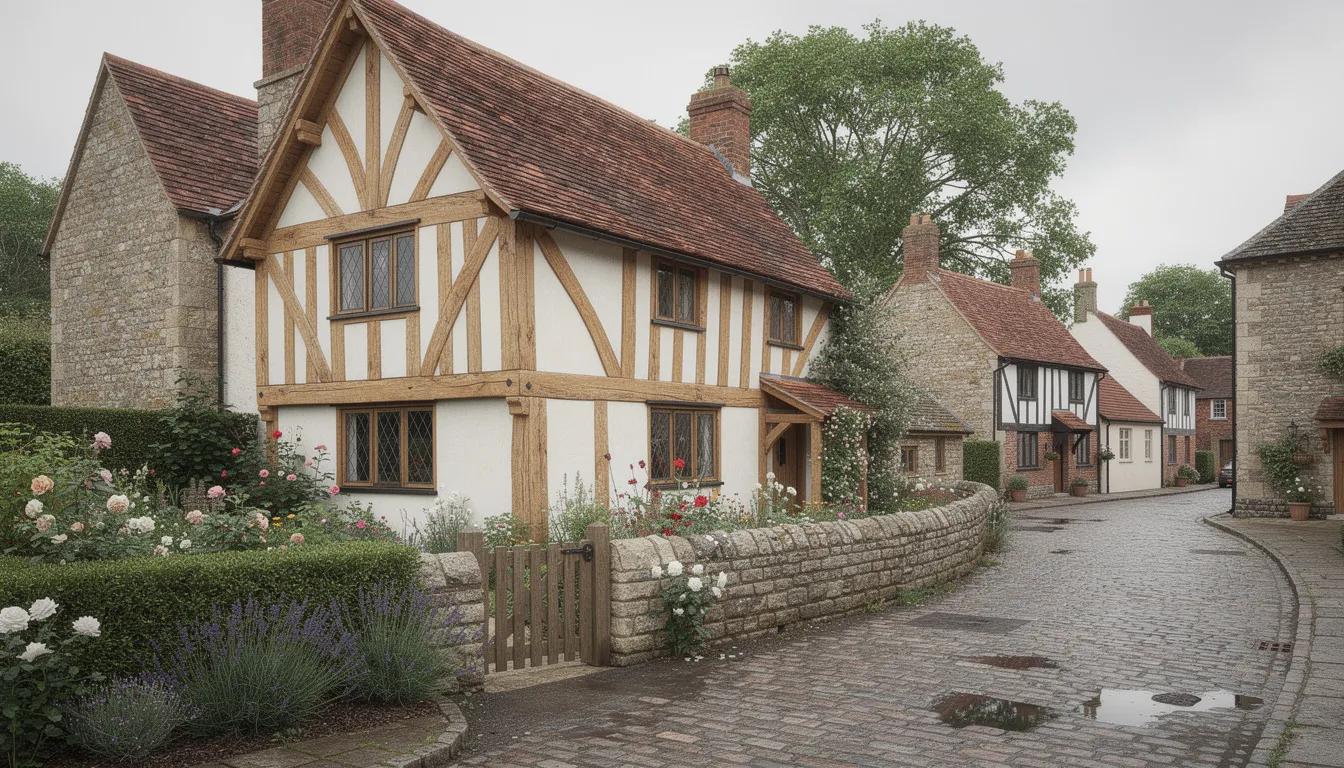
Many modern UK timber framed homes are not obviously “timber” from the outside because they are finished with brick or render. You could walk past dozens of them without realising they are timber construction at all. In contrast, older period properties—particularly those built before 1900—may have visible exposed beams that clearly identify their construction method.
By the early 2020s, around 20-25% of new UK homes were being built using timber frame construction, making it one of the most significant construction types in the residential market.
Timber frame is particularly common in Scotland, where it accounts for a substantial majority of new builds, and is steadily increasing in England and Wales. The main reasons for its popularity include:
- Fast construction times compared to traditional brick and block
- Excellent thermal performance and energy efficiency
- Lower embodied carbon compared with traditional masonry
- Design flexibility that appeals to self build projects
Understanding this construction method matters because mortgage lenders treat these homes differently from standard brick properties, which we will explore throughout this guide.
How Long Do Timber Framed Houses Last?
Well-built and well-maintained timber framed houses can last many decades, and in some cases, several centuries. Historic examples abound—16th-century timber frame properties are still occupied in English market towns today, providing living proof that timber construction can stand the test of time.
However, lifespan varies considerably depending on the era of construction:
Construction Period | Typical Characteristics | Lender Perception |
|---|---|---|
Pre-1900 (Oak Frame) | Traditional oak construction, often with visible beams, built to last generations | Generally acceptable; any historic issues already addressed |
1920-1965 | Mass-produced estates, often lacking vapour barriers, variable quality | Most challenging; many lenders cautious or decline |
1965-1990 | Transition period with improving building regulations | Case by case basis assessment required |
Post-1990 (Modern) | Factory-made systems, treated softwoods, engineered timber, built under tighter regulations | Generally well-accepted by most lenders |
Key Factors Affecting Lifespan
The longevity of a timber framed building depends on several critical maintenance factors:
- Protection from moisture ingress through properly maintained external cladding
- Adequate ventilation to prevent condensation and trap moisture scenarios
- Quality of original workmanship and compliance with building regulations
- Regular painting and sealing of decorative cladding and exposed timber elements
- Prompt repair of any leaks, roof defects, or drainage issues
Many lenders rely on the valuer and, in some cases, request a full structural engineering report to comment on expected durability and remaining life. This assessment directly influences whether a long-term mortgage of 25-35 years is acceptable for the property.
Essential Maintenance Checks
- Inspect gutters and downpipes regularly for blockages
- Check roof condition and flashings annually
- Ensure ground levels around the property allow adequate drainage
- Look for signs of timber decay, rot, or insect attack
- Maintain any external timber cladding with appropriate treatments
Can You Get a Mortgage on a Timber Framed House?
It is usually possible to obtain a residential or buy to let mortgage on timber framed homes in the UK, but the property will normally be classed as non standard construction unless it meets specific criteria that align with mainstream lending.
Many mortgage lenders are more comfortable where the timber frame is combined with brick, block, or stone outer walls and was built after around 1970 under recognised building regulations and warranty schemes such as NHBC for newer homes. These modern timber frames are viewed positively because they were constructed under stringent building methods and regulations.
However, challenges arise with certain property types:
- Pre-1970 timber frame may face extra scrutiny
- Properties built between 1920-1965 can attract concerns about historic construction standards, particularly the lack of vapour barriers under cladding during this period
- Properties with extensive exposed timber cladding may have limited lender options
What Lenders Assess
When considering a timber frame mortgage application, lenders typically examine:
Assessment Area | What They Look For |
|---|---|
Age and construction method | Build date, construction type, compliance with building regulations |
Cladding type and condition | Brick veneer, stone, render, or external cladding; condition of outer leaf |
Warranties and sign-off | New home warranties, building regulation approval, planning permission compliance |
Structural integrity | Surveyor’s report comments on condition and any hidden defects |
Resale marketability | Whether the property would sell easily if repossession occurred |
Fox Davidson operates as a whole-of-market residential mortgage broker, able to place cases with lenders that specifically accept timber frame. We can pre-empt common issues before a full application is submitted, potentially saving you time and valuation fees.
Why Might a Lender Be Cautious About Timber Frame?
Lender caution is driven by risk management rather than a blanket view that timber frame is inherently problematic. Different eras of construction have very different reputations, and lenders adjust their criteria accordingly.
The property itself serves as security for the mortgage loan. If a borrower defaults, the lender can repossess and attempt to resell the property to recover the outstanding balance. This means lenders are fundamentally concerned with resale value and marketability.
Key Concerns for Lenders
Perceived vulnerability to damage:
- Moisture damage, rot, or insect infestation if detailing is poor
- Historic problems with certain mid-20th-century construction systems where brittle materials and inadequate cavity wall insulation created structural vulnerabilities
Market and resale concerns:
- Surveyor worries about future resale if the property is repossessed
- Reduced buyer pool for unusual or heavily exposed timber designs compared with standard brick builds
- Properties in certain locations may have limited demand
Red Flags That Can Trigger a Decline
Some specific issues can cause a mortgage provider to refuse an application:
- Spray foam insulation directly applied between cladding and frame
- Obvious signs of structural movement or timber decay
- Previous unapproved alterations to the structure
- Cladding secured directly to the frame without proper moisture protection
- Properties in a conservation zone or area of outstanding natural beauty with restricted permitted development rights
Lenders rely heavily on the surveyor’s report and valuation. If the surveyor comments that marketability is limited or recommends further investigation, the lender may reduce the maximum LTV, ask for a structural survey or specialist timber report, or ultimately decline the application.
What Do Lenders Look At When Assessing a Timber Frame Mortgage?
Understanding the lending criteria that underwriters apply can help you prepare your timber frame mortgage application more effectively. Think of this as a practical checklist for what lenders assess.
Property-Related Criteria
Factor | What Lenders Consider |
|---|---|
Build date | Pre-1900, 1920-1965, 1965-1990, post-1990—each attracts different scrutiny |
External finish | Full brick or stone, brick to ground floor with timber above, full timber cladding, or render |
Location | Local authority area, demand for similar construction types, local council planning restrictions |
Condition | Surveyor’s comments, evidence of historic repairs, any signs of defects |
Warranties | NHBC or similar warranty for newer builds, hidden defects insurance where applicable |
Borrower-Related Criteria
- Deposit size and requested LTV: Expect some lenders to require 15-25% deposit for more unusual timber frame properties
- Credit history: A strong credit history can offset some perceived property risk; bad credit or bad credit history may further limit options
- Overall financial profile: Income stability, existing commitments, and affordability calculations
- For buy to let property: Rental coverage ratios, likely tenant demand, and whether you are purchasing in a personal name or limited company
Survey and Inspection Requirements
A full building survey or specific timber frame inspection is often recommended—and sometimes required—so that both buyer and lender understand the condition of:
- The timber frame structure itself
- All external cladding and weather protection
- Any insulation systems (particularly checking for inappropriate materials)
- Drainage and ground levels around the property
Share any existing reports, planning documents, or warranties with your mortgage broker early on. This allows lender selection to be aligned with the property’s actual construction type rather than assumptions.
Is It More Difficult – and What Deposit Might You Need?
Although it can be more challenging than for a standard brick-and-block home, a well-presented timber framed property can still attract competitive rates from mainstream lenders.
There is typically no special “timber frame rate” that automatically costs more. However, having fewer willing lenders can reduce your choice, especially at very high LTVs such as 90-95%.
Deposit Guidance by Property Type
Property Type | Typical Minimum Deposit | Notes |
|---|---|---|
Modern timber frame with brick/stone exterior, no adverse valuation comments | 5-10% | Competitive rates available from select lenders |
Post-1970 timber frame with some cladding | 10-15% | Depends on surveyor’s comments and location |
Older or unusual constructions | 15-25% | May require specialist lenders |
Pre-1970 or extensive exposed timber | 20-30% | Limited lender options; strong profile needed |
Factors That Can Increase Deposit Requirements
Other risk factors can compound the non standard construction classification:
- Historic credit issues or adverse credit history
- Interest-only borrowing requests
- Complex income structures (self-employed, contractors, multiple income sources)
- Properties requiring significant repairs identified in the building survey
- Location in areas with limited resale demand
Early affordability checks and lender research through a specialist mortgage broker like Fox Davidson are particularly valuable for buyers aiming for higher LTVs or with limited savings. Getting professional advice before making offers can prevent disappointment later.
Residential vs Buy-to-Let Mortgages on Timber Framed Houses
Both homebuyers and landlords can obtain mortgages on timber framed properties, subject to each lender’s individual criteria. However, the assessment process differs slightly between the two.
Main Residence Mortgages
For owner-occupied residential mortgages:
- Lenders focus on construction type, surveyor’s comments, and personal affordability (income, outgoings, credit profile)
- Longer terms of up to 35 years may require extra comfort on the property’s likely remaining life
- The mortgage process follows standard patterns once an appropriate lender is identified
- First-time buyers can access timber frame mortgages through the same route as existing homeowners
Buy to Let Mortgages
For buy to let mortgage applications on timber framed houses:
- Lenders assess both construction and rental demand—they want confidence the property can be let easily in its local market
- Affordability is usually based on expected rental income rather than personal income
- Many lenders have minimum personal income requirements for landlords (often £25,000+)
- Deposits typically range from 25-30% for timber frame buy to let properties
- You will need to decide whether to purchase in your personal name or through a limited company
Some buy to let lenders are more conservative on non standard properties than on standard brick houses, so lender choice can be narrower for a timber frame rental property.
Fox Davidson advises on both owner-occupied and buy to let residential mortgages. We can help investors structure borrowing across personal names and limited companies where appropriate, subject to standard regulatory rules.
Remortgaging a Timber Framed House or Funding an Extension
Remortgaging an existing timber framed property is usually possible, whether your goal is to secure a better rate, consolidate borrowing, or raise capital for improvements.
Straightforward Remortgages
When remortgaging a timber framed home:
- Lenders will rely on an updated valuation and may ask about any significant alterations since the last mortgage was arranged
- Improving condition—such as upgraded cladding, a new roof, or improved drainage—can reassure valuers and may support higher LTVs
- Your existing lender may offer a product transfer, but it is worth comparing rates across the market
- A new lender will conduct their own assessment of the construction type
Timber Framed Extensions
Adding a timber framed extension to an existing home can be a cost-effective way to create more space, but lenders will want to know:
- The works comply with building regulations and have local authority sign-off
- The extension will enhance value and marketability
- Planning permission was obtained where required
- The construction method is compatible with the existing structure
Some lenders are cautious about extensive new decorative cladding or mixed construction systems on older structures. It is sensible to speak to a broker and your existing lender before committing to extension plans.
Timing Your Remortgage Around Works
Where significant works are planned, consider your options:
Approach | Advantages | Considerations |
|---|---|---|
Remortgage before works | Raise funds based on current value; certainty of available capital | May not maximise borrowing if works significantly increase value |
Remortgage after completion | Potentially benefit from higher post-works valuation | Requires bridging finance or savings to fund works initially |
Stay with existing lender | Simpler process; no new valuation required for some product transfers | May not offer the most competitive rates |
Seek bespoke mortgage advice from Fox Davidson to choose between staying with your current lender and switching to a new provider for your remortgage needs.
How Fox Davidson Can Help with Timber Frame Mortgages
Fox Davidson is an FCA-authorised, whole-of-market residential mortgage broker established in 2013. We have specific experience in securing mortgages on non standard construction properties, including timber framed buildings of all ages and construction types.
Our Typical Process
1. Free Consultation Initial no-obligation conversation to understand the property type (age, construction method, location) and your goals. This free consultation helps us assess which lenders are likely to accept your case.
2. Detailed Fact-Find Comprehensive assessment covering income, commitments, deposit, credit history, and any existing mortgages.
3. Lender Research Targeted research identifying providers known to accept the relevant style and age of timber frame, with attention to maximum LTV and documentation requirements. We know which high street banks and specialist lenders are comfortable with different construction types.
4. Application Support Full support through decision-in-principle, mortgage application, valuation, and offer stages.
What We Can Do For You
- Pre-check lender criteria against specific construction details provided by you, your solicitor, or the surveyor
- Liaise with estate agents and solicitors to manage timescales where a purchase involves unusual construction and potential additional reports
- Help clients who have been declined by a high street bank due to the property’s build type, subject to affordability and credit standing
- Advise on both owner-occupied and buy to let residential mortgages across England, Scotland, and Wales
Each timber frame case is highly individual. Dealing with a specialist mortgage broker experienced in financing timber framed properties can save time, reduce the risk of wasted valuation fees, and improve the chances of securing a suitable deal.
Ready to discuss your timber framed property? Contact Fox Davidson by phone or enquiry form for a free, no-obligation conversation about your mortgage needs.
Frequently Asked Questions
The following FAQ covers common queries about timber frame mortgage applications that do not fit neatly into the main sections above. These offer concise, practical answers to questions we regularly receive.
Can I get a mortgage on an older timber framed cottage?
Many pre-1900 oak-framed cottages are mortgageable, but lender choice may be narrower than for modern construction. A full building survey or structural survey is strongly recommended for period properties. Most lenders pay close attention to the valuer’s comments on structural integrity and resale potential. Fox Davidson can approach lenders with a track record of lending on period timber properties, particularly those with demonstrated maintenance and no signs of timber decay.
Will a timber framed house be more expensive to insure?
Buildings insurance can sometimes be higher for certain non standard properties, including timber frame, because of perceived fire and repair risks. However, this is not always the case—modern timber frames with brick exteriors often attract standard premiums. We advise obtaining insurance quotes early in the purchase process, as lenders will require suitable cover in place at exchange of contracts. Speak to insurance providers who specialise in non standard construction for competitive quotes.
Do I always need a full structural survey on a timber framed home?
While a lender may only insist on a standard valuation, buyers are usually wise to commission a more detailed report. A Level 3 building survey, or a specialist timber frame inspection for older homes, helps you understand the condition of the frame, external cladding, and moisture protection systems. This protects you from unexpected repair costs and gives lenders additional confidence. Fox Davidson does not carry out site inspections or surveys but can work with whatever reports you obtain to identify suitable lenders.
Can I use Help to Buy or other schemes with a timber framed new build?
Government schemes (where available at the time of writing) can often be used with timber framed new builds, provided the development meets the scheme rules and the lender accepts the specific construction system and warranty provider. Not all lenders participating in government schemes will accept all construction types, so confirm scheme eligibility and lending criteria at the outset with your mortgage broker.
What documents should I gather before applying for a timber frame mortgage?
Prepare the following before your mortgage application:
Standard documents:
- Payslips (last 3 months) or accounts for self-employed applicants
- Bank statements (last 3 months)
- Photo ID and proof of address
- Details of existing mortgages or loans
Property-specific documents:
- New-build warranties (NHBC, LABC, Premier Guarantee, etc.)
- Building regulation completion certificates
- Planning permission documents for any extensions
- Any recent surveyor’s report or structural engineering report
- Details of the construction type and age from the seller or estate agent
Sharing these with Fox Davidson early allows more accurate lender selection and can speed up the mortgage process considerably.