
12-03-2026
Introduction
This guide covers Chelsea real estate essentials, from in-depth market analysis to practical mortgage solutions, providing everything buyers, investors, and sellers need to know. Whether you are a buyer, investor, or seller, understanding both the market analysis and available mortgage solutions is crucial for making informed decisions in Chelsea’s dynamic property landscape. Chelsea is renowned for its high property prices and strong demand, making expert mortgage advice essential for buyers seeking to navigate this prestigious market. By exploring both the current market trends and the full range of mortgage options, this guide ensures you are equipped to succeed in one of London’s most competitive property environments.
Key Takeaways
Chelsea remains one of London’s most prestigious micro-markets, where shifting prices meet enduring global demand. Despite recent corrections, the area’s combination of rich cultural heritage, architectural distinction, and prime location continues to attract discerning buyers from across Great Britain and beyond. Here’s what you need to know before making your next move in this sought after area:
- Average sale prices in Kensington and Chelsea fell around 16–17% between October 2024 and October 2025, but average rent rose approximately 3%, creating an interesting window for well-funded buyers and landlords seeking stable income streams.
- Chelsea’s core hotspots – the King’s Road corridor, Sloane Square, Cheyne Walk riverfront and garden squares off the Embankment – still command premium property values despite recent corrections, with limited supply supporting long-term resilience.
- Fixed rate mortgages are easing from 2023 peaks, with private banks and specialist lenders again supporting high value properties, especially where income is complex or assets are global.
- Fox Davidson is a specialist broker able to arrange commercial mortgages, bridging loans and development finance for Chelsea acquisitions from £250,000 upwards, including ltd company buy-to-let, HMO, MUFB and development schemes.
- Accurate property valuation and pricing in today’s market is essential to ensure your property reflects current trends and achieves the best possible outcome, making professional advice crucial for both buyers and sellers.
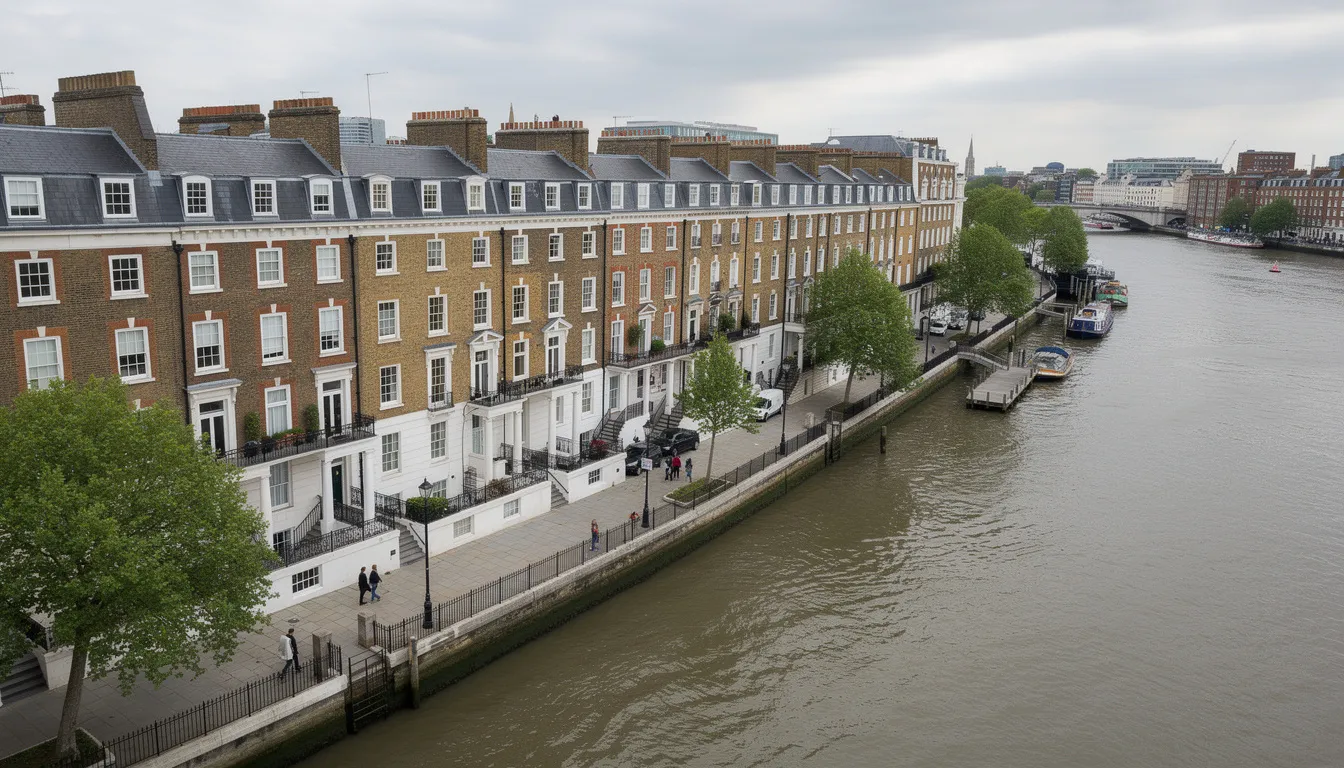
Chelsea in Context: History, Character and Buyer Profiles
Geography and Boundaries
Understanding Chelsea’s geography helps frame its property market:
- South: The River Thames, providing coveted waterfront addresses along Cheyne Walk and Chelsea Embankment
- North: Knightsbridge and South Kensington, offering easy access to museums, Hyde Park, and premium retail. Just north of Kensington lies Holland Park, a prestigious area within the Royal Borough, renowned for its luxury housing, green spaces, and rich cultural heritage.
- East: Sloane Square, the gateway to Belgravia and the West End
- West: Fulham and Parsons Green, where Chelsea’s premium pricing begins to soften
Architectural Character
The housing stock that defines Chelsea’s streetscape includes:
Property Type | Typical Location | Characteristics |
|---|---|---|
Georgian/Early Victorian Terraces | Garden squares, residential streets | High ceilings, period details, private gardens |
Mansion Blocks | Sloane Avenue, Chelsea Embankment | Lateral apartments, porter services, communal gardens |
Mews Houses | Behind main streets | Compact footprints, original coach house features |
Lateral Apartments | Embankment overlooking Thames | Premium views, modern specifications, outdoor space |
Detached properties, while less common in Kensington and Chelsea, have shown different market dynamics compared to flats and semi-detached homes. Recent data indicates that average prices for detached properties have declined, contrasting with more stable or rising prices in other property types, and rental trends for detached homes have also diverged from the broader market.
Chelsea’s Historical Evolution
Chelsea’s evolution from bohemian riverside village to blue-chip London enclave tells a story of enduring appeal. In the 1960s, the King’s Road became synonymous with the swinging London era, drawing artists, musicians, and fashion pioneers. Today, that same stretch hosts luxury retail, acclaimed restaurants, and some of the capital’s most desirable residential addresses. Notting Hill, another fashionable and desirable neighborhood, has experienced a similar evolution, further enhancing the appeal of West London’s prime property market. The area’s transformation reflects a broader pattern across prime central London, where history and modern aspiration coexist.
Buyer Profiles in Today’s Market
The Chelsea property market attracts distinct buyer segments, each with different motivations:
- International families: Drawn by proximity to elite schools, the West End, and easy access to City and Canary Wharf. They typically seek freehold houses with gardens or large lateral apartments with concierge services.
- UK-based professionals and entrepreneurs: Often prefer Chelsea’s slightly more residential feel compared to Mayfair or Knightsbridge, valuing the neighbourhood’s village atmosphere alongside its central London connectivity.
- Downsizers: From larger country or suburban properties, target mansion blocks offering lateral living without the maintenance burden of a house.
- Investment-led buyers: Focus on stable rental demand from corporate tenants, embassy staff, and high-earning professionals.
Emerging Demographic Shifts
Since 2020, notable changes have reshaped buyer patterns. Tech founders and finance executives increasingly opt for Chelsea over the City fringe, drawn by hybrid working models that prioritise lifestyle over commute times. Younger high net worth individuals are migrating from Knightsbridge and Mayfair, attracted by Chelsea’s blend of prestige and genuine neighbourhood character.
With this context in mind, let’s examine the current market snapshot for prices, rents, and demand drivers in Chelsea.
Current Market Snapshot: Prices, Rents and Demand Drivers
Price Movements
Chelsea sits within the Royal Borough of Kensington and Chelsea, one of the UK’s most expensive local authority areas. Recent data from late 2024 and 2025 reveals a market in transition – prices adjusting from post-pandemic peaks while rental demand remains robust.
The provisional average house price in Kensington and Chelsea stood at approximately £1,195,000 in October 2025, representing a decline of roughly 16.5% from around £1,431,000 in the same period a year earlier. This correction, while meaningful, should be viewed in context:
- Flats have seen sharper adjustments – approximately 17% year-on-year price falls – potentially presenting opportunities for investors targeting prime one and two-bed units near Sloane Square and South Kensington stations
- Houses have proved more resilient, with family-oriented stock (houses with outdoor space, period townhouses on garden squares) retaining stronger demand
- Average price per square foot remains around £1,477, reflecting Chelsea’s continued premium positioning within the London property market
Rental Performance
In contrast to sales price weakness, lettings have strengthened:
Metric | Figure | Trend |
|---|---|---|
Average monthly rent (Nov 2025) | £3,634 | +3.0% YoY |
One-bedroom rent growth | ~3.9% | Above average |
Gross yield (flats, Q3 2024) | 4.19% | Attractive for prime |
This divergence between falling property prices and rising rents creates an interesting dynamic. Investors can acquire assets at reduced prices while benefiting from improved yields – a combination rarely available in desirable postcodes.
Demand Drivers
Chelsea’s lettings market draws strength from:
- Corporate tenants on relocation packages
- International students attending Imperial College and other nearby institutions
- Embassy and diplomatic staff
- High-earning professionals in finance, law, and consulting
Cash Buyers and Leveraged Purchasers
Many transactions in Chelsea remain cash or low-loan-to-value purchases, with cash buyers accounting for a significant share of completions. However, falling mortgage rates through late 2025 and into 2026 are bringing more leveraged buyers back into play. For most buyers requiring finance, the shift from peak rates creates tangible affordability improvements on monthly repayments. Changes in interest rates have directly influenced market demand, expanded mortgage options, and altered borrowing behaviour among both high-net-worth individuals and general buyers in Chelsea.
Understanding these market dynamics, we can now explore where value is concentrated within Chelsea’s micro-locations and hotspots.
Micro-Locations and Hotspots: Where Value is Concentrated
Price per square foot in Chelsea varies dramatically by street and outlook. Understanding these micro-markets helps buyers identify where true value lies.
King’s Road and Side Streets
The stretch between Sloane Square and World’s End combines flagship retail, acclaimed restaurants, and period residential stock:
- Upper-floor apartments above the retail core appeal to younger professionals and pied-à-terre buyers
- Side streets like Jubilee Place and Chelsea Manor Street offer quieter residential settings with King’s Road convenience
- Properties here saw heightened demand in late 2024, with 12% more homes for sale as sellers responded to 20% increases in buyer registrations
Riverside Chelsea
Cheyne Walk, Chelsea Embankment, and the streets running down towards the Thames represent Chelsea’s most prestigious addresses:
- River-view apartments and townhouses command some of the area’s highest £/sq ft values
- Scarcity drives premium – few properties come to market each year
- Historic associations (Turner, Rossetti, and other artists lived here) add to the area’s prestige
- Super prime sales in this corridor attract international investors from the Middle East, US, and Asia
Garden Squares and “Old Chelsea”
Burton Court, Carlyle Square, Wellington Square, and the cluster of quiet residential streets south of King’s Road represent Chelsea’s family heartland:
- Period townhouses suit high-end refurbishment projects
- Gardens and green spaces are increasingly valued post-pandemic
- Conservation area protections preserve architectural character while limiting new supply
- Properties overlooking squares command 10-15% premiums over similar stock on through-roads
Sloane Square and Sloane Street Fringe
Proximity to Knightsbridge, designer retail, and luxury hotels draws global capital:
- Lateral apartments in mansion blocks suit international families
- New developments and newly refurbished schemes command premium pricing
- Strong demand from buyers seeking easy access to Harrods, Harvey Nichols, and the West End
Emerging Value Pockets
Areas closer to Fulham Road and the boundary with SW10/SW6 offer more compelling per-square-foot pricing:
- Benefits from Chelsea amenities and brand recognition
- Attractive entry points for first time buyers of prime property
- Potential for capital appreciation as the core market stabilises
Buyers can also leverage existing assets or employ financial strategies to acquire a new property in these emerging value pockets, making use of current ownership and investments to facilitate their next purchase.

With a clear understanding of Chelsea’s micro-locations, let’s move from market analysis to practical strategies for investing, developing, and holding property in this prime area.
From Market Analysis to Strategy: Investing, Developing and Holding in Chelsea
Acquisition Strategy
Successful Chelsea acquisitions combine macro indicators with hyper-local factors:
Macro considerations:
- Borough-wide price trends and their trajectory
- Rental inflation and tenant demand patterns
- Bank of England base rate movements and their impact on affordability
Hyper-local factors:
- School catchment areas (particularly for family houses)
- Conservation area designations and planning constraints
- Planned streetscape upgrades or transport improvements
Yield Versus Capital Growth
Gross yields in Chelsea typically run lower than outer London – often 2-4% depending on property type. However, long-term capital preservation and liquidity are the primary attractions:
- Prime property in established locations tends to recover faster after downturns
- Tenant quality in Chelsea reduces void periods and management hassle
- Exit liquidity remains strong, with consistent demand from domestic and international buyers
Asset Types Worth Analysing
Asset Type | Opportunity | Key Considerations |
|---|---|---|
Freehold townhouses | Conversion to luxury apartments or HMOs | Planning consent, conservation area rules |
Multi-unit freehold blocks (MUFBs) | Portfolio consolidation, rent optimisation | Service charge structures, lease lengths |
High-spec student accommodation | Near Imperial College and South Kensington | Regulatory compliance, management intensity |
Mixed-use blocks | Retail on King’s Road with residential above | Commercial lease strength, use class |
Refurbishment and Value-Add
In the 2026-2027 market, reconfiguring older stock into energy-efficient, open-plan layouts with outdoor space can materially improve both saleability and rental performance:
- Modern kitchens and bathrooms command premium rents
- Energy efficiency upgrades (improved energy performance certificate ratings) attract environmentally conscious tenants
- Creating outdoor space – balconies, terraces, or garden access – addresses post-pandemic lifestyle preferences
Risk Considerations
Chelsea investment carries specific risks requiring expert advice:
- Planning constraints: Conservation areas limit external alterations and extensions
- Service charges: Older mansion blocks can carry substantial charges that erode yields
- Tax changes: Potential shifts to non-dom taxation or stamp duty may reshape buyer pools
- Currency fluctuations: Sterling movements affect international investor appetite
With a clear investment strategy in place, let’s look ahead to forecasts for Chelsea’s property market in 2026–2027.
Forecasts for 2026–2027: Affordability, Rates and International Capital
Interest Rate Trajectory
Bank of England base rate reductions from 2025 peaks into 2026-2027 are already feeding through to improved mortgage products:
- Sub-4% five-year fixed rates are available for strong borrower profiles
- Specialist and private bank lenders are competing more actively for prime London business
- Stress testing at 5.5% base plus buffer remains standard, but improved headline rates ease affordability calculations
Affordability in Prime Areas
Even with recent price corrections, Kensington and Chelsea’s average values (around £1.2m in late 2025) remain far above London’s typical £547k average. This keeps Chelsea firmly in the “prime” bracket where wealth rather than income is often decisive:
- High net worth individuals with asset-backed lending enjoy access unavailable to mainstream borrowers
- Many buyers structure purchases through limited companies or offshore vehicles
- Deposit requirements typically range from 25-40% on high value properties
International Demand
The London property market has always attracted global capital. Currency movements are likely to trigger renewed buying activity:
- Periods of sterling weakness against the US dollar historically boost American buyer interest
- Middle East purchasers, often acquiring best-in-class properties around Sloane Square and the river, respond to relative value opportunities
- Asian buyers continue seeking UK education pathways and stable property ownership
Developer Pipeline
Constrained land supply and tight planning rules limit new stock entering the Chelsea market:
- Major development sites are rare within the conservation-area-dominated core
- New developments that do complete are typically high-spec boutique schemes with limited unit numbers
- This supply constraint supports medium-term price stabilisation
Practical Takeaway
The period from 2026-2027 may offer a narrow window where borrowing costs trend lower while prices have not yet fully rebounded. For prepared buyers with strong finance in place, this creates strategic opportunities across residential, commercial, and development assets.
With the market outlook in mind, let’s turn to the essentials of residential finance and mortgage solutions in Chelsea.
Residential Finance in Chelsea: Mortgages, Ltd Company Buy-to-Let and High-Value Lending
Chelsea’s high property prices and strong demand make expert mortgage advice essential for buyers. The area’s complex property ownership landscape, often involving high-net-worth clients and international buyers, means that specialized mortgage advice is crucial for navigating the lending process and securing the best terms.
Types of Mortgages Available in Chelsea
There are various types of mortgages available for purchasing properties in Chelsea, including:
Mortgage Type | Description |
|---|---|
Fixed-rate | The interest rate remains the same for a set period, providing predictable monthly payments. |
Variable-rate | The interest rate can change, usually tracking the lender’s standard variable rate or the Bank of England base rate. |
Interest-only | Borrowers pay only the interest each month, with the capital repaid at the end of the term. |
Offset | Savings are linked to the mortgage, reducing the interest charged on the loan balance. |
Chelsea is known for its high property prices and demand, making expert mortgage advice essential for buyers. Securing the right mortgage in Chelsea often requires the expertise of a specialist broker or advisor.
High-Value Residential Mortgages
For properties exceeding £2 million – common along King’s Road, Sloane Square, and the Embankment – specialist solutions are often required:
Lender Type | Typical LTV | Key Features |
|---|---|---|
Private banks | 60-75% | Relationship-based, flexible criteria |
Specialist lenders | 65-75% | Complex income assessment |
International banks | 50-70% | Multi-currency options |
Income and Affordability
For entrepreneurs, company directors, or international clients with complex income, lenders may rely on a broader assessment:
- Business profits and retained earnings
- Investment portfolio income
- Global assets and net worth statements
- Bonus and commission structures with appropriate track record
Interest-Only and Part-and-Part Structures
These arrangements help manage cash flow on high-value Chelsea homes:
- Interest-only: Lower monthly payments, capital repaid at term end through sale, refinance, or asset liquidation
- Part-and-part: Combination approach offering flexibility while building some equity
- Clear repayment strategies are essential – lenders require documented exit routes
Ltd Company Buy-to-Let
Many investors now purchase Chelsea flats through special purpose vehicle (SPV) limited companies for tax efficiency:
- Corporation tax on rental profits rather than personal income tax
- Greater flexibility on mortgage interest deductibility
- Specialist buy-to-let lenders support this approach from around £250,000 upwards
- Professional advice on structuring is essential before committing
HMO, MUFB and Student Accommodation
Chelsea-adjacent opportunities around Imperial College and South Kensington suit more complex residential strategies:
- High-spec HMOs targeting professional sharers or postgraduate students
- Multi-unit freehold blocks (MUFBs) offering portfolio diversification
- Dedicated lender products exist for these assets, though underwriting is more intensive
Top Mortgage Advisors in Chelsea
Some of the top mortgage advisors in Chelsea include:
- Tyburn Mortgages
- Reside Mortgages
- Richmond Financial Solutions
- Chesterton Grant Mortgages (offers fee-free mortgage advice in Kensington and Chelsea)
Importance of Specialized Mortgage Advice
- Chelsea’s property market is complex, with high-value transactions, international buyers, and unique ownership structures.
- Specialist mortgage brokers are crucial for navigating the lending landscape for high-value properties in Kensington and Chelsea.
- Expert advice ensures buyers access the most suitable products and lenders for their circumstances.
Typical Mortgage Qualification Requirements
To qualify for a mortgage in Chelsea, buyers typically need:
- A strong credit score
- Proof of income (such as payslips, tax returns, or business accounts)
- A substantial down payment
Average Deposit Required
- The average deposit required for a property in Kensington and Chelsea is typically 10-20% of the property price.
- For high-value properties, larger deposits may be required, especially for international or complex income buyers.
Value of Using Fee-Free and Independent Mortgage Brokers
- Fee-free brokers like Chesterton Grant Mortgages can help buyers access a wide range of products without additional cost.
- Independent brokers are not tied to specific lenders, ensuring unbiased advice and access to the best available deals.
By understanding the full range of mortgage options and working with experienced advisors, buyers and investors can secure the most competitive terms and successfully navigate Chelsea’s high-value property market.
Next, let’s explore commercial mortgage and mixed-use opportunities in Chelsea.
Commercial Mortgages and Mixed-Use Opportunities in Chelsea
Owner-Occupied Commercial Mortgages
Businesses purchasing their Chelsea premises can access funding tailored to their needs:
- Typical LTV: 60-75% depending on property type and covenant strength
- Terms: Usually 15-25 years with five-year rate reviews
- Suitable for: Boutique retailers, galleries, medical practices, professional firms
A good example might be a design consultancy acquiring their existing leased premises on King’s Road, locking in long-term occupation costs while building an asset.
Investment-Led Commercial Assets
Investors acquiring retail-with-residential-uppers on secondary Chelsea parades need finance structured around:
- Lease lengths and break clauses
- Tenant covenant strength
- Passing rents versus market rents
- Void risk and re-letting prospects
Lenders focus heavily on income security, meaning properties with strong tenants on long leases attract better terms.
Mixed-Use Schemes
Buildings combining ground-floor A-class use with residential above require careful lender assessment:
- Different income streams (commercial rent, residential rent) are valued separately
- Overall valuation considers the blend of uses
- Some lenders prefer residential-dominant schemes; others have appetite for retail-heavy assets
Refinancing Existing Holdings
Owners who acquired during the low-rate period of 2015-2019 may need to refinance onto current terms:
- Product transfer from existing lender may not offer optimal pricing
- A broker can negotiate improved rates or more flexible covenants
- Early engagement allows time to prepare the deal properly
ESG and Modernisation
Growing lender interest in EPC ratings and environmental performance means:
- Lower-rated stock may attract margin premiums or reduced LTV
- Refurbishing older Chelsea buildings to improve energy efficiency unlocks better terms
- Green finance products are increasingly available for qualifying improvements

Let’s now look at how bridging finance can provide speed and flexibility for Chelsea transactions.
Bridging Finance in Chelsea: Speed, Flexibility and Off-Market Deals
Typical Use Cases
Bridging loans solve specific timing challenges:
- Chain breaks: Securing an off-market townhouse near Burton Court before selling an existing home
- Auction purchases: Buying an unmodernised flat on Cheyne Walk requiring 28-day completion
- Motivated vendors: Completing quickly on a mixed-use King’s Road block where sellers demand certainty
- Renovation funding: Short-term finance while refurbishing before refinancing onto long-term terms
Loan Parameters
For Chelsea transactions, bridging loans typically offer:
Parameter | Typical Range |
|---|---|
Minimum loan | £250,000 |
Maximum loan | No formal upper limit (security dependent) |
LTV | 50-75% depending on asset and exit |
Term | 6-18 months |
Interest | 0.5-1.5% per month (rolled up or serviced) |
Exit Strategies
The key advantage of well-structured bridging is clarity on how the loan will be repaid:
- Refinance: Move onto a long-term commercial or residential mortgage post-completion
- Sale: Dispose of the asset post-refurbishment at enhanced value
- Asset realisation: Sale of another property or investment to clear the bridge
- Staged release: For developments, progressive unit sales providing funds for repayment
Regulated vs Unregulated Bridging
Understanding the distinction matters:
- Regulated bridging: For owner-occupied properties, governed by FCA consumer protection rules
- Unregulated bridging: For investment or commercial assets, offering greater flexibility but requiring borrower sophistication
Specialist tailored advice is essential to ensure the correct structure for your circumstances.
Risk Management
Bridging carries costs that require careful modelling:
- Interest roll-up: Adds to the capital balance, increasing the exit amount needed
- Arrangement fees: Typically 1-2% of the loan, payable on drawdown
- Valuation and legal costs: Can add £5,000-15,000 on high-value transactions
Fox Davidson helps clients model total cost of funds to avoid overstretching in high-value Chelsea transactions.
Let’s move on to development finance options for Chelsea’s unique property landscape.
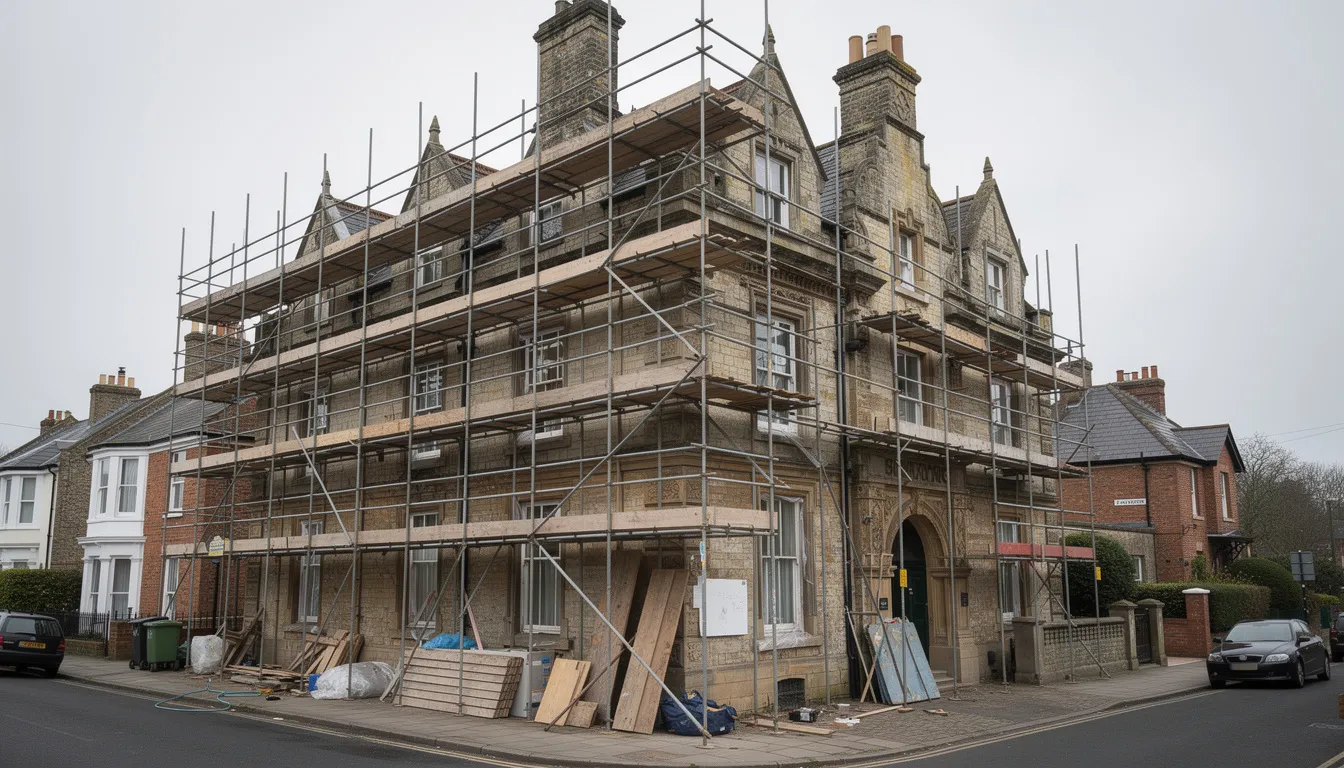
Development Finance: From Chelsea Conversions to Boutique Schemes
Typical Project Types
Development opportunities in Chelsea include:
- Townhouse conversions: Converting a large period house into luxury apartments
- MUFB refurbishment: Upgrading tired multi-unit blocks near Sloane Avenue
- Extensions: Adding rear or roof extensions to create additional units where planning allows
- Mixed-use repositioning: Reconfiguring retail with residential above for optimal use
Funding Structures
Development finance is usually arranged with:
- Senior debt: The primary loan, typically 60-70% of costs
- Mezzanine finance: Additional layer if higher leverage required
- Equity: Developer contribution, usually 25-40%
- Drawdowns: Funds released against build milestones, verified by monitoring surveyor
- Interest roll-up: Commonly rolled up until completion or sale
Key Lender Metrics
Lenders assess development proposals against several benchmarks:
Metric | Typical Requirement |
|---|---|
Loan-to-Cost (LTC) | 60-75% |
Loan-to-Gross Development Value (LTGDV) | 60-65% |
Profit on cost | Minimum 15-20% |
Interest cover | Stressed at higher rates |
Due Diligence Requirements
Chelsea development finance requires thorough preparation:
- Planning status: Full planning consent preferred; outline consent possible with conditions
- Professional team: Reputable architect, quantity surveyor, and contractor with relevant track record
- Contingency allowances: Typically 5-10% of build costs
- Conservation considerations: Listed building constraints and area-wide protections
Exit Routes
Lenders want clarity on how projects will complete:
- Sales to end-users: Private treaty sales post-completion
- Block sales to investors: Particularly for BTL-suitable units
- Refinance: Onto long-term investment facilities once fully let
- Phased exits: Larger schemes may blend sales and retention
Fox Davidson maps exit strategy at the outset, ensuring alignment between development timeline and finance structure.
Now, let’s see how Fox Davidson supports clients through every stage of the Chelsea property journey.
Working with Fox Davidson: Process, Lender Access and Tailored Solutions
Discovery and Objectives
The process starts with a free, no-obligation consultation to understand:
- Whether you’re acquiring, refinancing, developing, or restructuring a Chelsea asset
- Your timeframes and any constraints (chain breaks, auction deadlines, planning milestones)
- Risk tolerance and leverage preferences
- Corporate structures and tax considerations
Market and Funding Analysis
Our team reviews:
- Current Chelsea market data and comparable transactions
- Lender appetite for your specific asset type and borrower profile
- Shortlisted mortgage options – commercial mortgages, bridging, development finance – suited to your situation
Lender Network
Fox Davidson maintains relationships with:
- High-street banks for straightforward transactions
- Private banks for high-net-worth and complex-income clients
- Challenger lenders comfortable with non-standard assets
- Family offices and specialist funders for bespoke solutions
- Development and bridging funders experienced with Chelsea’s high-value stock
Structuring and Negotiation
We shape your application to present complex income or corporate structures clearly, then negotiate on your behalf for:
- Improved rates and reduced fees
- Flexible covenants suited to your business model
- Appropriate leverage for your risk profile
- Terms aligned to your intended hold period or exit
Ongoing Support
Fox Davidson stays involved through:
- Valuation instruction and management
- Legal process coordination
- Drawdown and completion support
- Refinance or exit strategy review as the deal matures
In recent years, this end-to-end approach has helped clients across the market navigate increasingly complex lending environments.
Let’s address some of the most frequently asked questions about Chelsea real estate and finance.
FAQs: Chelsea Real Estate and Finance
How much deposit do I typically need to buy in Chelsea?
For mainstream residential purchases, buyers should expect to contribute at least 25-40% on high-value properties. Most buyers in prime locations bring substantial equity to the transaction. Commercial and development deals typically require 30-40%+ equity depending on asset class and lender appetite. Strong borrower profiles with proven track records may access slightly higher leverage, but conservative loan-to-value ratios remain standard in today’s market.
Can I finance a Chelsea property through a company registered outside the UK?
Many lenders will consider offshore or non-UK corporate borrowers, particularly for prime London property. However, this is a specialist area requiring additional legal, tax, and due diligence work. Anti-money laundering requirements are stringent, and lenders will want full transparency on beneficial ownership. Fox Davidson helps coordinate these complex transactions, working with appropriate legal and tax advisers to structure deals correctly.
Is it still possible to remortgage and release equity from a Chelsea property after recent price falls?
Equity release remains feasible provided current valuations and affordability tests stack up. While property prices have fallen 16-17% from peaks, many long-term owners retain substantial equity. A broker can compare multiple lenders to maximise loan size while staying within conservative loan-to-value limits. The key is realistic valuation expectations and clear demonstration of repayment capacity or exit strategy.
What timelines should I allow for arranging bridging or development finance in Chelsea?
Straightforward bridging cases can often complete in 2-4 weeks if legals and valuation proceed quickly. Some lenders offer even faster turnarounds for repeat borrowers with clean titles. Full development facilities usually take 6-10 weeks given the additional due diligence on planning, build costs, and professional team. Early engagement with a broker is strongly advised, particularly for auction purchases or time-sensitive acquisitions.
Do lenders treat energy performance differently for older Chelsea buildings?
While many prime period properties in Chelsea have lower EPC ratings due to their age and construction, lenders are increasingly pricing in efficiency. Properties rated E, F, or G may face margin premiums or reduced maximum loan-to-values. Borrowers may secure better terms by committing to energy efficiency upgrades as part of a refurbishment or development plan. Some lenders offer specific “green” products for properties meeting improved environmental standards.
Chelsea’s enduring appeal as one of London’s most prestigious addresses shows no signs of fading, even as prices adjust and market conditions evolve. For investors, developers, and owner-occupiers prepared to act with the right finance structure in place, the current environment offers genuine opportunity.
Whether you’re exploring a townhouse acquisition, refinancing an existing holding, or structuring development finance for a conversion project, Fox Davidson provides the local expertise and lender access to help you secure optimal terms.
Contact Fox Davidson today for a free, no-obligation consultation to discuss your Chelsea investment and financing requirements.