
Introduction to commercial mortgages in the UK
A commercial mortgage is a loan secured against property used for business purposes, whether that property generates rental income from tenants or houses your own trading business. Commercial mortgages are a type of business loan designed to help businesses secure the money needed for property investment and business growth.
Unlike residential mortgages designed for personal homes, commercial mortgages fund income-producing assets such as offices, retail units, industrial warehouses, hotels, and mixed-use developments across England, Northern Ireland, Wales and Scotland.
This article reflects the UK commercial property finance landscape as of 2026, taking into account the post-2023 interest rate environment and Bank of England base rate trends currently sitting around 3.75%. With lending volumes rebounding to approximately £45 billion annually according to UK Finance data, commercial property buying remains an active market for investors and trading businesses alike.
This guide is written by Fox Davidson, award-winning UK commercial mortgage brokers with extensive experience arranging commercial and semi-commercial mortgages nationwide. Fox Davidson secure commercial mortgages from £250,000 to £100m+ on commercial property in the UK and do not charge a broker fee for commercial and semi-commercial mortgages.
Common uses for commercial mortgages include:
- Buying your own business premises to move from renting to ownership
- Refinancing an existing loan to release equity or secure better terms
- Purchasing investment property such as offices, retail, industrial units, HMO blocks, MUFBs and student accommodation
- Acquiring semi commercial properties like shops with flats above, pubs with owner accommodation, or guest houses
Commercial mortgages provide the money required to buy or refinance commercial property, making it possible for businesses and investors to secure the funds needed for important property transactions.
📞 Call for immediate expert advice. 💻 Complete our enquiry form 📧 Email outline your requirements
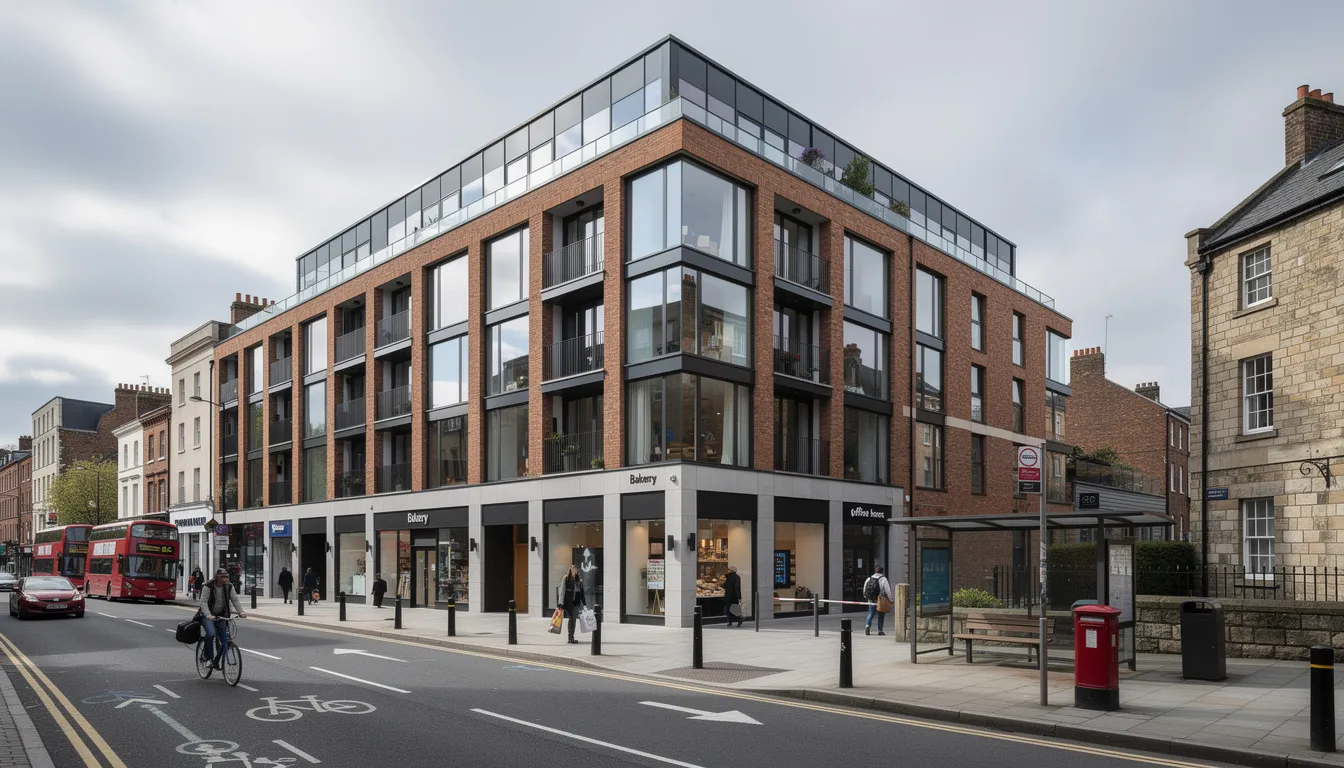
A typical semi-commercial property: ground floor retail with residential accommodation above, commonly financed through specialist commercial or semi-commercial mortgage products.
What is a commercial mortgage?
A commercial mortgage is a medium to long-term loan secured on commercial or semi-commercial property, typically by way of a first legal charge registered against the asset. The property itself acts as collateral, meaning lenders can repossess and sell it if the borrower fails to repay the loan.
Commercial mortgages differ fundamentally from residential mortgages in their purpose, underwriting approach, and the type of property they fund:
Owner-occupied commercial mortgages
- Used by trading businesses purchasing or refinancing their own premises for commercial purposes, such as housing the business’s own operations
- Underwritten based on the business’s profits and ability to service the debt
- Common for manufacturers, professional practices, hospitality operators and retailers
Commercial investment mortgages
- Used to purchase property let to third-party business tenants
- Underwritten primarily on rental income and tenant covenant strength
- Typical for landlords building portfolios of offices, industrial units or retail
Semi-commercial mortgages
- Used for mixed-use properties combining commercial and residential elements
- Examples include a shop with flat above, a pub with owner’s accommodation, or a guest house with proprietor’s quarters
- Often attract slightly different terms due to the blended income profile
Loan sizes typically range from £250,000 up to £100m+ for larger portfolios or institutional-quality assets. The mortgage term generally runs from 3 to 30 years, with most high street lenders capping at 25 years. Some specialist lenders offer longer amortisation profiles for the right borrower and asset combination.
Commercial mortgages operate much like a personal mortgage, but are mainly used by business owners who are looking to buy commercial property or land for commercial use. The key distinction from residential property financing is straightforward: commercial mortgages are for properties used to generate business income, while residential mortgages and standard buy-to-let products are for personal homes or single residential lettings.
Who uses commercial mortgages and for what?
Fox Davidson act for a diverse range of clients seeking commercial property finance: trading businesses acquiring their own premises, professional landlords building investment portfolios, developers converting or constructing new schemes, and investors using limited company or LLP structures for tax efficiency.
Here are typical scenarios we encounter in 2026:
- Bristol manufacturing business purchasing a 10,000 sq ft industrial unit to move from leasehold to freehold ownership, securing long-term stability and building equity rather than paying rent
- Limited company landlord acquiring a 12-unit HMO portfolio in Birmingham through a commercial investment mortgage, as the multi-let configuration takes the property beyond standard buy-to-let criteria
- GP practice buying and refurbishing a surgery building with a specialist medical commercial mortgage, often with NHS rental income underpinning the loan
- Hospitality operator refinancing a hotel in Cornwall to raise capital for refurbishment and energy-efficiency upgrades, meeting EPC requirements ahead of 2025/2028 regulatory deadlines
Most commercial lenders are currently most active from £250,000 upwards, which aligns with Fox Davidson’s focus. Smaller loans do exist but often carry higher rates and fees relative to the amount borrowed, making the economics less favourable.
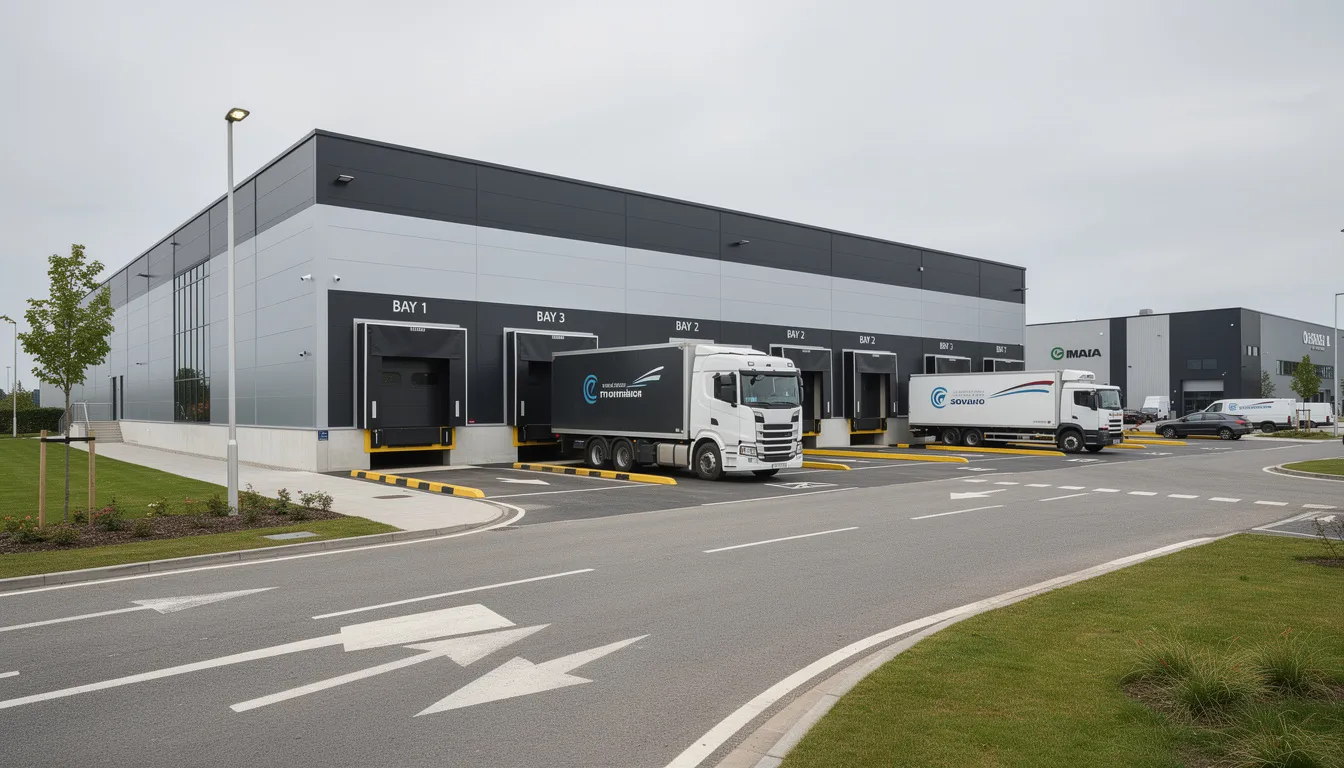
Key features of UK commercial mortgages in 2026
When structuring a commercial mortgage in 2026, several key features determine how the loan works in practice:
Loan terms
- Typical terms range from 3 to 25 years, with some specialist lenders extending to 30 years
- Owner-occupiers often prefer longer terms to reduce monthly repayments and improve cash flow
- Investment property loans may have shorter terms with balloon payments at maturity
Interest rate types
- Variable rate loans track the Bank of England base rate or SONIA (Sterling Overnight Index Average) plus a margin, typically 1.5% to 3%
- Fixed rate mortgage products lock the rate for 2, 3, 5, 7 or 10 years, popular in 2026 given base rate uncertainty
- Commercial rates are risk-priced and usually higher than mainstream residential mortgage rates, reflecting the additional complexity and risk
Repayment structures
- Capital repayment (amortising) loans reduce the balance monthly, building equity over time
- Interest-only loans maintain the original balance, with a requirement to repay the full amount at term end
- Part-and-part structures combine both, offering flexibility for cash flow management
- Some lenders may offer a capital repayment holiday, allowing borrowers to take an interest-only period for a set time, subject to approval, as a flexible repayment option.
Security arrangements
- First legal charge on the property is standard
- Lenders may request additional security such as debentures, floating charges over business assets, or director personal guarantees
- Cross-collateralisation using existing property as security can improve terms or increase borrowing capacity
Fox Davidson access both high street banks and specialist lenders, allowing tailored terms for complex cases that mainstream lenders might decline.
How much can I borrow on a commercial mortgage?
Commercial borrowing capacity depends primarily on two factors: loan to value (LTV) ratio and affordability based on rental income or business profits.
Typical LTV ranges in 2026:
Property Type | Typical Max LTV | Notes |
|---|---|---|
Standard office/industrial | 65–75% | Strong tenant covenants may achieve higher end |
Retail units | 60–70% | Location and tenant mix affect appetite |
Leisure/pubs/hotels | 60–70% | Specialist underwriting required |
Semi-commercial (shop with flat) | 70–75% | Blended income profile often viewed favourably |
Owner-occupied (strong covenant) | 70–75% | Robust accounts and trading history essential |
Commercial mortgage deposit requirements
- Usually 25–40% of purchase price depending on property sector and borrower strength
- Using equity in an existing property as additional security can reduce cash deposit requirements
- Higher risk assets or borrowers with limited credit history may need larger deposits
How lenders assess serviceability:
For investment property, lenders calculate a debt service coverage ratio (DSCR) based on passing rent against loan repayments at a stressed interest rate. A minimum 1.25x cover is typical, meaning £125 of rent for every £100 of debt service.
For owner occupied properties, lenders examine historic and forecast EBITDA or net profit, typically requiring 1.25x to 1.75x coverage of loan repayments. Recent management accounts and forward projections carry significant weight.
Commercial mortgage costs, fees and pricing
The headline interest rate is only part of the total cost of a commercial mortgage. Borrowers should budget for a range of fees and charges that add to the overall expense.
Interest rates in 2026
- Variable rates: Bank of England base rate (currently around 4%) plus margins of 2.0% to 5.0% depending on risk profile
- Fixed interest rate products: 4.2% to 5.8% for 5-year fixes on quality assets
- Higher risk propositions or complex structures command premiums at the upper end
Lender fees
- Arrangement fee: typically 1–2% of loan amount, sometimes higher for complex deals
- Valuation fees: based on property type, size and location, often £2,000–£10,000+ for larger assets, usually payable upfront
- Security fees and facility fees may apply depending on lender
Legal costs
- Borrower’s own solicitor fees for reviewing mortgage terms and conducting due diligence
- Contribution to lender’s legal costs, often £3,000–£10,000+ depending on complexity
- Additional charges for complex titles, multi-unit freeholds, or cross-collateralisation arrangements
Other fees to consider
- Commitment fees if drawdown is delayed
- Telegraphic transfer fees for releasing funds
- Early repayment charge (ERC) for exiting before the agreed term, particularly on fixed rate loans
Cost Component | Example: £1m Loan (Variable) | Example: £1m Loan (5-Year Fixed) |
|---|---|---|
Interest rate | Base + 2.5% = 6.5% | 5.2% fixed |
Annual interest cost (Year 1) | £65,000 | £52,000 |
Arrangement fee (1.5%) | £15,000 | £15,000 |
Valuation | £4,000 | £4,000 |
Legal costs (total) | £8,000 | £8,000 |
5-year interest cost (approx) | £325,000 | £260,000 |
Early repayment charge | None | 3% reducing |
Table shows illustrative figures for comparison purposes. Actual costs subject to status and individual circumstances.
Commercial mortgages vs other forms of property finance
Commercial mortgages are designed for medium to long-term ownership of trading or investment property. However, other products address different needs in the property lifecycle.
Commercial mortgage
- Term: 3–30 years
- Purpose: long-term ownership of income-producing commercial property
- LTV: 60–75% typical
- Pricing: 4.5–7% in 2026
- Best for: stabilised assets with established income
Commercial bridging loan
- Term: 3–18 months
- Purpose: short-term funding to secure property quickly, buy unmortgageable stock, or bridge until planning permission is granted or a sale completes
- LTV: 65–75%
- Pricing: 7–12% in 2026
- Best for: auction purchases, refurbishment projects, chain-breaking
Development finance
- Term: 12–36 months typically
- Purpose: funding ground-up construction or major conversions
- LTV/LTC: 60–70% of gross development value (GDV)
- Pricing: 6–9% plus fees
- Best for: developers building new schemes for sale or retention
see also: development exit finance
Ltd company buy to let
- Term: 5–25 years
- Purpose: standard residential buy-to-let through a limited company structure
- LTV: 75% typical
- Pricing: 4–6%
- Best for: single residential lets and smaller HMOs within BTL criteria
Finance Type | Typical Term | Max LTV | Speed to Completion | Best Use Case |
|---|---|---|---|---|
Commercial mortgage | 3–30 years | 65–75% | 6–12 weeks | Long-term investment or owner-occupation |
Commercial bridging loan | 3–18 months | 70–75% | 1–4 weeks | Auction, refurb, chain-breaking |
Development finance | 12–36 months | 60–70% GDV | 4–8 weeks | New build or major conversion |
Ltd company BTL | 5–25 years | 75% | 4–8 weeks | Standard residential investment |

Types of properties that can be financed
Commercial lenders consider a wide variety of property types, each with its own risk profile and underwriting approach. Fox Davidson arrange finance across the full spectrum of commercial and semi-commercial assets.
Core asset classes:
- Offices: single-let headquarters buildings, multi-let serviced offices, provincial town centre suites and city centre Grade A space
- Retail: parade shops, convenience stores, restaurants, shopping centres and mixed-use buildings with flats above
- Industrial and logistics: warehouses, light industrial units, trade counters, manufacturing facilities and last-mile distribution hubs
Specialist and alternative assets:
- HMOs (Houses in Multiple Occupation) and MUFBs (multi-unit freehold blocks) where the structure moves beyond standard BTL criteria
- Student accommodation blocks let on a room-by-room basis
- Care homes, medical centres, dental practices and veterinary surgeries
- Hotels, guest houses, B&Bs, pubs, bars and leisure property
Land and development opportunities:
- Sites with or without planning permission
- Typically funded through development finance or bridging rather than standard commercial term loans
- Agricultural land with diversification potential
Some sectors face tighter underwriting in 2026. High street retail and casual dining remain challenging given changing consumer patterns, making experienced brokerage advice from specialists like Fox Davidson particularly valuable for navigating other lenders’ varying appetites.
Eligibility and what lenders look for in 2026
Commercial lending is bespoke and subject to status, but consistent themes apply across the market when lenders assess applications.
Borrower profile requirements:
- Experience in the relevant sector, particularly for owner-occupied business mortgage applications
- Track record of successful property investment or business operation
- Clean credit history, though some specialist lenders accommodate adverse credit for the right asset
- Management capability and clear business plan for new ventures
Financial documentation:
- Last 2–3 years’ audited or accountant-certified accounts
- Up-to-date management information showing current trading
- Personal assets and liabilities statements for directors and guarantors
- Business plan and projections for new business ventures
Property-specific factors:
- Location quality: prime city centre versus tertiary locations affects both value and lending appetite
- Tenant covenant strength for investment property, including credit rating assessments
- Lease terms: length remaining, rent level, review patterns and break clauses
- Property condition, energy performance certificate (EPC) rating and compliance with MEES regulations for lettable commercial properties
Security and structure considerations:
- Whether borrowing personally, through a limited company, LLP or SPV
- Personal guarantees from directors or major shareholders typically required
- Debentures over trading company assets for owner-occupier facilities
- Gearing levels and whether enough equity or additional security is available
Fox Davidson pre-assess all applications to structure them in line with lender eligibility criteria before submission, improving success rates and reducing wasted time.
How to apply for a commercial mortgage through a broker
Using a whole-of-market broker like Fox Davidson can significantly improve outcomes compared with approaching one bank directly. Brokers access multiple lenders, understand current appetite, and structure applications to maximise approval chances.
The application process step by step:
- Initial conversation: understanding your objectives, property details, timelines and exit strategy (particularly where bridging or development finance is linked to the commercial property finance requirement)
- Document collection: gathering 3 years’ accounts, up-to-date management figures, assets and liabilities statements, tenancy schedules, leases, and proof of ID and address
Pre-assessment stage:
- Broker runs affordability and LTV checks using actual lender criteria
- Identifies suitable lenders from high street banks, challenger banks and specialist funds
- Discusses product options: variable or fixed rate, capital repayment versus interest-only
Agreement in principle and full application:
- Decision-in-principle (DIP) obtained to confirm lending appetite
- Formal valuation instructed once terms agreed
- Legal stage begins with solicitors acting for borrower and lender
Completion and beyond:
- Typical timeframes in 2026: 6–12 weeks for straightforward commercial mortgages
- Faster routes available where bridging is used to purchase before refinancing
- Ongoing support with re finance opportunities, rate reviews and portfolio restructuring
Fox Davidson do not charge a broker fee for commercial and semi-commercial mortgages. Lender arrangement fees and third-party costs (valuation, legal) still apply and are clearly explained upfront.
Commercial bridging loans and short-term solutions
A commercial bridging loan is more appropriate than a term mortgage when speed or property condition prevents conventional lending. Common scenarios include:
- Auction purchases with 28-day completion deadlines where mainstream lenders cannot move fast enough
- Vacant properties requiring works before they become mortgageable
- Assets without full planning consent awaiting planning permission approval
- Chain-breaking situations where a quick purchase is essential
Key features of commercial bridging in 2026:
- Terms typically 3 to 18 months
- Interest usually charged monthly, often rolled up and added to the loan balance
- LTVs commonly up to 70–75% on commercial or semi commercial properties, sometimes higher with additional security
- Rates in the 7–12% range depending on risk profile
- Lender focus on clear exit strategy: how will you repay the bridge?
Exit routes lenders scrutinise carefully:
- Sale of the property once works complete or market conditions improve
- Refinance onto a commercial mortgage or buy-to-let mortgage product
- Development finance for larger schemes
- Alternative business funding sources
Example scenario: An investor in 2026 uses bridging to purchase a vacant high-street shop in Cardiff at auction. The property needs change-of-use consent and conversion to create two flats above the retail unit. A 12-month bridge at 70% LTV covers the purchase price. Once works complete and new planning permission is granted, the investor refinances onto two residential mortgages for the flats and a commercial mortgage for the retail unit, repaying the bridge in full.
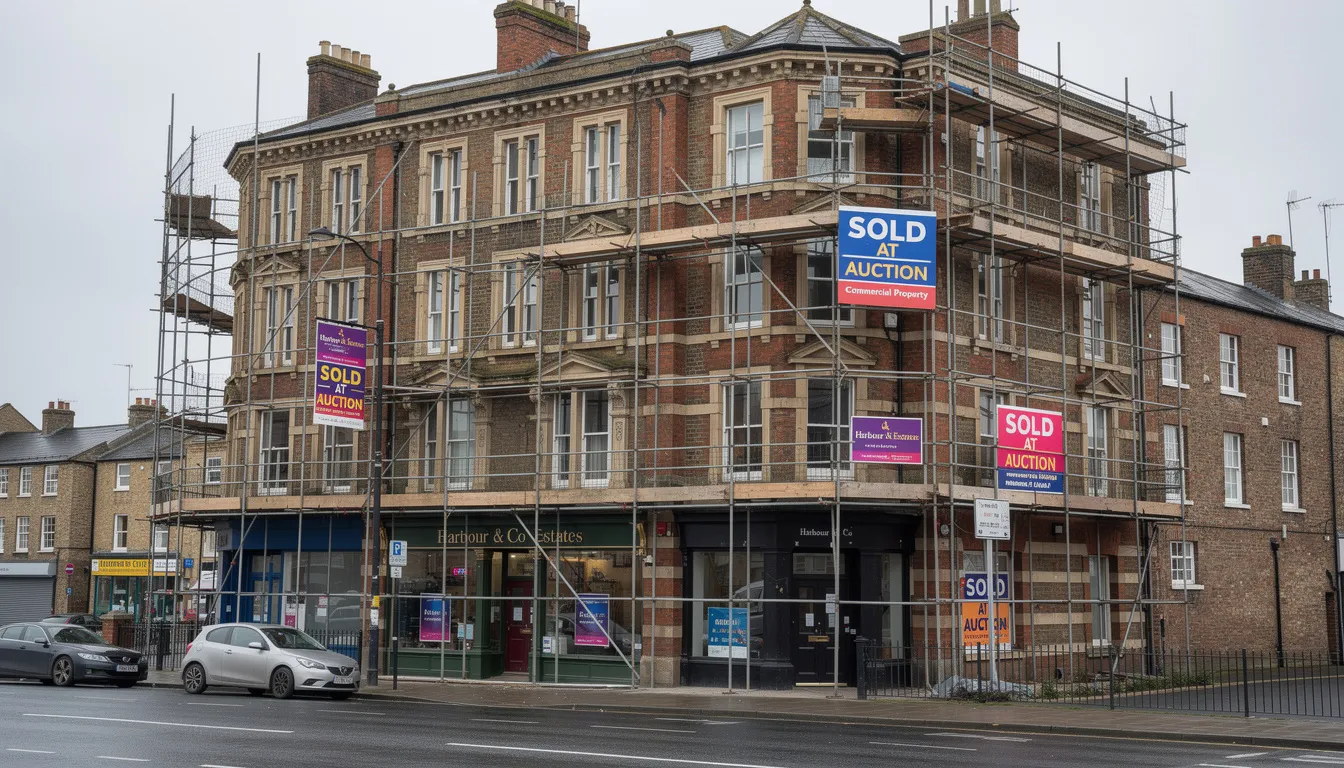
Buying commercial property through a limited company vs personally
Many investors in 2026 use limited company or SPV (Special Purpose Vehicle) structures for tax efficiency and liability management, particularly for portfolios of HMOs, MUFBs and mixed-use blocks.
Common structures:
- SPV companies with defined SIC codes for property investment activities
- Trading companies purchasing their own premises for owner occupation
- LLP structures for joint venture projects or partnership arrangements
Lender expectations for company borrowing:
- Directors and major shareholders (typically 20%+ shareholding) usually required as personal guarantors
- No significant pricing penalty in most of the commercial mortgage market for borrowing via a company compared with personal names
- Clean company credit history, though new SPVs are acceptable where directors have strong personal track records
Practical considerations:
- How profits are extracted: dividends versus salary, with different tax implications
- Corporation tax on profits versus personal income tax on rental receipts
- Succession planning: selling shares versus selling property directly
- Professional costs for company accounts and compliance
Important note: Borrowers should obtain independent tax advice from a qualified accountant alongside mortgage advice. The right solution depends on individual circumstances, existing income levels, and long-term investment objectives.
Risks, benefits and things to watch out for
While commercial property can be a powerful tool for wealth creation and business stability, it carries risks that borrowers must understand and manage.
Benefits of commercial mortgages:
- Potential for long-term capital growth as property value increases
- Indexed rental increases through upwards-only rent review clauses
- Trading businesses control their new premises rather than depending on landlords
- Leverage: using mortgage finance to amplify returns when markets perform well
- Tax-deductible interest reducing the effective cost of borrowing
- Building equity with each capital repayment rather than paying rent to a third party
Risks to consider:
- Interest rate risk: when fixed rate periods end, remortgage rates may be higher than current levels
- Sector risk: voids in office or retail markets due to changing work and shopping patterns post-pandemic
- UK vacancy rates for offices reached 14% in 2026 according to MSCI data
- Tenant default or early lease breaks leaving properties without income
- Property value may fall below the loan balance in adverse markets
Operational and regulatory risks:
- Rising compliance costs including fire safety requirements and building standards
- EPC regulations requiring investment in energy efficiency improvements
- Maintenance and capital expenditure demands on older stock
- Covenant breaches triggering loan defaults if rental income falls or property values decline
Risk management approach:
- Stress-test deals against higher interest rate scenarios before committing
- Maintain cash reserves for void periods and unexpected costs
- Use experienced commercial brokers to negotiate favourable loan covenants and terms
- Consider interest rate hedging on larger facilities through swaps or caps
Frequently asked questions about commercial mortgages (2026)
What is a commercial mortgage and how does it work in the UK?
A commercial mortgage is a secured loan used to buy property for business purposes, whether that’s an office, warehouse, shop, or mixed-use building. The loan is secured by a first legal charge on the property, with terms typically ranging from 3 to 30 years. Lenders assess the property’s income potential and the borrower’s financial strength before approving applications.
How long does it take to get a commercial mortgage approved in 2026?
Standard commercial mortgages typically complete within 6 to 12 weeks from application to drawdown. Complex cases involving unusual property types, multiple securities, or borrowers requiring bespoke structuring may take longer. Bridging loans can complete in 2 to 4 weeks for urgent requirements.
What deposit do I need for a commercial mortgage on a shop with flat above?
Semi-commercial properties like shops with flats above typically require a 25–30% deposit, equivalent to 70–75% loan to value. The exact deposit depends on property location, condition, tenant quality and borrower strength. Using equity in an existing property can sometimes reduce cash deposit requirements.
Can I get a commercial mortgage without trading history?
New business ventures without trading history face greater scrutiny but can still obtain commercial mortgages. Lenders focus on the borrower’s sector experience, personal financial strength, quality of business plan, and the property’s income potential. Personal guarantees and larger deposits often help.
Are commercial mortgage rates higher than residential mortgage rates?
Yes. Commercial mortgage rates are typically 1–3% higher than residential mortgages due to increased complexity and perceived higher risk. In 2026, commercial rates range from approximately 4.5% to 7% for standard deals, with specialist or higher-risk propositions commanding premiums above this.
Can I live above my business and still get a commercial mortgage?
Yes. Semi-commercial mortgages specifically cater for properties combining business use (ground floor) with residential accommodation above. Living above your business premises is common for pubs, restaurants, convenience stores and professional practices. Lenders assess both the commercial income and the residential element.
Can a limited company or SPV get a commercial mortgage for HMOs and MUFBs?
Yes. Many commercial lenders actively support limited company borrowers acquiring HMOs and MUFBs. Directors typically provide personal guarantees. Fox Davidson regularly arrange commercial mortgages for limited company clients building portfolios of multi-let properties.
Do Fox Davidson charge a broker fee for commercial mortgages?
No. Fox Davidson do not charge a broker fee for commercial and semi-commercial mortgages. Borrowers pay lender arrangement fees and third-party costs (valuation, legal) directly, with all charges explained transparently before application.
What happens at the end of my commercial mortgage term?
At term end, you either pay off the remaining balance (including any balloon payment on interest-only loans), refinance onto a new mortgage, or sell the property. Planning for term end is essential, particularly for interest-only loans where the original capital remains outstanding.
Can I remortgage my commercial property to release equity?
Yes. Commercial remortgages are common for releasing equity from existing property to fund new acquisitions, business expansion, or improvements. Maximum lending depends on current property value, rental income or business profits, and outstanding loan balances.
Why work with Fox Davidson, award-winning UK commercial mortgage brokers
Fox Davidson are specialists in commercial, semi-commercial, bridging and development finance with national coverage across England, Northern Ireland, Wales and Scotland.
Why clients choose Fox Davidson:
- Track record arranging complex commercial mortgages, bridging loans and development finance from £250,000 to £100m+ across the UK
- No broker fee for commercial and semi-commercial mortgages, with transparent explanation of all lender and third-party fees
- Access to high street banks, challenger banks, building societies and specialist lenders not always available directly to borrowers
- Experience structuring funding for HMOs, MUFBs, student accommodation, mixed-use assets and trading businesses
- Founded by award-winning brokers Wesley Davidson and Sarah Fox-Clinch
- Whole-of-market approach ensuring the right solution for each client’s individual circumstances
Fox Davidson understand that finding the right commercial property finance requires more than simply comparing rates. Structuring deals to meet lender criteria, negotiating terms, and ensuring smooth progression through legal and valuation stages all contribute to successful outcomes.

Next steps and how to get tailored advice
Commercial lending is bespoke by nature. The right mortgage for one property and borrower may be entirely wrong for another. Personalised advice from experienced brokers ensures you access appropriate products at competitive terms.
Simple steps to get started:
- Prepare basic information about the property, purchase price or refinance amount, existing borrowing and your timescales
- Gather recent financial accounts (ideally 3 years), tenancy details and ID documents
- Contact Fox Davidson via phone or online enquiry to discuss your scenario with a specialist adviser
Strategic use of commercial mortgages, bridging loans and development finance can support business growth and property investment ambitions through 2026 and into the next economic cycle. Whether you’re buying your first commercial property, expanding an existing portfolio, or seeking alternative business funding for a new venture, experienced guidance helps you borrow with confidence.
To discuss commercial mortgages speak with FD Commercial, our specialist commercial team
📞 Call for immediate expert advice. 💻 Complete our enquiry form 📧 Email outline your requirements
Fox Davidson are authorised and regulated by the Financial Conduct Authority. Your property may be repossessed if you do not keep up repayments on a mortgage or any other debt secured on it. Our network Mortgage Intelligence do not regulate Bridging loans or commercial Finance.