
Introduction: Buy to Let Portfolio Mortgages in 2026
A buy to let portfolio mortgage is a specialist lending product designed for landlords who own four or more properties, consolidating multiple assets under a single facility or streamlined arrangement. If you’re a landlord approaching or already past this threshold in 2026, understanding how these mortgages work could save you considerable time, money, and administrative effort.
Property investment and management should be approached as a business, requiring strategic planning, legal compliance, and operational systems. Treating your property portfolio as a business helps ensure long-term success and sustainability.
The UK property market has shifted significantly since 2022. Higher interest rates, tighter Prudential Regulation Authority (PRA) underwriting rules, and the full impact of Section 24 tax restrictions have reshaped how landlords structure and finance their investments.
Average rents continue to climb, currently sitting above £1,300 per month outside London and exceeding £2,200 in the capital as of early 2026. Lenders are increasingly assessing the asset quality and asset mix of a landlord’s portfolio when making lending decisions. For portfolio landlords, navigating this environment requires both market knowledge and access to the right lenders.

Here at Fox Davidson, we are award-winning UK residential mortgage brokers with extensive experience helping landlords across England and Wales. We work with clients managing everything from a handful of buy to let properties to substantial portfolios held in special purpose vehicle (SPV) limited companies, including Houses in Multiple Occupation (HMOs), multi-unit freehold blocks (MUFBs), and student accommodation, as well as those pursuing multiple buy strategies to expand their holdings. This guide provides practical, step-by-step advice for both existing portfolio landlords and those about to cross the four-property threshold. Creating a business plan and investment strategy is essential for building and managing a property portfolio effectively.
One of the key benefits of portfolio mortgages is the ability to simplify cash flow management through one aggregated monthly repayment, making it easier to track and manage your finances as your business grows.
Key Points: Buy to Let Portfolio Mortgages in 2026
- Portfolio mortgages consolidate four or more mortgaged buy to let properties under a single facility, simplifying management and lending assessment.
- The UK property market in 2026 is characterized by higher interest rates, stricter underwriting, and increased focus on portfolio asset quality.
- Portfolio landlords are subject to enhanced lending criteria, including stricter loan-to-value (LTV) limits and interest coverage ratios (ICR).
- Specialist lenders and mortgage brokers play a crucial role in navigating portfolio mortgage products and criteria.
- Ownership structures, such as SPVs, are increasingly common for tax efficiency and mortgage interest relief.
- The application process for portfolio mortgages is more complex and typically takes 6–12 weeks.
- Cross-collateralisation risks and legal complexities require careful consideration before consolidating properties under a portfolio mortgage.
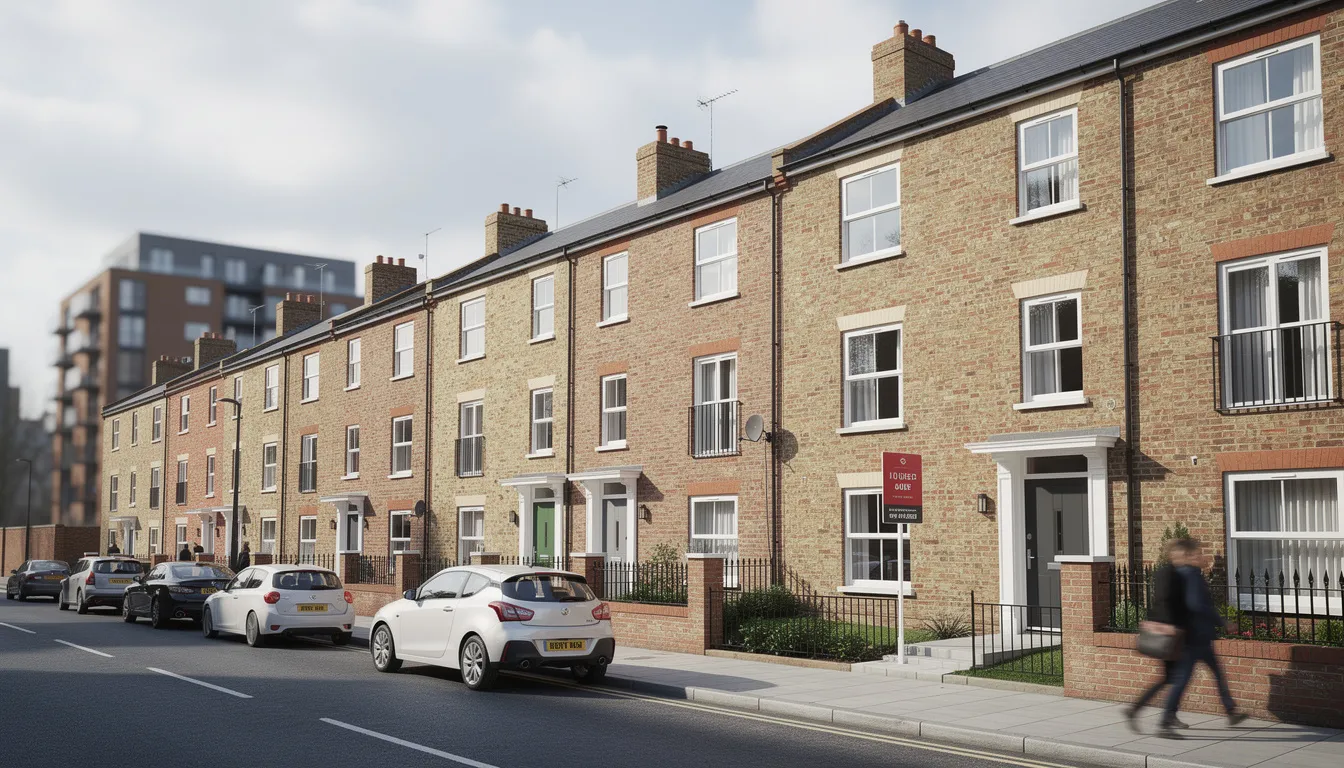
What Is a Portfolio Landlord in the UK?
A portfolio landlord is defined as a residential landlord with four or more mortgaged buy-to-let properties. If you are wondering how many properties you need to be considered a portfolio landlord, the answer is four or more mortgaged buy to let properties. A portfolio landlord is defined under Prudential Regulation Authority (PRA) rules as an individual or limited company director who owns four or more mortgaged buy to let properties. It is important to note that unencumbered properties, those owned outright without a mortgage, do not count towards this threshold.
This classification applies whether your properties are held personally or through one or more SPV limited companies. Most lenders aggregate your holdings across all ownership structures where you appear as a director, shareholder, or personal guarantor.
For example:
- An investor with two mortgaged houses in their personal name plus two mortgaged via an SPV would typically be treated as a portfolio landlord in 2026.
- The four-property threshold is based on mortgaged buy to let properties only, not total property ownership.
- Some high street lenders will still offer standard buy to let criteria for landlords with up to three or four mortgaged properties, but beyond that most require specialist portfolio underwriting.
- Managing one property is generally less complex and attracts less lender scrutiny compared to managing multiple properties as a portfolio landlord.
Typical exclusions from the count include:
- Your main residence.
- Holiday homes without buy to let mortgages.
- Properties held in certain corporate structures where you have no personal guarantee.
Once classified as a portfolio landlord, lender criteria tighten considerably, and the pool of available mortgage products narrows. Some lenders require existing landlord experience to increase the size of a portfolio to four or more properties, with a common minimum requirement of around two years. This is where working with a specialist mortgage broker becomes particularly valuable.
Standard Buy to Let vs Portfolio Mortgage – What’s the Difference?
Understanding the difference between standard buy to let mortgages and portfolio mortgages is essential for landlords managing multiple properties.
The fundamental difference lies in how lenders assess your application. With a standard buy to let mortgage, underwriting focuses on a single property, its rental income, value, and your personal circumstances. With a portfolio mortgage, lenders assess your entire portfolio of mortgaged properties together, considering aggregate performance, total equity, and overall rental coverage. This approach is particularly beneficial for landlords managing a property portfolio, as it allows for a more holistic view of multiple investment properties.
Feature | Standard Buy to Let | Portfolio Buy to Let Mortgage |
|---|---|---|
Number of properties | 1–3 mortgaged buy to lets | 4 or more mortgaged buy to lets |
Underwriting focus | Individual property | Whole portfolio performance |
Typical maximum LTV | 75–80% | 70–75% (sometimes 65% for HMOs) |
Administrative complexity | Separate applications per property | Single facility or coordinated approach |
Lender choice | High street lenders and specialists | Mainly specialist lenders |
Suitable for | New or smaller-scale landlords | Experienced landlords scaling up |
Portfolio mortgages can cover anywhere from four to over 100 properties under one or a small number of facilities. Many come with a single annual review date and a dedicated relationship manager, simplifying ongoing administration significantly.
Landlords can still hold separate stand-alone buy to let mortgages on each property rather than consolidating into a portfolio mortgage. However, managing multiple individual mortgages becomes increasingly difficult once you reach eight to ten properties, due to multiple renewal dates, different lender relationships, and fragmented equity access. Using portfolio mortgage loans can streamline the process by reducing the number of separate loans and administrative tasks involved.
Portfolio structures are particularly common for HMOs, MUFBs, student blocks, and situations where multiple flats sit within one freehold building.
For example, a landlord with 12 houses each on a separate buy to let mortgage from different lenders faces 12 sets of renewal dates, 12 separate monthly payments, and 12 different relationships to manage. In contrast, consolidating all 12 under a single portfolio facility results in one payment, one review date, and one underwriter who understands the whole portfolio. Portfolio mortgages allow multiple properties to be grouped under a single loan, simplifying portfolio management and cash flow management.
When comparing the two approaches, it’s important to consider the costs involved. Portfolio mortgages can help reduce overall costs by consolidating valuation fees, legal expenses, and insurance premiums, whereas managing multiple standard mortgages may lead to higher cumulative costs.
📞 Call for immediate expert advice. 💻 Complete our enquiry form 📧 Email outline your requirements

How Do Lenders Assess Portfolio Landlords in 2026?
Lenders apply tighter underwriting standards for portfolio landlords, which remain firmly in place in 2026. The assessment goes beyond evaluating individual properties on a property-by-property basis. Lenders assess rental income, asset mix, concentration risk, and overall Loan to Value (LTV) across the entire portfolio during the application process. They typically require a full schedule of assets, liabilities, and income for the entire portfolio to gain a comprehensive view of the borrower’s financial position.
Most UK lenders require valuations on each property included in a portfolio mortgage, and valuation costs can vary depending on whether a desktop or full valuation is required. These valuations are crucial in determining lending terms, costs, and approval processes.
Some lenders may require a minimum personal income alongside portfolio stress testing and overall LTV assessment. Lenders also apply stress tests simulating higher interest rates to ensure affordability of payments if rates rise. Demonstrating financial support and stability is essential to show the capacity to sustain mortgage repayments and manage risks across the portfolio.
Lender Criteria
When underwriting a portfolio mortgage application, lenders typically examine:
- Total portfolio loan-to-value (LTV): Usually capped at 70–75% across all mortgaged properties.
- Interest cover ratio (ICR): Rental income must typically cover 125–145% of mortgage payments at a stress rate (commonly 5.5–6.5% in 2026).
- Landlord experience: Often a minimum of two years as a buy to let landlord, though some lenders accept less with strong compensating factors.
- Portfolio schedule: A complete breakdown including addresses, current values, mortgage balances, monthly rents, existing lender names, and whether each loan is interest-only or repayment.
- Asset mix, asset quality, and concentration risk: Lenders assess the mix and quality of assets within the portfolio, as well as any concentration risk, to evaluate overall risk exposure and portfolio structuring. Lenders may have restrictions or preferences regarding the property types included in a portfolio, and property types can influence eligibility and mortgage conditions.
- Rental income and overall LTV across the entire portfolio: Lenders review the total rental income and the combined loan-to-value ratio to ensure the portfolio meets their lending criteria.
Lenders prefer a diversified portfolio across different locations or property types to mitigate risk.
Not all lenders offer the same financing options or support for portfolio landlords, so it’s important to find specialist lenders.
Portfolio Schedule Requirements
Many lenders impose caps on total borrowing, perhaps £2 million to £5 million per client—or limit the maximum number of mortgaged buy to let units they will hold (e.g. 10, 20, or 25 properties). Lenders may also set a maximum loan size for portfolio mortgages, with some specifying caps such as £1 million, £5 million, or £10 million, while others assess the maximum loan size on a case-by-case basis. Others have no formal cap but apply increasingly detailed scrutiny as portfolios grow.
Fees such as arrangement, legal, and valuation fees may apply to portfolio mortgages, and these costs can vary by lender. It’s important to note that defaulting on a mortgage payment for a portfolio mortgage can impact the entire mortgage, as all properties are typically linked as security for the loan.
Different criteria often apply to HMOs and MUFBs. Expect lower maximum LTV thresholds, higher minimum ICR requirements, and specific questions about licensing and planning compliance.
Preparing a Lender-Ready Portfolio Schedule
At Fox Davidson, we prepare a lender-ready portfolio schedule for our clients before approaching lenders. This reduces back-and-forth queries and significantly speeds up decisions in principle. To prepare a lender-ready schedule:
- List all properties with full addresses.
- Include purchase price, current market values, and outstanding mortgage balances for each property.
- Record monthly rental income for each property.
- Note the name of the existing lender for each property.
- Specify whether each loan is interest-only or repayment.
The application process for a portfolio mortgage requires extensive documentation, including a full property portfolio schedule and business plan.
What Is a Buy to Let Portfolio Mortgage?
A buy to let portfolio mortgage is a facility that allows a lender to take multiple investment properties as security, typically under one mortgage loan agreement.
Rather than managing separate mortgages on individual properties, landlords can consolidate borrowing into a coordinated structure. Portfolio mortgages allow lenders to assess affordability, risk, and Loan to Value (LTV) across the entire portfolio, taking into account total rental income and asset mix.
Some portfolio mortgages can include commercial property, and certain lenders offer products that cover both residential and commercial properties, providing flexibility for mixed-use portfolios. There are important differences between commercial lending and residential lending within portfolio mortgages, including costs and requirements.
Additionally, landlords may transfer properties into different ownership structures, such as limited companies, which can have legal, tax, and lending implications. A portfolio mortgage may charge higher interest rates to offset the risk posed to the lender due to the larger portfolio size.
Buying through a Limited Company can be more tax-efficient for higher-rate taxpayers, though mortgage options differ. However, some landlords may reach the maximum property or borrowing limits with one lender, requiring consideration of multiple lenders as the portfolio grows.
Types of Portfolio Mortgage Arrangements
Portfolio mortgage arrangements vary by lender:
- Some portfolio products use a single account number with one monthly payment covering all properties. This means landlords pay one amount each month for all their properties, simplifying cash flow management.
- Others create linked facilities with separate sub-accounts for each property but with common covenants, pricing, and review dates.
- All properties within the facility typically stand as security for the overall borrowing.
Types of Properties Included
Portfolio mortgages can include:
- Standard single-let houses and flats.
- HMOs (licensed and non-licensed). Purchasing HMOs through a portfolio mortgage allows landlords to acquire multiple high-yield properties under one loan structure. The rent from HMOs often provides higher rental income compared to single-let properties, supporting stronger cash flow for investors. Investing in HMOs can generate two or more times the monthly income of single-let properties, making them a popular choice for landlords.
- MUFBs (multi-unit freehold blocks).
- Small blocks of flats.
- In some cases, mixed-use properties (depending on lender appetite).
Lending Assessment
When assessing how much to lend and at what rate, lenders look at the blended yield and total rental income across the portfolio. Lenders also consider the customer’s overall financial profile, conducting due diligence and relationship management throughout the application process to ensure responsible lending. Landlord experience, typically of at least 12-24 months, is preferred by lenders as it demonstrates the ability to manage rental properties effectively.
Managing multiple rental properties requires reliable systems and processes for all aspects of the letting process, from tenant screening to maintenance and rent collection. It is worth speaking with mortgage brokers or property management professionals, as their expertise can help navigate complex regulations, financing options, and management strategies.
Summary and Next Steps for Buy to Let Portfolio Mortgages
In this comprehensive guide, we have explored the essentials of buy to let portfolio mortgages in the UK for 2026. We covered what defines a portfolio landlord, the key differences between standard buy to let and portfolio mortgages, and how lenders assess portfolios with multiple mortgaged properties. Understanding lender criteria, portfolio schedules, and the complexities of portfolio mortgage applications is crucial for landlords managing four or more properties.
Portfolio mortgages offer significant advantages by consolidating multiple buy to let properties under a single facility, simplifying financial management, and enabling a holistic view of rental income, asset mix, and borrowing capacity. However, they also come with increased underwriting scrutiny, potential higher interest rates, and legal complexities that require careful planning and expert advice.
For landlords looking to grow or refinance their property portfolio, it is essential to develop a clear business plan, maintain accurate portfolio records, and work closely with specialist mortgage brokers who understand the nuances of portfolio lending. Preparing a lender-ready portfolio schedule and understanding the application process can help expedite approvals and reduce valuation costs.
Next Steps
Get in touch with our expert property portfolio mortgage brokers, We will request a copy of your portfolio and speak with you to discuss your mortgage requirements such as repayment type, fixed rate vs tracker, loan term and other preferences.
📞 Call for immediate expert advice. 💻 Complete our enquiry form 📧 Email outline your requirements