
Introduction to – Development Exit Finance in 2026
This is our comprehensive 2026 guide to development exit finance, written by Fox Davidson, award-winning UK mortgage brokers advising clients across England, Scotland, Northern Ireland and Wales. Here at Fox Davidson, we secure development exit finance from £250,000 to £100m+ on residential, commercial and mixed-use schemes UK-wide, as part of our broader expertise in property development finance solutions for a wide range of property development projects.
In this guide, we answer what development exit finance is and why property developers are increasingly turning to it in the current 2026 interest rate and sales market environment. With slower sales cycles persisting in some regions, tighter main bank lending, and developers needing longer to achieve full market value for completed properties, this specialist finance solution has become an essential tool for professional developers.
We cover how development exit finance works, costs, rates, criteria, timelines, case studies, FAQs and how to apply. Whether you are an experienced developer or approaching your first scheme, this guide gives you everything you need to understand and access this funding solution.
📞 Call for immediate expert advice. 💻 Complete our enquiry form 📧 Email outline your requirements

What Is Development Exit Finance?
Development exit finance is a type of bridging finance which allows property developers to repay existing development finance and provide more time for the sale of the completed units on a development site.
Development exit finance is a short-term bridging loan that repays existing development funding once a scheme is wind and watertight or at practical completion, and can optionally release equity tied up in the completed assets. It bridges the gap between finishing construction and achieving full sales or refinancing onto long-term buy-to-let or commercial mortgage terms.
This type of exit finance is used once the build risk is largely removed, when properties are habitable and marketable, but before all units are sold or moved onto permanent investment finance. At this stage, development exit finance is sourced from a range of development finance lenders. Using a specialist broker can help access the best terms available from multiple lenders. The lower risk profile at this stage means specialist lenders offer more favourable terms than they would during active construction.
The key distinction from traditional ground-up development finance is timing and risk. Development finance covers the construction phase with staged drawdowns, higher interest rates (often 1%+ monthly), and closer monitoring due to build risk. A standard bridging loan can fund various short-term property needs but is not specifically structured around completed development assets and agreed sales strategies. Development exit finance sits between these products, offering development exit bridging loans specifically designed for schemes at or near project completion. Development exit finance often offers a cheaper rate than traditional development finance, making it a cost-effective solution post-completion.
In 2026, more lenders will consider development exit funding from practical completion or when schemes reach 90-95% build complete, often with building control signed off or pending only minor works.
Key takeaways:
- Development exit finance repays existing development loans once construction risk is substantially removed
- It provides breathing space to sell remaining units at full value rather than accepting discounted offers
- Interest rates are lower than development finance due to the reduced lender risk on completed properties, often resulting in a cheaper rate for borrowers
- Loans can release capital for your next project while sales complete
Note: Development exit finance is typically not regulated unless the borrower or their family intends to live in the property after completion.
How Development Exit Finance Works in Practice
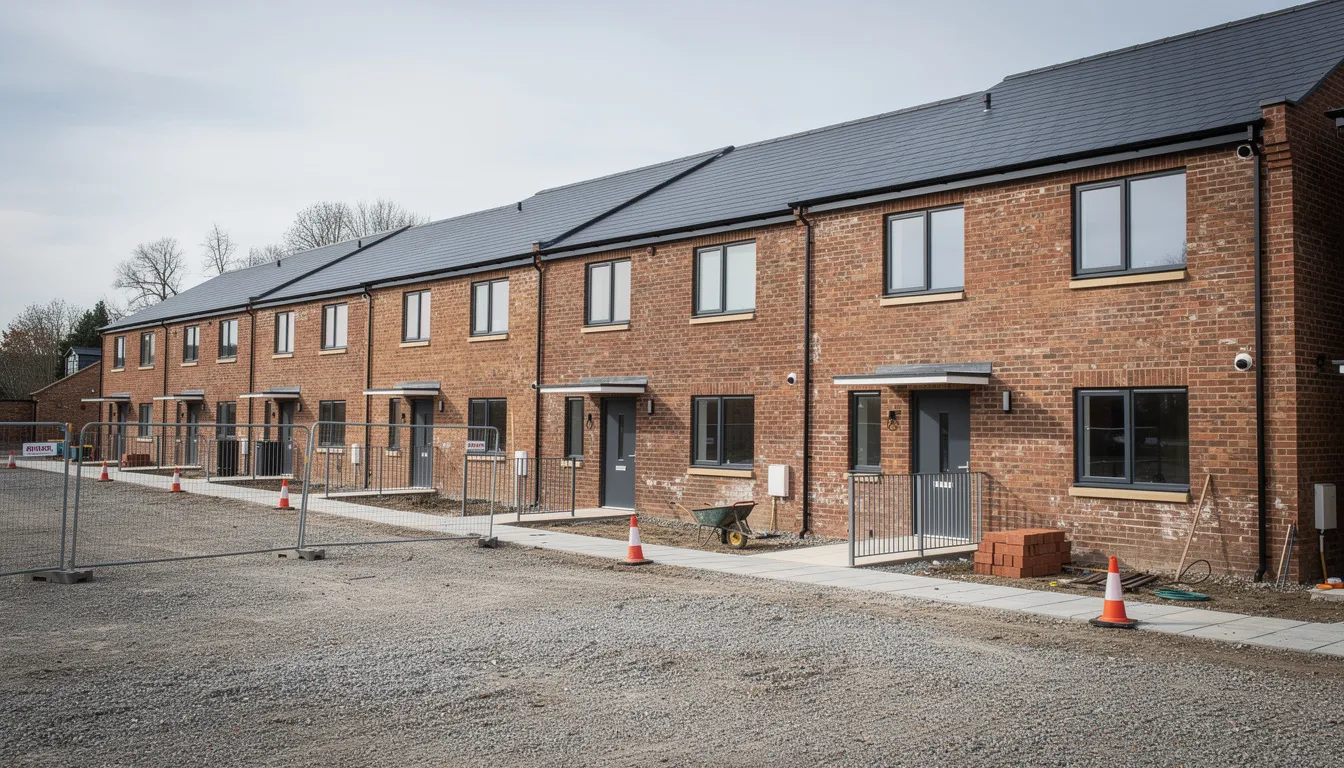
The typical sequence begins with your original development finance loan in place, funding the construction phase of your property development. As the scheme reaches practical completion or becomes wind and watertight, the clock starts ticking on your existing facility. This is where Fox Davidson reviews your options and identifies the most suitable development exit finance lenders for your specific situation, with the goal of securing the best deal for your development exit finance by considering competitive interest rates, flexible terms, and tailored funding solutions.
Once we secure development exit finance from a new lender, the funds are used to redeem your old development finance facility in full. This immediately stops the higher interest rate accruing on the original loan. Depending on the loan-to-value ratio and lender criteria, you may also release equity at this stage, capital that can be deployed towards acquiring your next development site or covering other business needs.
Loan sizing is typically based on the lower of current market value or gross development value at completion, subject to a maximum LTV. For residential schemes in 2026, this commonly sits at around 70-75% of market value, though commercial property and secondary locations may attract slightly lower LTV caps.
Interest on development exit loans is usually retained or rolled up, meaning there are no monthly payments to service during the loan term. Instead, the accumulated interest is repaid alongside the principal when units sell or when you refinance onto long-term mortgages. This structure preserves cash flow during the critical sales period.
The legal and valuation process involves commissioning a new valuation on the completed or nearly completed scheme. The lender’s solicitor then checks title, planning consent, building regulations sign-off, and any warranties in place (such as NHBC, LABC or Premier). They also verify that original build costs are fully funded and that the exit strategy, whether sales, refinancing, or a combination, is realistic and achievable within the finance term.
Here at Fox Davidson, we manage the full process with lenders, valuers and solicitors to minimise any gap between your development facility redeeming and the exit loan completing.
Key points:
- Your existing development loan is redeemed immediately upon completion of the exit facility
- Interest rolls up rather than requiring monthly servicing
- Repayment comes from sales proceeds, refinancing onto investment mortgages, or both
- We coordinate all parties to ensure a seamless transition between facilities
When and Why to Use Development Exit Finance
Property developers approach us for development exit finance in several common scenarios. The most frequent is a looming expiry on their existing development finance loan. With many facilities offering 12-18 month terms that cannot easily be extended, developers often find themselves facing either a rushed sale at discounted prices or a default situation neither of which protects their equity. Development exit finance provides crucial support during the period when a property sells, helping to minimise holding costs and maximise the property’s value while it is on the market.
Saving Interest Costs
One of the primary benefits is the immediate reduction in interest costs. Development finance rates in 2026 typically run at 1.0-1.5% per month, while development exit finance commonly ranges from 0.6-0.85% monthly. On a £5m facility, that difference could save £20,000-£30,000 over a six-month period. For experienced property developers running multiple projects simultaneously, these savings directly impact overall profitability.
Buying Time to Achieve Full Value
The 2025-2026 sales market has remained challenging in certain regions, with average time to sell new-build properties extending to 4-7 months in some areas. Rather than accepting offers 10-15% below asking price to meet a facility deadline, development exit finance provides the breathing space needed to achieve open market value. Our clients consistently report achieving 8-12% higher net proceeds compared to forced exits.
Releasing Capital for Your Next Project
Many developers use exit finance specifically to raise capital for their next scheme. By borrowing against completed properties at 70-75% LTV while sales complete, you can pull out equity that would otherwise be locked until the last unit sells. This accelerates your ability to secure sites, pay deposits, and start the cycle again without waiting for every property to complete its sale.
Ideal use cases:
- Development finance expiring before all units are sold
- Slow sales market requiring extended marketing period
- Desire to hold some units as long-term buy-to-let investments
- Need to release funds for next development project
- Build costs have overrun but works are now complete, requiring facility restructure

Development Exit Finance vs Development Finance vs Bridging
Many developers confuse these products, but choosing the correct facility at each phase of a project can save tens of thousands in interest and fees. Here at Fox Davidson, we ensure clients are on the most appropriate product for their current situation.
Feature | Ground-up Development Finance | Development Exit Finance | Standard Bridging Loan |
|---|---|---|---|
Typical Project Stage | Pre-construction through build | Practical completion onwards | Any stage (purchase, refurb, chain break) |
Risk Level to Lender | Higher (construction risk) | Lower (completed asset) | Variable |
Typical Term | 12-24 months | 3-18 months | 1-24 months |
Indicative LTV Range | 60-70% GDV (staged) | 70-75% completed value | 60-75% market value |
Interest Rate Range (2026) | 1.0-1.5% per month | 0.6-0.85% per month | 0.75-1.2% per month |
Use of Funds | Land purchase, build costs | Refinance existing facility, release equity | Purchase, refinance, capital raise |
Drawdown Structure | Staged against build milestones | Single tranche at completion | Usually single tranche |
Typical Loan Size | £500k – £50m+ | £250k – £100m+ | £100k – £25m |
The typical lifecycle sees developers start with development finance to fund land acquisition and construction, then transition onto development exit finance once the build reaches practical completion. From there, units either sell on the open market or refinance individually onto buy-to-let, HMO, or commercial mortgages depending on the developer’s hold strategy.
Here at Fox Davidson, we also arrange the onward term finance including portfolio buy-to-let, HMO, multi-unit freehold blocks, semi-commercial and full commercial mortgages so your exit from the development exit loan is fully planned from the outset.
Loan Sizes, LTVs, Terms and Typical Rates (2026)
Here at Fox Davidson, we secure development exit loans from £250,000 to £100m+ on residential, mixed-use and commercial developments across the UK. Our relationships with multiple lenders, challenger banks, private banks, and pension funds mean we can source competitive terms across this entire range.
Typical loan terms run from 3-18 months, with some lenders offering extensions up to 24 months for larger phased schemes where units will sell sequentially over a longer period. Many development exit finance lenders allow early repayment without exit fees, so you only pay interest for the period you actually use the facility.
LTV norms for mainstream residential schemes currently sit at around 70-75% of the completed scheme value. For commercial property, mixed-use developments, or assets in secondary locations, lenders typically apply more conservative caps of 60-70% LTV. The exact maximum depends on location, build quality, sales evidence, and overall demand for the property type.
As at early 2026, indicative interest rates for lower-risk, lower-LTV residential development exit loans start from around 0.6% per month, rising to approximately 0.85% monthly for higher LTV, more complex, or non-standard assets. These figures are indicative only and subject to individual scheme assessment.
Total cost of funds encompasses more than headline rate. Arrangement fees, rolled interest, valuation fees, and legal fees all contribute to overall costs. When comparing lender offers, we focus on total cost over the expected loan term rather than simply the lowest monthly rate, sometimes a slightly higher rate with lower fees delivers better value depending on your anticipated sales timeline.
Costs and Fees: What Developers Should Budget For
Understanding the full cost structure helps you budget accurately and compare lender offerings on a like-for-like basis. Development exit finance involves several fee categories beyond the headline interest rate.
Cost Type | Typical Structure/Notes |
|---|---|
Arrangement Fee | 1-2% of loan amount, payable on completion or deducted from advance |
Valuation Fee | £500-£1,500 for loans under £1m; £1,500-£4,000 for £1-5m; £4,000+ for larger/complex schemes |
Lender Legal Fees | Scaled based on loan size, typically £1,500-£5,000+ plus disbursements |
Borrower Legal Fees | Variable depending on solicitor; recommend experienced development/bridging specialists |
Lender Exit/Redemption Fee | Many exit facilities have no early repayment charges; some charge 1-2 months minimum interest |
Broker Fee | Fox Davidson typically remunerated by lender; any client fee disclosed upfront in writing |
For valuation fees in the 2026 UK market, expect to pay in the region of £500-£1,500 for schemes valued under £1m, rising to £1,500-£4,000 for loans between £1-5m, and £4,000 or more for larger or more complex commercial/mixed-use property development projects. These are payable upfront before formal offer.
Legal costs include both the lender’s solicitor fees and your own representation. We recommend using solicitors with strong development and bridging finance experience, as they understand the urgency typically involved and can navigate title complexities efficiently.
Other items to budget for include title insurance if applicable, monitoring surveyor sign-off where the lender requires confirmation of completion status, and any redemption fees or minimum interest provisions on your outgoing development finance loan.
Here at Fox Davidson, we are typically remunerated by the lender on unregulated lending. Where any client broker fee applies, this is always disclosed upfront in writing before you proceed.
Eligibility and Criteria (Including First-Time Developers)
Both experienced and first-time developers can access development exit finance, though lending criteria are naturally tighter for new entrants and for more complex schemes. Lenders want confidence that the borrower can execute their exit strategy within the agreed finance term.
Core factors lenders assess:
- Scheme location and demand: Strong local markets with evidenced buyer/tenant interest attract better terms
- Build quality and specification: Completed to current building regulations with appropriate warranties
- Extent of completion: Most require practical completion or 90%+ complete with defined snagging schedule
- Sales track record: Number of reservations, exchanges, and completions already achieved
- Borrower experience: Track record with similar schemes, though first-time developers are considered
- Credit profile: Personal and corporate credit history of borrowers and guarantors
- Exit strategy clarity: Realistic, evidenced plan for repayment via sales or refinancing
For a first-time developer, lenders place extra emphasis on the professional team surrounding the project. A strong builder, architect, and project manager with relevant experience can offset limited personal development track record. Realistic appraisal figures, robust contingency planning, and transparent cost and schedule reporting throughout the build phase all help build lender confidence.
Typical acceptable borrower structures include individuals, partnerships, UK limited companies, LLPs, and special purpose vehicles (SPVs). Offshore SPVs and foreign nationals may be considered by specialist lenders subject to enhanced due diligence and potentially higher pricing.
Adverse credit does not automatically preclude borrowing, but will impact pricing and maximum LTV. Early disclosure to Fox Davidson allows us to target lenders whose lending criteria accommodate credit issues, rather than wasting time on applications destined to fail.
Regulation: When Is Development Exit Finance Regulated?
Most development exit loans for pure investment or resale schemes are unregulated, as they are arranged on a commercial basis secured against non-owner-occupied property. This applies to the vast majority of developer exit finance transactions we arrange.
However, the loan may be regulated by the Financial Conduct Authority (FCA) if the security includes a property where the borrower or an immediate family member currently lives or intends to live. Specifically, if more than 40% of the secured property will be used as the borrower’s residence, the loan falls within FCA regulation.
This can arise in mixed-use or small block scenarios. For example, if a developer completing a four-unit scheme intends to retain one flat for personal use while selling the others, the entire facility may become regulated. Similarly, if a family member will occupy one of the completed properties, regulation may apply.
Regulated vs Unregulated – What It Means for You
When a development exit finance loan is regulated, additional consumer protections apply. This includes formal suitability assessments, prescribed disclosure documents, and specific affordability checks. The application process takes slightly longer, and fewer lenders operate in the regulated space. Here at Fox Davidson, we are FCA authorised and regulated, meaning we can arrange both regulated and unregulated development exit bridging loans depending on your circumstances.
We carefully establish the intended use of each property from the outset so that the correct regulatory treatment is applied. If you or a family member will occupy any part of the security, please raise this with us at initial enquiry stage.
Application Process and Required Documentation
The application process with Fox Davidson follows a clear, structured path designed to minimise delays and achieve the best possible terms for your development project.
We begin with an initial phone or video consultation to understand your scheme, current facility position, and objectives. This allows us to identify suitable lenders and provide indicative terms quickly, typically within 24-48 hours of receiving key information.
Once you are happy to proceed, we submit a full application to the chosen lender. They instruct a valuation on the completed or near-completed scheme, and their legal team begins due diligence on title, planning, and building regulations compliance. Upon satisfactory valuation and legal sign-off, a formal offer is issued. Legal completion then follows, with funds used to redeem your existing development facility.
Core documents typically required in 2026:
- Planning consent and any related conditions/discharge documents
- Building regulations sign-off or completion certificates
- Warranty documentation (NHBC, LABC, Premier, or architect’s certificate)
- Schedule of accommodation showing unit sizes, types, and specifications
- Updated cost breakdown confirming all build costs are funded
- Current cashflow projection for remaining sales period
- Evidence of build completion (photos, monitoring surveyor report, or practical completion certificate)
- Sales schedule including reservations, exchanges, and target prices for remaining units
Financial information expected from borrowers:
- Personal or corporate accounts (typically 2 years)
- Asset and liability statement
- Portfolio schedule for experienced landlords/developers
- Details of any existing borrowing across the group
Here at Fox Davidson, we coordinate with solicitors and valuers to keep timescales tight, especially where a development loan expiry is approaching. We flag potential issues early such as outstanding planning conditions or warranty gaps so these can be resolved before they delay completion.
Have this ready to speed up your exit finance:
- All planning and building control documents in one folder
- Up-to-date sales schedule with agent confirmation
- Latest valuation or appraisal from your original development lender
- Contact details for your solicitor and any monitoring surveyor
- Clear schedule of what remains outstanding on your current facility

How Quickly Can Development Exit Finance Be Arranged?
Realistic timescales based on our 2024-2026 experience show that straightforward residential schemes in strong locations often complete in around 2-3 weeks from full application submission. For urgent situations where all parties are responsive and documentation is comprehensive, we have achieved completions in 5-10 working days.
More complex or higher-value commercial and mixed-use schemes typically require 4-6 weeks due to more detailed valuation requirements and legal due diligence. Large multi-unit blocks or assets with complicated title arrangements may extend further.
Key factors influencing speed:
- Valuation booking lead times (currently 5-10 working days for most RICS surveyors)
- Responsiveness of borrower and solicitors in providing requested information
- Complexity of title and any historic issues requiring resolution
- Outgoing lender’s redemption process and any delays in providing redemption figures
Fast-track tips:
- Pay for express valuation services where available
- Use solicitors experienced in development and bridging transactions
- Provide complete, accurate information at the outset
- Engage Fox Davidson as early as possible—ideally 6-8 weeks before your existing facility expires
While we can work to tight deadlines when necessary, developers contacting us early maximise their choice of lenders and achieve the most competitive pricing. Leaving it until the final weeks before facility expiry limits options and may result in higher overall costs.
Case Studies: Recent Development Exit Finance Deals
These real-world examples demonstrate how development exit finance works in practice and the tangible benefits achieved for our clients. Each situation presented unique challenges that this specialist finance solution addressed effectively.
£3.1m Development Exit on 10 New-Build Houses in Gloucestershire (May 2025)
A regional developer completed a scheme of 10 family homes in a sought-after Gloucestershire village. Their original 18-month development finance facility was approaching expiry with five units sold and five still available. The existing lender was unwilling to extend, and the developer faced either accepting offers 12% below asking price or defaulting. We secured a development exit loan at 72% LTV with interest at 0.68% monthly—significantly cheaper than the 1.15% they had been paying. The remaining homes sold over the following seven months at full asking prices, and the developer used released equity to secure their next site before this scheme fully completed.
£8.5m Exit Facility on 42 Apartments in Manchester (November 2024)
A city-centre apartment scheme completed with strong initial sales, but the remaining 18 units faced a slower market as interest rates remained elevated. The original development finance lender required full repayment at month 15. We arranged an £8.5m development exit facility providing a 12-month window to sell remaining units at appropriate pricing. The structure released £1.2m equity which the developer deployed as the deposit on a new project in Liverpool. All units sold within 11 months, avoiding the fire sale that would have cost an estimated £600,000 in discounted pricing.
£2.7m Exit on Mixed-Use Block in London Commuter Town (February 2026)
A mixed-use development comprising ground-floor retail with eight residential flats above required an exit strategy that accommodated both sale and rental income streams. The commercial property element complicated matters, as the developer intended to retain the retail unit as a long-term investment while selling the flats. We structured a development exit loan covering the entire block, then arranged separate onward finance—a commercial mortgage for the retail element and individual buy-to-let mortgages for two flats the developer chose to retain. The remaining six flats sold over eight months.
How We Structure Development Exit Finance with Other Products
Here at Fox Davidson, we do not view development exit finance in isolation. Every exit loan eventually requires its own exit, whether through sales, refinancing, or a combination of both. We integrate your development exit strategy with onward funding solutions from the outset.
Common combined strategies include:
A developer completing a 12-unit scheme might sell eight units on the open market while retaining four as a portfolio. We structure the development exit loan to accommodate phased repayments as sales complete, then arrange block buy-to-let refinancing on the retained units before the exit facility expires. This removes any gap in funding and ensures the developer is never exposed to expensive overstay charges.
For mixed-use developments, the exit strategy often involves different products for different elements. Retail or office space may refinance onto commercial mortgages, residential units onto buy-to-let facilities, and any units earmarked for the developer or a family member may require regulated bridging to ensure compliance.
We also advise developers whose trading businesses occupy premises within completed schemes. An initial development exit can bridge to a long-term owner-occupied commercial mortgage once the business demonstrates the required trading history.
The lifecycle view:
Build (Development Finance) → Complete (Development Exit Finance) → Sell/Refinance (Term Investment Mortgages) → Raise additional funds for next project → Acquire New Site → Repeat
Cross-referencing our broader services, Fox Davidson also arranges complex buy-to-let for limited company structures, HMO finance, multi-unit freehold block mortgages, semi-commercial lending, and full commercial mortgages. This means your entire property finance journey can be managed through one experienced team with clear understanding of your portfolio and objectives.
Frequently Asked Questions About Development Exit Finance
This FAQ section addresses the most common questions developers ask about development exit finance in 2026. These answers provide quick clarity on the key points covered in detail throughout this guide.
Development exit finance is a short term loan specifically designed for property developers who have completed or nearly completed a scheme but need additional time to sell units or arrange long-term refinancing. You should consider it when your existing development finance is approaching expiry, when the sales market requires patience to achieve full value, or when you want to release capital tied up in completed properties to fund your next development.
Loan amounts typically range from £250,000 to over £100m, with Fox Davidson securing facilities across this entire spectrum. The maximum you can borrow depends primarily on loan-to-value limits (usually 70-75% of completed value for residential), the quality and location of the scheme, and evidenced exit strategy. Commercial and mixed use developments may attract slightly lower LTVs.
Yes, first-time developers can access this finance, though many lenders apply stricter criteria. Success depends on having a strong professional team (experienced builder, architect, project manager), realistic valuations, comprehensive documentation, and a clear, achievable exit strategy. Demonstrating that the scheme is genuinely complete and market-ready helps build lender confidence despite limited personal track record.
Most development exit loans are unregulated because they secure non-owner-occupied investment property. However, if you or an immediate family member will live in any property forming part of the security, or if more than 40% will be your residence, the loan becomes FCA regulated. Fox Davidson is authorised and regulated, enabling us to arrange both regulated and unregulated facilities.
Straightforward residential schemes typically complete within 2-3 weeks from full application. Urgent cases with responsive parties and complete documentation can sometimes achieve 5-10 working days. Larger or more complex commercial schemes may require 4-6 weeks. Engaging a specialist broker early and having documentation ready significantly reduces timescales.
Costs include arrangement fees (typically 1-2% of loan amount), interest (usually 0.6-0.85% monthly, rolled up rather than paid monthly), valuation fees (£500-£4,000+ depending on scheme size), and legal fees for both lender and borrower representation. We quote all fees upfront before you commit, focusing on total cost over your expected loan term.
Absolutely. Subject to LTV limits and lender criteria, many of our clients use exit loans specifically for this purpose. By borrowing against completed properties at up to 70-75% of value while sales continue, you can raise funds to secure your next site, pay deposits, or cover acquisition costs without waiting for every unit to sell.
How to Get Your Development Exit Finance with Fox Davidson
Developers across the UK choose Fox Davidson because we combine award-winning brokerage expertise with genuine whole-of-market access and strong relationships with specialist lenders. Our experienced team understands both residential and commercial development exits, structuring facilities that work for your specific scheme and onward strategy.
Get in touch today:
📞 Call for immediate expert advice. 💻 Complete our enquiry form 📧 Email outline your requirements
When you contact us, please provide brief details of your scheme including location, gross development value, loan amount required, and the time remaining on your current facility. This allows us to provide accurate indicative terms quickly.
What happens next:
Following our initial conversation, we typically return indicative terms within 24-48 hours. We then outline likely timescales for completion based on your scheme’s complexity and the responsiveness of all parties. Throughout the process, we keep you informed at every stage.
Early engagement, ideally several weeks before your existing facility expires gives you the best choice of lenders, lowest overall costs, and the smoothest transition between facilities. Developers who contact us at the last minute often find their options limited and may pay premium pricing for urgent execution.
Here at Fox Davidson, we help developers move seamlessly from building to selling and onto the next opportunity. Contact us for a free consultation to discuss your development exit requirements.