
Introduction: Who Should Read This Guide?
Are you a homebuyer, property investor, or a family considering adding or purchasing a property with an annexe? If so, understanding your mortgage options is crucial because lender criteria and eligibility can be more complex than for standard homes. Whether you’re seeking a flexible living arrangement for relatives, planning to generate rental income, or looking to invest in a property with additional accommodation, this guide will help you navigate the unique challenges and opportunities of securing a mortgage for house with an annexe.
If you’re seeking a mortgage for a house with an annexe, you can secure one in the UK, but the process and lender requirements are often more involved than for standard properties. This is especially true when the annexe is self-contained, used for business, or intended for rental income. Knowing how lenders view annexes and what documentation you’ll need can make all the difference in getting approved.
Quick Summary: Can You Get a Mortgage for a House with an Annexe?
Yes, you can get a mortgage for a house with an annexe, but the process and lender requirements depend on the annexe’s use, size, and how it is connected to the main property. Most lenders will consider properties with annexes, but acceptance depends on the intended use of the annexe. Obtaining a mortgage for a property with an annexe can be more complicated than a standard mortgage process depending on the type of annexe and its intended use.
Background: Why Mortgages for Annexed Properties Are Different
Obtaining a mortgage for a property with an annexe can be more complicated than a standard mortgage process depending on the type of annexe and its intended use. However, purchasing a house with an annexe in the UK is generally straightforward if the property has a single title, shares utilities, and is used for family purposes. The complexity increases when the annexe is self-contained, separately let, or used for business, as lenders may apply stricter criteria or require specialist products.
What Is an Annexe – and Why It Matters for Your Mortgage?
Before diving into mortgage options, it’s important to understand what an annexe is and how its features affect your eligibility.
Definition of Annexe:
An annexe is a separate living area on the same title as the main property, it is usually used to accommodate guests or family members. It can also be used as rental accommodation. It can be attached or detached. Lenders will pay close attention to its access, facilities and intended usage.
Definition of Self-Contained Unit:
A self-contained annexe has independent living facilities such as a kitchen, bathroom, and bedroom. If an annexe has its own entrance, kitchen, and bathroom, it may be considered a separate dwelling by lenders.
Definition of Granny Annexe:
The primary use for an annexe is having a member of the family live there, often referred to as a “granny annexe.” This term typically describes a self-contained space designed for elderly relatives but can also apply to accommodation for adult children, carers, or guests.
Understanding these definitions is essential because lenders assess annexes differently based on their configuration and use. For example, a simple bedroom extension is treated differently from a fully self-contained flat with its own utilities.
Now that you understand what an annexe is, let’s look at how mortgages for these properties work in practice.
Answering Your Key Question First: Can You Get a Mortgage for a House with an Annexe?
Yes, you can get a mortgage for a house with an annexe in the UK, but securing the right deal requires specialist handling, particularly where rental income or business use is involved. The annexe market has grown considerably over the past decade, and lenders have adapted their criteria accordingly, though not uniformly.
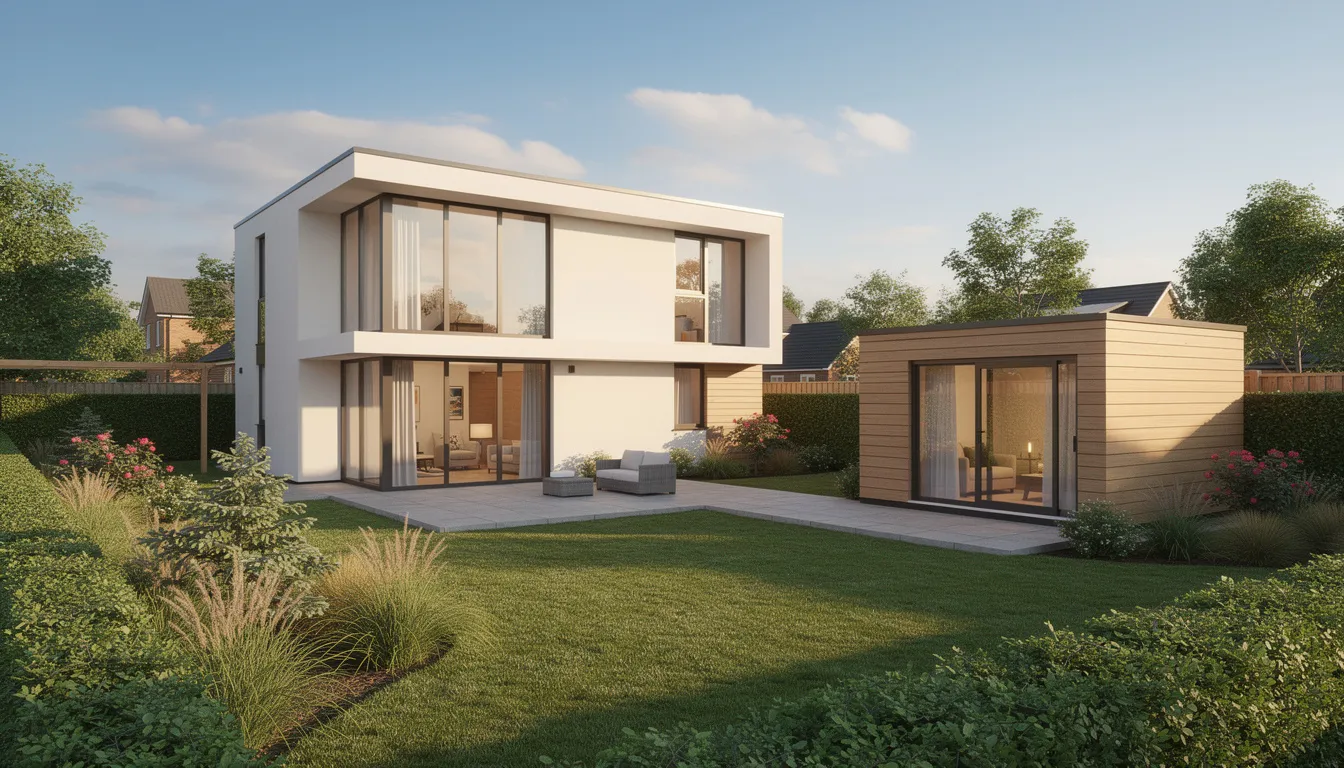
A granny annexe, sometimes referred to as a ‘granny flat’, is a self-contained addition to a property, often purpose-built for elderly relatives but now also used for home offices, holiday lets, or as an auxiliary dwelling for various needs.
Mainstream residential mortgage providers will often accept a granny annexe used for family members without much difficulty. However, their criteria tighten considerably when the annexe is fully self-contained, separately let to tenants, or used for business purposes. Many lenders simply decline these applications outright rather than assess them individually. Annexes can also be used by other family members or guests, making them a versatile solution for different family arrangements.
Fox Davidson works with specialist lenders across the UK who are comfortable with complex annexed properties, including those with separate council tax banding or independent utility meters. For larger loans, typically around £150,000 or more in total borrowing, we can arrange commercial, semi-commercial, or mixed-use mortgage structures where the property’s characteristics warrant this approach.
The intended use of the annexe is the single biggest factor determining which type of mortgage or finance is suitable. A secondary living space for your elderly parents requires a fundamentally different lending approach than a holiday let generating rental income on Airbnb. It is important to find a suitable mortgage that matches the specific configuration and use of the property to ensure lender eligibility and compliance.
Ready to learn how the mortgage process works for these unique properties? Let’s break down the steps involved.
How Do Mortgages for Properties with Annexes Work in Practice?
The core mortgage process, application, underwriting, valuation, legal work, and completion, follows the same general path as any property purchase. However, the property and its layout receive significantly closer scrutiny from the mortgage provider.
Here’s how a typical case progresses:
Step 1: Initial Consultation
The first conversation with Fox Davidson establishes the fundamentals:
- Current use of the annexe (family, tenant, holiday guests, business)
- Planned future use
- Whether you’re purchasing, remortgaging, or raising capital for a new build annexe
- Property value and how much deposit you have available
Step 2: Fact-Finding
We gather detailed information on:
- Income sources and employment status
- Existing mortgage commitments on your current property or portfolio
- Credit history and any historic issues
- Ownership structure (personal name vs limited company)
Step 3: Lender Sourcing
This stage is where working with a mortgage broker who understands annexed properties makes a material difference. We source lenders whose policy explicitly permits:
- Annexes of your specific size
- Your chosen construction type
- The level of self-containment your property features
Step 4: Valuation
The mortgage lender instructs a surveyor who assesses the whole property. The surveyor’s report will:
- Confirm marketability of the combined property
- Comment on the annexe’s size relative to the main house
- Assess whether the property is readily saleable in the local market
- Note any concerns about construction or condition
Step 5: Underwriting
The underwriting team focuses on several specific points:
- Whether any tenancy agreement or holiday let arrangement is in place or planned
- If annexe income can be taken into account for affordability
- Whether separate council tax or meters impact the lender’s risk assessment
- Compliance with the lender’s property type criteria
Step 6: Completion
Your solicitor ensures:
- The annexe is on the same freehold title as the main building
- Planning permission and building control sign-off are in place (especially for annexes built after approximately 2015)
- Any restrictive covenants are identified and addressed
- The local authority has no outstanding enforcement issues
With the process outlined, let’s explore what lenders specifically look for when assessing properties with annexes.
Key Lender Requirements for Houses with Annexes
Understanding what lenders look for allows you to prepare a stronger mortgage application. Requirements vary between mainstream and specialist UK lenders, but certain criteria appear consistently.
It’s also important to consider the legal implications of letting or creating an annexe. You may need to comply with licensing requirements, safety regulations, and tenancy agreements, all of which can affect your mortgage eligibility and the lender’s decision.
Personal Financial Criteria
Most lenders expect:
- Clean or acceptable credit record (some specialist lenders work with bad credit)
- Provable income: employed payslips or 2–3 years’ accounts and SA302s for self-employed borrowers
- Loan-to-income caps around 4–4.5x for residential purposes
- Different metrics for buy to let or commercial (based on rental income and stress tests)
Property-Specific Criteria
The annexed property itself must meet certain standards:
Size and proportion:
- Annexe footprint usually expected to be smaller than the main dwelling
- Many lenders apply a rule that the annexe should be under 40–50% of total floor area
- A larger property where the annexe dominates may be treated as multi unit properties
Construction standards:
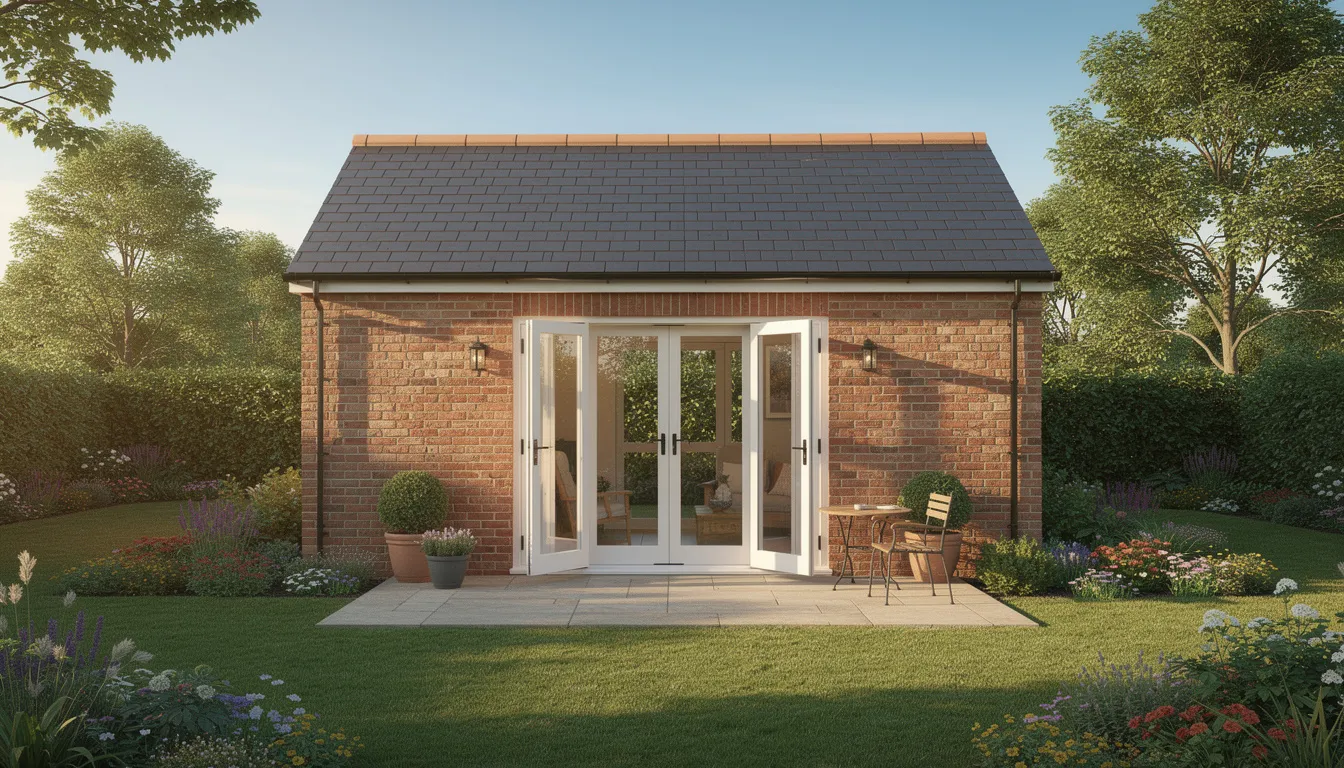
- Preference for standard construction: brick or block walls, tiled or slate roof
- Non-standard materials (timber-only, SIPs panels, flat roofs) may require specialist lenders
- Higher deposits sometimes needed for non-standard construction type
Garden lodge and modular buildings:
- These typically require more specialist lenders
- Some may only be financeable via commercial or development-style facilities
Documentation Requirements
Be prepared to provide:
Document | When Required |
|---|---|
Planning permission certificates | Annexes built or converted after 2010 |
Building control completion certificate | Recent construction or significant alterations |
Certificate of Lawfulness | Where lawful use needs confirmation from local authority |
Tenancy agreement copies | If annexe is currently let |
Holiday let booking records | If operating as short-term accommodation |
Fox Davidson screens these factors early in the mortgage process. This approach means applications only go to lenders whose criteria match the property, avoiding costly declines and wasted valuation fees.
Now that you know what lenders require, let’s look at how much deposit you’ll need and how affordability is assessed.
Deposits, Loan-to-Value and Affordability for Annexed Homes
How much deposit you need depends on how the property will be used and which lending category it falls into.
Standard Residential Expectations
For owner-occupied homes with modest annexes:
- Many lenders work from 10% minimum deposit (90% LTV)
- Some require 15% or more if the annexe is large or self-contained
- Properties with existing mortgage commitments need sufficient equity
Investment and Second Home Requirements
For second homes, holiday homes, or annex-heavy properties:
- 20–25% deposits are more common
- Fewer lenders compete in this space, potentially affecting rates
- SDLT changes since 2016 mean you may pay extra stamp duty on additional properties
Affordability Assessment Methods
The calculation method varies by mortgage type:
Mortgage Type | Assessment Basis | Typical Calculation |
|---|---|---|
Owner-occupied residential | Personal income | 4–4.5x gross annual income |
Buy to let mortgage | Rental stress test | 125–145% of interest at notional rate (often 5.5%+) |
Commercial mortgage | Combined income | Interest cover ratio 1.25–1.5x |
Potential rental income from the annexe can sometimes support affordability, but only a subset of lenders will include this—particularly for purchase mortgages where no letting track record exists.
Fox Davidson can help clients structure purchases via limited companies or SPVs where the property is primarily an investment with an annexe let out separately. This often provides more flexibility on how rental income is assessed.
With deposit and affordability requirements in mind, let’s see how first-time buyers and self-employed applicants can approach annexed property mortgages.
First-Time Buyers, Self-Employed Borrowers and Complex Incomes
First-time buyers and self-employed borrowers can absolutely obtain mortgages on houses with annexes, but case preparation becomes crucial for success.
First-Time Buyers
Key considerations include:
- Higher property values (because of the annexe) normally require stronger incomes or joint applications
- Lenders scrutinise dependants using the annexe carefully
- Elderly parents typically treated as dependants rather than tenants, which is favourable
- Additional borrowing capacity may be needed compared to a standard first home
The good news: if the annexe is for family members rather than generating extra income, most mortgage lenders treat this sympathetically.
Self-Employed and Company Directors
Lenders commonly request:
- Two to three years of full accounts and SA302s
- Some accept one year for borrowers with strong profiles or substantial deposits
- Directors may need to demonstrate sustainable dividend extraction
- Portfolio landlords face additional assessment under PRA rules
Fox Davidson works routinely with:
- Portfolio landlords with layered income sources
- Company directors extracting dividends and salary
- Borrowers with income from multiple properties and SPVs
- Complex cases where standard lenders have declined
Preparing Your Application
To speed up underwriting, collate before seeking terms:
- Up-to-date accounts (certified where possible)
- Tax calculations and SA302s
- Existing mortgage statements for all properties
- Bank statements showing dividend and rental receipts
- Details of other assets and liabilities
With your application prepared, let’s examine what lenders look for in the design, layout, and construction of annexes.
Annexe Design, Layout and Construction: What Lenders Look At
Whether you’re buying an annexed property or considering building one, understanding what lenders assess helps avoid surprises.
Size and Proportion
Lenders usually prefer annexes clearly subordinate to the main house:
- Under 40–50% of total floor area as a general guideline
- Properties where the annexe matches or exceeds the main property may be treated differently
- Such cases often require commercial terms or specialist lenders accepting multi unit properties
Connectivity and Access
Connectivity affects lender appetite:
- Some residential lenders prefer an internal door or shared hallway
- Fully detached annexes with separate driveways restrict lender choice
- Completely separate access can push the deal toward commercial or investment lending
Facilities
The level of self-containment matters:
- Annexe with sleeping, washing, and kitchen facilities = likely viewed as self-contained unit
- Second kitchens often trigger stricter lender policies
- Separate utility meters can affect insurance requirements and council tax
Construction and Quality
Construction Type | Lender View | Deposit Impact |
|---|---|---|
Brick/block walls, tile/slate roof | Standard construction | Standard LTV available |
Timber lodge | Often non-standard | May need 20%+ deposit |
SIPs panels | Specialist assessment | Varies by lender |
Flat roof | Some lenders restrict | May limit options |
Fully glazed structures | Non-standard | Higher deposits typical |
Regulatory Compliance
Planning permission and building regulations sign-off are non-negotiable for recent builds:
- Annexes constructed or materially altered in recent years must have documentation
- Poor paperwork can delay or derail a mortgage
- Fox Davidson flags missing documents early and advises on remedial steps
With the design and construction factors in mind, let’s explore the different ways you might use an annexe and how this affects your mortgage options.
Using an Annexe: Family, Rental, Holiday Let and Business Scenarios
How you use the annexe, and how you might use it over the next 5–10 years, should be discussed at the outset. The intended use may change which type of finance is recommended.
Family Use (Granny Annexe, Adult Child, Carer)
Most residential lenders are comfortable when:
- Immediate family members or dependants live in the annexe
- No formal rent is charged
- The arrangement supports the household (elderly relative care, adult child saving for deposit)
Legal advisers may require “consent to mortgage” forms for adult occupants to avoid creating tenancy rights that complicate future sales.
This remains the simplest scenario for securing a standard mortgage.
Long-Term Rental Use
Separate long-term tenancies for the annexe change the picture:
- Property may be pushed into buy to let or semi-commercial territory
- Tenancy agreement must be disclosed to the lender
- Only a subset of lenders allow a separately let annexe on residential terms
- Rental income assessment differs from owner-occupied applications
Fox Davidson places such cases with certain lenders whose criteria explicitly permit separate lettings.
Holiday Let and Short-Stay Platforms
Marketing the annexe on platforms like Airbnb or Booking.com requires:
- Specific holiday let or mixed-use mortgage products
- Local authority licensing where applicable
- Fire risk assessments
- Gas and electrical safety certification
- Specialist insurance covering paying guests
This scenario often means fewer lenders will consider the application, but specialist lenders exist who actively seek this business.
Business and Studio Use
Light business use from an annexe is often acceptable:
- Home office, therapy room, or studio
- Typically must remain under 40% of total floor area
- Main dwelling must remain the primary property
Where the annexe is primarily commercial (beauty salon, clinic, workshop), a commercial mortgage becomes appropriate. Fox Davidson structures these regularly.
Flexibility Over Time
Consider your future plans when selecting initial lending:
- Converting a family annexe into a holiday let in a few years
- An elderly relative’s eventual move to care
- Potential to raise capital against increased property value
The initial lending structure shouldn’t restrict sensible future uses—discuss this with your broker.
Now, let’s look at how to finance the construction or purchase of an annexe.
Financing the Construction or Purchase of an Annexe
Funding a new annexe differs from buying a property that already has one. Fox Davidson advises on both scenarios.
Higher-Value Annexed Homes and Bespoke Underwriting
For higher-value annexed homes, lenders may offer bespoke underwriting to accommodate complex income or asset structures. In these cases, a mortgage secured on high-value properties can be arranged for affluent clients or those seeking large property investments, providing tailored solutions for unique financial circumstances.
Capital-Raising Routes
If you need to raise capital for an annexe, options include:
- Remortgaging
- A further advance
- A second charge loan
A second charge loan is a type of charge mortgage that allows you to borrow against the equity in your property without changing your existing mortgage. This can be an alternative to remortgaging or using bridging loans, enabling you to access additional funds for building an annexe while keeping your current mortgage terms intact.
Purchasing a Property with an Existing Annexe
Table: Mortgage Options for Properties with Existing Annexes
Option | Best For | Typical Terms |
|---|---|---|
Standard residential mortgage | Family use, no separate letting | Up to 90% LTV |
Limited company buy to let | Investment with annexe let separately | 75% LTV typical |
Commercial mortgage | Mixed-use or business operation | 65–75% LTV |
Higher-value annexed homes (£750,000+ in the South East) often require bespoke underwriting from lenders comfortable with larger property values. |
Adding a New Annexe to an Existing Home
Capital-raising routes include:
- Remortgaging: Move your existing mortgage to a higher loan amount, access equity built up in your current property, may require leaving your current mortgage lender.
- Further advance: Request additional borrowing from your current mortgage lender, often simpler if within their criteria, rates may differ from your existing mortgage.
- Second charge loan: Keep existing mortgage in place, borrow additional funds secured against equity, useful when early repayment charges apply to first mortgage.
- Bridging loan: Fast, short-term option to fund construction, ideal when timing is tight, exit strategy typically involves remortgaging once annexe is complete.
Development and Heavy Refurbishment
For substantial projects—building a self-contained 60m² annexe with costs exceeding £200,000—development finance or structured bridging may be appropriate.
Fox Davidson routinely arranges:
- Development funding from £250,000 upwards
- Bridging loans for investors adding annexes
- HMO conversion finance
- Multi-unit extension funding
Cash from Family Members
Many annexes for elderly parents are funded from the sale of the relative’s property. This creates considerations around:
- Gift versus loan documentation
- Deprivation of assets (care fee planning)
- Inheritance tax implications
Solicitors and independent financial advisers should address these before funds are transferred.
Gather build quotes, architect plans, and planning consents before approaching for development or bridging funding—lenders need these to cost and phase the project accurately.
With funding options covered, let’s examine how rental income, tax, and valuation affect your mortgage choices.
Rental Income, Tax and Valuation Considerations
Annexes can enhance both property value and income potential, but surveyors and lenders view these benefits with nuance.
Rental Income for Affordability
Only a small pool of lenders include projected annexe rental income for a purchase mortgage. More will consider it on a remortgage where:
- A rental track record exists (12+ months ideal)
- Tenancy agreements demonstrate consistent income
- The annexe meets their property criteria
Fox Davidson structures larger portfolios using SPV limited companies and specialist lenders who accept multiple income streams, including annexe rentals.
Valuation Uplift
Market commentary suggests a good-quality, compliant annexe can add 20–30% to a home’s value—but this varies significantly by:
- Location (rural vs urban demand for annexes)
- Design and quality of finish
- Level of self-containment
- Construction materials and age
Valuation is at the surveyor’s discretion and not guaranteed. The how much value question depends entirely on local market conditions.
Tax Considerations
Stamp duty:
- Separate dwellings can trigger Multiple Dwellings Relief (MDR) in England and Wales
- Rules are complex and change periodically
- Professional advice from a tax adviser is essential
Council tax:
- If the annexe has a separate council tax band, this affects lender appetite
- Properties with separate council tax may be viewed as two dwellings
- This can complicate both purchase and eventual sale
Fox Davidson always recommends clients discuss tax, inheritance, and care-fee planning with qualified tax advisers or solicitors where annexes form part of long-term family arrangements.

With these financial considerations in mind, let’s see when a commercial or semi-commercial mortgage may be more appropriate.
When a Commercial or Semi-Commercial Mortgage May Be More Appropriate
Some annexed properties are best financed on commercial terms, particularly when the annexe is heavily income-producing or primarily used for business.
Examples Requiring Commercial Approach
- Holiday let business: A property with a main residence and a detached annexe operating as a three-unit holiday let since 2021. The rental income dominates household finances, and the operation requires commercial assessment.
- Business premises within annexe: A ground-floor therapy centre or clinic within the annexe, with owners living above or in the main house. The commercial element changes the lending category.
How Commercial Lenders Assess These Cases
Commercial lenders focus on different metrics:
- Trading accounts or projected income rather than payslips
- Interest cover ratios instead of simple salary multiples
- More flexibility on construction type and layout
- Higher documentation requirements
If you think your property may fall into this category, Fox Davidson can help you identify the right lenders and products.
How Fox Davidson Helps with Annex Mortgages
Fox Davidson is a specialist mortgage brokerage based in the UK, focusing on non-standard property & complex property finance where standard lenders often struggle, annexed properties being a prime example.
How We Support Clients
Our services include:
- Assessing whether a standard residential mortgage, buy to let, limited company structure, or commercial mortgage best suits your annexed property
- Sourcing lenders explicitly comfortable with annexes, separate access, holiday let use, or mixed residential/commercial layouts
- Navigating cases where the right lender isn’t immediately obvious
- Finding a suitable lender when others have declined
Our Focus Areas
We work primarily with:
- Loan sizes from £150,000 upwards
- Investors owning HMOs, MUFBs, and student accommodation
- Portfolio landlords with annex-rich property holdings
- Developers adding value through annexe construction
Our Process
Free initial consultation: No-obligation discussion covering the property, the annexe, and your funding goals.
Tailored funding proposals: Solutions that might combine term mortgages with short-term bridging or development finance where timing and project phases require it.
Lender management: We handle lender communication, valuation coordination, and underwriting queries, keeping your case moving efficiently.
Next Steps
Contact Fox Davidson with:
- Details of the property
- Plans for the annexe
- Your target timescales
We’ll explore indicative terms before you make any binding commitments, helping you understand what’s achievable and which lenders are most likely to approve your mortgage application.
Whether you’re looking to get a mortgage on a property with an existing annexe, raise capital to build one, or refinance an annexed property in your portfolio, the right structure and the right lender make all the difference.