
Introduction: Mortgages for Accountants – Essential Information
As accountants, whether employed, partners in a firm, or running your own practice, you are often regarded favourably by mortgage lenders. The accounting profession is associated with stable career paths and financial expertise, which leads many lenders to offer higher income multiples and more flexible lending criteria compared to other professions. However, each lender applies different policies, so understanding which lenders to approach is critical for securing the best mortgage terms.
In this article, we share insights based on recent cases and current market conditions in 2026. We cover:
- Typical borrowing capacity for accountants in 2026
- Mortgage options for trainee and newly qualified accountants
- Considerations for self-employed accountants, partners, and company directors
- The impact of student debt on mortgage applications
- Buy-to-let and property investment opportunities
- How to structure your mortgage application for optimal results
📞 Call for immediate expert advice. 💻 Complete our enquiry form 📧 Email outline your requirements
Key Points at a Glance
- Accountants are considered low-risk borrowers, often qualifying for income multiples of 5–6 times annual income, compared to 4–4.5 times for standard borrowers.
- Professional qualifications (e.g., ACA, ACCA, CIMA, ICAEW) are generally required to access specialised mortgage products with enhanced terms.
- Self-employed accountants may provide 1–3 years of business accounts and SA302 tax documents; some lenders accept one year of accounts for strong profiles.
- Trainee and newly qualified accountants can benefit from future income assessment based on signed employment contracts.
- Student loan repayments reduce borrowing power as they are factored into affordability assessments, though they do not affect credit ratings.
- Buy-to-let mortgages and portfolio finance are accessible, with stress-testing applied to rental income.
- A well-prepared application including detailed income structure, bank statements, and credit history review improves approval chances and speeds up the process.

Do Accountants Receive Better Mortgage Deals in 2026?
Mortgage lenders do not usually offer exclusive products solely for accountants, but many recognise accountants as low-risk borrowers due to their financial expertise and stable career paths. This recognition leads to:
- Professional categorisation: Lenders require proof of qualifications such as ACA, ACCA, CIMA, CTA, ICAS, or ICAEW membership to access specialised professional mortgage products. Chartered accountants in England and Wales, chartered certified accountants, and management accountants generally qualify.
- Higher income multiples: Whereas standard borrowers might be capped at 4–4.5 times income, qualified accountants can often access 5–6 times income, significantly increasing borrowing potential.
- Flexible documentation requirements: Many lenders accept one year of accounts for self-employed accountants in certain cases, compared to the usual two or three years.
Example: A senior employed chartered accountant earning £95,000 basic salary plus £10,000 bonus may be assessed at 5.5–6 times income by specialist lenders. At a generic high street bank using 4.5 times, borrowing would be approximately £472,500. With a professional lender at 5.75 times, borrowing rises to about £603,750—a difference exceeding £130,000.
Factor | Standard Borrower | Accountant Borrower |
|---|---|---|
Typical income multiple | 4–4.5x | 5–6x (sometimes higher) |
Minimum deposit | 5–10% | 5–10% (some lenders offer 95% LTV for professionals) |
Self-employed accounts required | 2–3 years | 1–2 years (with some specialist lenders) |
Professional qualification required | No | Yes (ACA, ACCA, CIMA, etc.) |
Qualified accountants may borrow more with smaller deposits due to their low-risk profile and access to specialised professional mortgages offering up to 95% loan-to-value (LTV) and enhanced income multiples.
How Much Can an Accountant Borrow in 2026?
Borrowing capacity depends on income structure, outgoings, dependants, credit history, and property type. Lenders use affordability calculators to assess borrowing potential based on income and outgoings.
Most accountants can borrow between 5 and 6 times their annual income, with some securing higher multiples depending on lender policies and personal circumstances.
Examples using 2026 data:
- Employed accountant earning £60,000 with no other debt: borrowing range approximately £300,000–£360,000 (5–6x income).
- Newly qualified accountant earning £45,000 with a confirmed contract rising to £55,000 within 12 months: borrowing potential £275,000–£330,000 based on future income.
- Self-employed accountant (Ltd company) with average salary plus dividends of £80,000 over 2 years: borrowing between £440,000–£480,000 (5.5–6x income).
Affordability assessments consider all financial commitments, including car finance, credit cards, child maintenance, and student loan repayments. Debt-to-income ratios above 50% are considered high risk; lenders prefer ratios below 30%.
In higher-priced regions such as London and the South East, some lenders offer enhanced income multiples but apply stricter stress tests to ensure affordability under potential interest rate rises.
Lenders typically require 1–3 years of SA302 tax calculations, tax year overviews, payslips, or tax returns to verify income for accountants.
Annual Income | Conservative Lender (4.5x) | Specialist Professional Lender (5.75x) |
|---|---|---|
£45,000 | £202,500 | £258,750 |
£60,000 | £270,000 | £345,000 |
£80,000 | £360,000 | £460,000 |
£100,000 | £450,000 | £575,000 |
£125,000 | £562,500 | £718,750 |
For precise borrowing estimates, provide your salary, bonus, and self-employed income details to run lender-specific affordability calculations.
📞 Call for immediate expert advice. 💻 Complete our enquiry form 📧 Email outline your requirements
Mortgages for Trainee and Newly Qualified Accountants
Trainee and newly qualified accountants can often secure mortgages earlier than expected by leveraging future earning potential. Some lenders assess affordability based on signed employment contracts showing higher post-qualification salaries, even if the applicant is still on a trainee wage.
Example: A trainee in Manchester earning £32,000 with a confirmed post-qualification salary of £48,000 starting in six months. Using current income at 4.5 times, borrowing would be £144,000. Using future income at 5.5 times, borrowing potential increases to £264,000—a £120,000 difference.
Regional salary variations influence borrowing capacity:
- London Big 4 trainees generally have higher salaries, increasing loan amounts.
- Regional trainees may have lower salaries but face lower property prices.
- Certain lenders explicitly welcome applications from trainees with signed contracts.
Many mainstream and specialist lenders are comfortable lending to accountants on permanent contracts during probationary periods, provided at least one payslip or evidence of employment exists.
Scenario | Current Salary | Future Salary | Borrowing at 4.5x Current | Borrowing at 5.5x Future |
|---|---|---|---|---|
Trainee (6 months to qualification) | £32,000 | £48,000 | £144,000 | £264,000 |
Newly qualified (confirmed role) | £45,000 | £55,000 | £202,500 | £302,500 |
Senior trainee (Big 4 London) | £42,000 | £62,000 | £189,000 | £341,000 |
Self-Employed Accountants, Partners & Company Directors
Many accountants are self-employed, partners in firms, or company directors with complex income structures. Presenting income favourably to lenders is critical.
Typical documentation required in 2026:
- 2–3 years’ SA302 tax calculations and tax year overviews from HMRC
- Full accounts prepared by an accountant (often self or firm)
- 3–6 months’ business accounts and personal bank statements
- Evidence of professional qualifications when required
Independent accountant certification of financial documents strengthens applications, especially for self-employed accountants.
Lender assessment by business structure:
- Sole trader / traditional partnership: Lenders assess net profit or share of net profit, typically requiring two years of consistent earnings; some accept one year for strong profiles.
- LLP / equity partner: Lenders focus on profit share drawings and partnership schedules, viewing income as relatively stable. Private banks may offer tailored deals considering retained profits and projected profit shares.
- Limited company director: Most lenders assess salary plus dividends. Some specialist lenders consider salary plus retained profits, increasing borrowing power for accountants retaining earnings in their companies.
Independent certification of tax returns adds credibility, even if accountants prepare their own returns.
Example: A self-employed chartered accountant trading as a limited company with £12,570 salary and £87,430 dividends (£100,000 total) secured borrowing of approximately £550,000 at 5.5 times income. Some lenders considered retained profits to support higher borrowing.
For strong profiles transitioning from employed roles to self-employment, some lenders accept one year of accounts supported by prior employed income evidence.

Impact of Student Debt and Professional Training Debt on Mortgage Applications
UK student loans (Plans 2, 4, 5, and postgraduate loans as of 2026) do not appear as conventional debt on credit files. However, monthly repayments are treated as committed outgoings in affordability assessments, reducing disposable income and maximum borrowing capacity.
- Student loan repayments typically reduce borrowing by £10,000–£30,000 depending on income and lender stress tests.
- Professional training loans (bank loans or overdrafts used during ACCA, ACA, or CIMA studies) appear as unsecured credit and affect affordability and credit assessments.
- Maintaining a good credit history with timely repayments on all loans is essential to access favourable mortgage terms. Missed payments in the last 24 months may restrict options to specialist lenders with higher rates.
2026 Student Loan Facts for Mortgages:
- Plan 2 repayment threshold: £27,295
- Plan 5 repayment threshold (from September 2023 starters): £25,000
These repayments impact affordability but do not negatively affect credit ratings.
Property Investment and Buy-to-Let Mortgages for Accountants
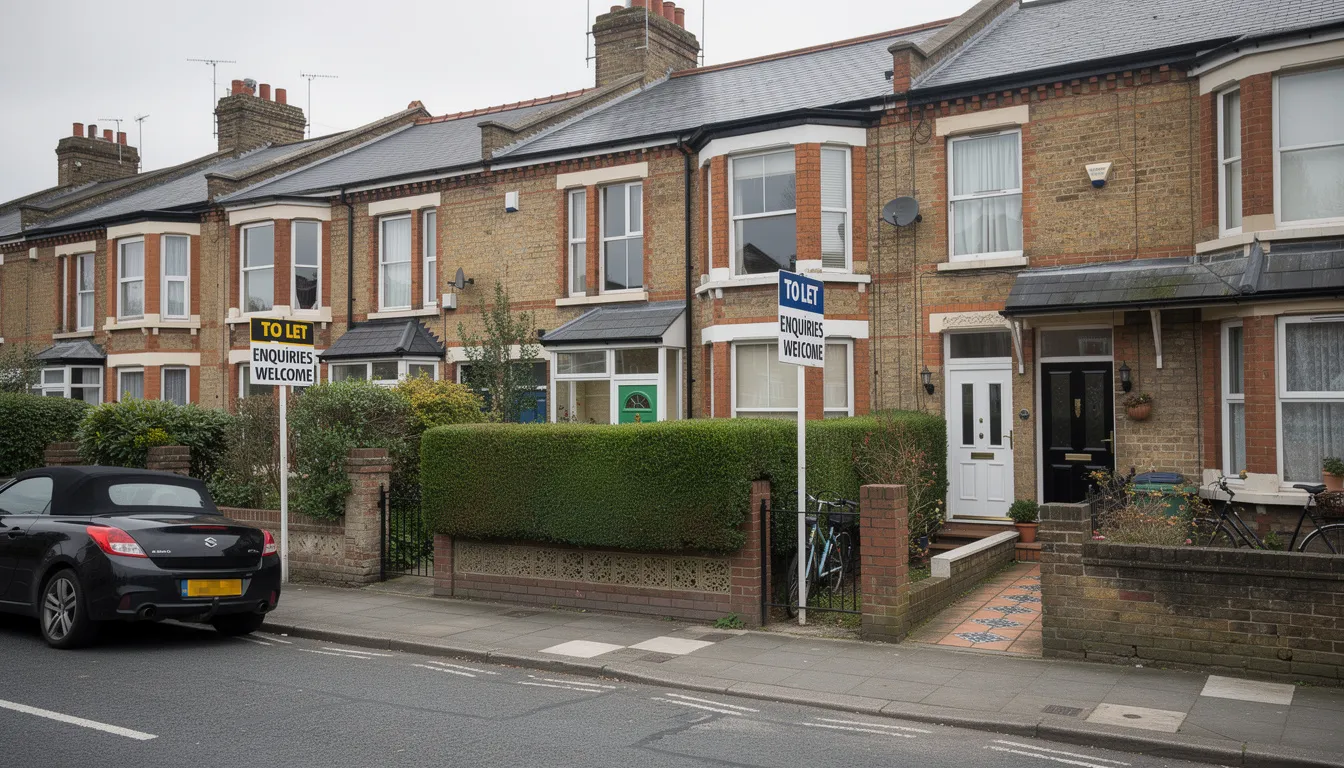
Many accountants leverage strong incomes and financial expertise to build property portfolios, from single buy-to-let properties to HMOs and small blocks of flats. Understanding tax and financial records facilitates property investment.
For buy-to-let underwriting in 2026, lenders primarily stress-test rental income rather than personal salary. However, profession and tax position influence access to top-tier lenders and competitive interest rates.
Common property types supported:
- Single Assured Shorthold Tenancy (AST) buy-to-let properties
- Houses in Multiple Occupation (HMOs)
- Multi-Unit Freehold Blocks (MUFBs)
- Student accommodation in university cities
- Short-term lets where lender criteria permit
Example | Property Value | Deposit | Required Rental Income (125% ICR at 6% stress) | Required Rental Income (145% ICR at 7% stress) |
|---|---|---|---|---|
First-time landlord: Bristol flat | £300,000 | £75,000 (25%) | £1,125/month | £1,450/month |
Experienced landlord: Leeds HMO | £400,000 | £100,000 (25%) | £1,500/month | £1,933/month |
MUFB: 4 flats in Manchester | £600,000 | £150,000 (25%) | £2,250/month | £2,900/month |
Limited company (SPV) buy-to-let: Many accountants purchase investment properties through Special Purpose Vehicles for tax efficiency. Lenders assess personal income as director/guarantor, company structure (including SIC codes), and portfolio experience. Financial understanding often smooths this process.
Types of Mortgages and Property Finance Commonly Used by Accountants
Accountants often use a range of mortgage products beyond standard residential loans, especially for property investment, refurbishment, or development.
- Residential repayment and interest-only mortgages: Standard options for primary residences, including part-and-part arrangements with interest-only on a portion of the loan. Interest-only mortgages generally require larger deposits and credible repayment strategies.
- Professional mortgages: These offer higher income multiples specifically for chartered accountants and similar professionals. Lenders require proof of qualifications to access favourable terms.
- Buy-to-let and portfolio finance: Includes limited company SPV structures for tax efficiency, with lenders specialising in landlord finance for first-time landlords to portfolio refinancing.
- Bridging loans: Short-term finance for chain breaks, auction purchases, or capital raises. Terms typically range from 6 to 24 months with interest rates between 0.55% and 1.2% per month depending on loan-to-value and complexity. Exit strategies usually involve sale or refinance onto term mortgages.
- Development finance: For small developers, financing ground-up builds or major refurbishments. Loans generally start from £250,000 upwards and are structured around build phases and Gross Development Value (GDV).
Note: Our focus is on mortgages and property-backed finance; we do not provide unsecured loans or consumer credit.
How We Package Mortgage Applications for Accountants
Presenting mortgage applications effectively is crucial for smooth processing and approval. The following steps outline how we approach accountant mortgage applications:
- Full discovery of income structure: We analyse basic salary, bonuses, overtime, profit shares, dividends, LLP drawings, company accounts, and any rental or investment income to match you with suitable lenders.
- Bank statement review: Reviewing the last 3–6 months of bank statements helps identify potential affordability or conduct issues, such as gambling transactions, overdraft usage, or new credit commitments.
- Credit file cross-check: We assess credit history from Experian, Equifax, TransUnion, or CheckmyFile to address any historic issues like defaults or late payments. A clean credit report strengthens applications.
- Lender-specific affordability calculators: Using 2026 calculators for professionals, we identify maximum borrowing across mainstream and specialist lenders.
- Written submissions for complex cases: For situations like first-year self-employment after leaving a Big 4 firm, we prepare detailed cover letters explaining context and mitigating risk, often securing approval where standard applications might fail.
This structured approach results in faster approvals and fewer underwriting queries, which busy accountant clients appreciate.
Step-by-Step: Applying for a Mortgage as an Accountant
Step 1: Initial Consultation (20–30 minutes)
A phone or video call to discuss your income details, objectives, timescales, employment status, qualifications, deposit, and property type. This provides an immediate indication of what is achievable.
Step 2: Documentation Gathering
We provide a clear list of required documents:
- Last 3 months’ payslips (if employed)
- Last 2–3 years’ accounts, SA302s, and tax year overviews (if self-employed)
- Last 3–6 months’ personal and business bank statements
- Identification and proof of address
- Evidence of professional qualifications (ACA, ACCA, CIMA membership) when required
Step 3: Research and Recommendation
We conduct detailed affordability checks across mainstream and specialist lenders and recommend specific lenders and products suited to your financial situation.
Step 4: Agreement / Decision in Principle
Typically issued within 24–48 hours after complete documentation, providing confidence to make property offers.
Step 5: Full Application, Valuation, and Underwriting
We manage lender communications, chase valuations, and handle underwriter queries, keeping you updated throughout.
Step 6: Mortgage Offer and Completion
Upon formal offer issuance, we liaise with your solicitor to ensure smooth progression. Completion typically takes 4–8 weeks depending on chain complexity and legal matters.

Current 2026 Market Conditions for Accountants’ Mortgages
Since 2020–2023, interest rates and lender criteria have evolved. The 2026 environment is more stable but cautious.
- Bank of England base rate: Approximately 3.75%–4.00% as of early 2026, down from 2023–2024 peaks.
- Residential fixed rates (2-year): 4.25%–4.85%
- Residential fixed rates (5-year): 4.15%–4.65%
- Buy-to-let fixed rates: 4.75%–5.50%
- Bridging finance: 0.55%–1.2% per month above base or SONIA
Lenders apply stress tests at 7%–8% for residential lending, impacting maximum borrowing despite attractive headline rates.
Product Type | Strong Accountant Profile | Generic Borrower | Potential Saving |
|---|---|---|---|
2-year fixed (75% LTV) | 4.29% | 4.54% | 0.25% |
5-year fixed (75% LTV) | 4.19% | 4.49% | 0.30% |
5-year fixed (90% LTV) | 4.59% | 4.99% | 0.40% |
Professional mortgage (85% LTV) | 4.35% | N/A | Access only |
Many accountants prefer longer-term fixed rates (5–10 years) for payment certainty, especially when borrowing at higher income multiples.
Case Studies: Mortgages for Accountants We Arranged (2024–2026)
Case Study 1: London ACA Senior Manager
- Profile: London-based ACA senior manager at a Big 4 firm, £110,000 salary plus £25,000 bonus.
- Property: £900,000 home in North London with 10% deposit (£90,000).
- Issue: 4.5x income cap limits borrowing to £607,500, insufficient for purchase.
- Solution: Specialist lender offered 6x income for qualified accountants, assessing £135,000 income and lending £810,000 at 5.75x.
- Outcome: Mortgage offer in 3 weeks; completion in 6 weeks; client secured home without additional deposit.
Case Study 2: Bristol Self-Employed Chartered Accountant
- Profile: Self-employed chartered accountant who left Big 4 in 2023; first-year trading profit £140,000.
- Property: £750,000 purchase with £100,000 deposit.
- Issue: Most lenders require 2–3 years accounts; client had only one full year.
- Solution: Specialist lender accepted one year of accounts plus prior employed income evidence; loan at 4.64x profit secured.
- Outcome: £650,000 loan approved; smooth underwriting due to strong profile.
Case Study 3: Manchester Buy-to-Let Portfolio Builder
- Profile: Manchester-based ACCA employed accountant earning £75,000, existing buy-to-let owner.
- Property: £350,000 5-bed HMO near university campus.
- Issue: HMO lending requires specialist criteria; client wished to purchase via limited company SPV.
- Solution: Specialist lender assessed rental income of £2,400/month (5 rooms at £480 each), passing 145% ICR stress test.
- Outcome: 75% LTV mortgage at 5.25% fixed for 5 years; completion within 8 weeks; client expanding portfolio.
Frequently Asked Questions (FAQs) About Mortgages for Accountants in 2026
What are the benefits of professional mortgage products for accountants?
Professional mortgage products offer higher borrowing capacity and flexible underwriting tailored to the accounting profession’s income structures. These products accommodate irregular incomes and complex financial situations better than standard mortgages.
How much can an accountant borrow for a mortgage in the UK?
Qualified accountants typically borrow 5–6 times their annual income, compared to 4–4.5 times for standard borrowers. Actual borrowing depends on salary, credit history, debts, and lender criteria.
Do accountants get special mortgage rates or products?
While accountants do not usually receive lower interest rates solely due to their profession, they access specialised mortgage products with higher income multiples and more flexible criteria, enabling larger loans.
Can trainee or newly qualified accountants get a mortgage?
Yes. Many lenders assess affordability based on contracted future income for trainees or newly qualified accountants, enabling larger loans than current income alone would allow.
How do self-employed accountants prove their income for a mortgage?
Self-employed accountants provide 2–3 years’ SA302 tax calculations, tax year overviews, and full accounts. Some lenders accept one year of accounts for strong profiles. Bank statements and professional qualifications may also be required.
Can I get a mortgage with only one year of accounts as a self-employed accountant?
In some cases, yes. Lenders may accept one year of accounts if supported by evidence of prior employed income or a strong professional profile.
Will student loans affect my mortgage application?
Student loan repayments reduce borrowing capacity as they are factored into affordability assessments but do not affect credit ratings. The reduction varies based on income and lender stress tests.
Can accountants get buy-to-let mortgages?
Yes. Accountants often access specialised buy-to-let products, including purchases through limited company SPVs for tax efficiency. Rental income is stress-tested to ensure affordability.
Can accountants with bad credit get a mortgage?
Yes, but options are more limited and interest rates higher. Specialist lenders may consider applicants with defaults, CCJs, or missed payments, usually requiring larger deposits.
Do mortgage lenders check professional accountancy qualifications?
For professional mortgage products with enhanced terms, lenders require evidence of qualifications such as ACA, ACCA, or CIMA membership.
How quickly can I get a mortgage offer as an accountant?
With complete documentation, a Decision in Principle can be obtained within hours or 1–2 working days. Full mortgage offers typically take 2–4 weeks for straightforward cases, longer for complex applications.
Why Work With Us on Your Mortgage as an Accountant?
We specialise in mortgages for accountants, understanding the nuances of your income and profession. Our expertise includes:
- Handling complex income structures for partners, LLPs, company directors, and portfolio landlords.
- Access to a wide lender panel including mainstream banks and specialist professional lenders.
- Providing residential, investment, bridging, and development finance solutions.
- Managing the entire mortgage process from tailored advice to completion.
- Offering UK-wide service with flexible consultation options.
Whether you are a trainee, senior manager, or partner expanding your portfolio, we provide expert guidance to secure the right mortgage.
Contact us today for a free, no-obligation consultation. We will assess your financial situation, run lender-specific calculations, and show you the mortgage deals available to you as an accountant in 2026.
Get in touch:
📞 Call for immediate expert advice. 💻 Complete our enquiry form 📧 Email outline your requirements