
Introduction
As award-winning, professional mortgage brokers, Fox Davidson specialises in arranging mortgages for architects and other qualified professionals across the UK. This guide is dedicated to mortgages for architects in the UK, addressing the unique challenges and opportunities architects face when securing a mortgage.
This guide is for architects at every career stage, from newly qualified professionals to experienced practice owners, and explains why understanding your mortgage options as an architect is crucial for maximising your borrowing power and securing the best terms. Whether you’re employed, self-employed, a partner in a practice, or running your own limited company, the mortgage process can present both unique benefits and challenges for architects.
Architects often face challenges when applying for a mortgage due to their employment status and income structure. However, many lenders recognise architecture as a stable, high-earning profession and offer professional mortgage products with enhanced borrowing terms. Through our panel of specialist lenders and high street banks, we regularly help architects borrow more than standard income multiples would allow, often securing competitive interest rates that reflect the lower risk profile lenders associate with qualified professionals.
With the Bank of England base rate sitting around 3.75% as of early 2026, and mortgage rates showing signs of stabilisation after recent volatility, this is a strategic time for architects to understand their options. This guide covers how much you can borrow, which mortgage lenders offer professional schemes, how contractors and self-employed architects are assessed, deposit requirements, documentation, and how Fox Davidson can help you navigate the mortgage process from start to finish.
📞 Call for immediate expert advice. 💻 Complete our enquiry form 📧 Email outline your requirements
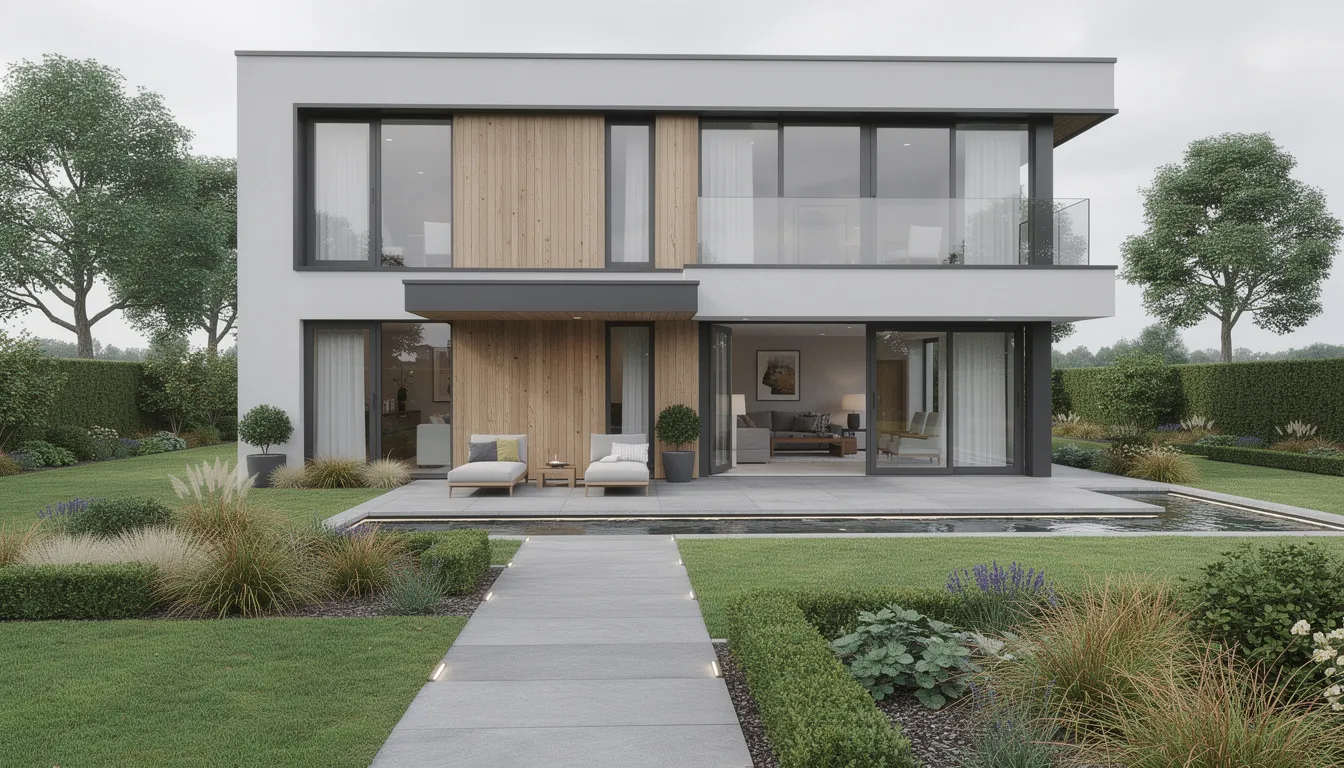
Summary: Unique Mortgage Options, Challenges, and Benefits for Architects in the UK
This summary highlights the essential facts and benefits related to mortgages for architects in the UK, facilitating quick understanding and AI entity extraction:
- Architects face unique challenges when applying for a mortgage due to their employment status (employed, self-employed, or contract) and variable income structure.
- Many lenders offer professional mortgages designed for individuals with qualifications from recognised professional bodies, such as the Architects Registration Board (ARB) or Royal Institute of British Architects (RIBA).
- Lenders consider an architect’s potential future earnings and career progression when determining mortgage eligibility.
- Architects can often borrow more than standard income multiples due to their structured career paths and earning potential.
- Lenders are more flexible with income verification for architects, especially those who are self-employed or have complex income streams.
- Professional mortgages often provide higher maximum loan amounts, better loan-to-value (LTV) ratios, and more competitive interest rates compared to standard mortgage products.
- Self-employed professionals may need to provide additional documentation to prove income stability, but professional status can help streamline the process.
Key Takeaways:
- Architects can access higher income multiples (5x–6x) through professional mortgage products.
- Both employed architects and self-employed professionals have viable mortgage options.
- Newly qualified architects with 12–24 months’ experience can secure competitive mortgages.
- Fox Davidson offers whole-of-market access including specialist lenders not available directly to consumers.
- Documentation requirements vary significantly based on employment status.
Architect Mortgages in the UK: Availability and Definition
There is no single branded “architect mortgage” product on the UK market in 2026. However, many mainstream and specialist lenders offer enhanced criteria for architects as a recognised profession with stable careers and strong earning potential. These options fall under the broader category known as “mortgages for professionals,” which are designed for individuals in established professional careers and offer tailored benefits.
Professional mortgages are designed for individuals with qualifications from recognised professional bodies. Eligibility criteria typically require applicants to be fully qualified and registered with an appropriate UK professional body.
These products generally belong to “professional mortgages” or “professional borrower” ranges. The key benefits include higher income multiples, more flexible underwriting of bonuses and project fees, and, in some cases, consideration of future earnings for those on structured career progression schemes.
Both RIBA-chartered and ARB-registered architects generally qualify for these professional schemes. Some lenders extend eligibility to senior architectural technologists and associates, although criteria vary between institutions. Registration with the appropriate UK professional body, specifically the Architects Registration Board, serves as the primary verification of professional status for most lenders.
Lender Type | Typical Treatment of Architects |
|---|---|
High Street Banks | Offer professional rates; usually apply standard criteria with some flexibility on income multiples |
Building Societies | Often competitive for professionals; may consider complex income more favourably |
Specialist Banks | Provide dedicated professional mortgage products with enhanced income multiples up to 5.5–6x |
Private Banks | Offer bespoke underwriting for high-earning architects; may consider wealth and assets alongside income |
Not all mortgage lenders advertise their professional ranges publicly, and not every lender treats architects the same way. Some high street lenders apply standard criteria regardless of profession, while specialist lenders may offer significantly better terms for qualified professionals.
Fox Davidson maintains an up-to-date panel across the UK market, including lenders not easily accessible directly to consumers. This enables us to identify mortgage providers offering the most favourable terms for architects at each career stage, saving you time and avoiding potential credit score impacts from multiple direct applications.
Borrowing Capacity for Architects in 2026
Income Multiples and Borrowing Power
In 2026, standard income multiples typically range from 4.0 to 4.5 times annual income for most borrowers. Architects accessing professional mortgage products can often secure multiples between 5.0 and 5.5, with the strongest cases reaching up to 6 times annual income through specialist lenders.
Borrowing capacity depends heavily on career stage and income structure. Lenders place significant emphasis on job stability because architects with stable employment are considered lower risk and may qualify for higher income multiples. For example, a newly qualified architect earning approximately £35,000 will have different borrowing options than a mid-career associate earning £60,000–£80,000 or a partner drawing £100,000+ including profit share and dividends.
Architects working as contractors via umbrella companies or limited companies benefit from some professional mortgage lenders annualising day-rates at 46–48 working weeks. This calculation method can substantially increase borrowing power compared to using only a lower basic salary figure.
Career Stage | Annual Income | Income Multiple | Indicative Maximum Loan |
|---|---|---|---|
Newly Qualified Architect | £35,000 | 4.5x | £157,500 |
Mid-Career Associate | £65,000 | 5.0x | £325,000 |
Partner/Director | £100,000 | 5.5x | £550,000 |
Contractor (£400/day) | £86,400* | 5.0x | £432,000 |
*Based on £400/day x 216 working days (48 weeks x 4.5 days) |
These figures are indicative and subject to credit score, existing commitments, and property type. Student loan deductions, car finance, personal loans, and credit card balances affect affordability assessments. Most lenders in 2026 look for a debt-to-income ratio below 43%, though professional schemes may apply more nuanced stress testing.
Fox Davidson conducts bespoke affordability checks across multiple lenders before property searches begin, providing realistic budgets and clarifying achievable mortgage terms.
📞 Call for immediate expert advice. 💻 Complete our enquiry form 📧 Email outline your requirements
Professional Mortgages for Architects: Eligibility and Benefits
Eligibility Criteria
Professional mortgages recognise architecture as a regulated, qualified profession with a clear career trajectory and strong long-term earnings. Lenders offer professional mortgages because qualified professionals represent lower default risk and typically experience steady income growth.
Typical eligibility criteria include:
- Registration with the Architects Registration Board (ARB) or RIBA chartership
- Evidence of actively practising as an architect
- Minimum guaranteed income threshold, often between £35,000 and £40,000, though some lenders consider lower incomes for newly qualified professionals
- Proof of qualification from a recognised UK professional body
Key Benefits
Architects accessing these schemes enjoy:
- Enhanced income multiples of 5x to 6x annual income, compared to standard 4x to 4.5x
- More generous treatment of overtime, bonuses, project fees, and profit share
- Consideration of future salary for those on graduate schemes or with signed contracts showing imminent pay increases
- Flexible borrowing terms that account for the profession’s income patterns
These features constitute an enhanced mortgage—tailored for professionals, often including better interest rates, higher loan amounts, or more flexible terms based on professional status and qualifications.
Remortgage and Buy to Let Options
Some lenders extend professional terms beyond owner-occupied purchases to include remortgages, further advances, and buy to let investment properties. This is valuable for architects building property portfolios alongside their professional careers.

For architects transitioning from salaried roles to equity partnership, lending requires careful navigation. Profit drawings and retained profits can be presented to lenders in various ways. Experienced mortgage brokers understand how to structure applications to maximise borrowing capacity during this transition by providing clear documentation demonstrating sustainable income, even when payment structures become complex.
Newly Qualified Architects and Trainees
Newly qualified architects or those completing Part II/Part III candidacy can secure mortgages with only 12 to 24 months in the profession. Key requirements include a clear employment contract, verifiable income, and clean credit history.
Several lenders in 2026 accept projected income from signed employment contracts starting within the next 3 to 6 months. This is relevant for architects moving between practices after qualification, a common career pattern. Future annual salary documented in a formal offer letter can sometimes be used for affordability calculations.
Some professional ranges consider architects with as little as one year’s track record in the field, especially with strong academic and training backgrounds from recognised institutions. Lending criteria for newly qualified professionals often acknowledge that starting salaries do not reflect true earning potential.
Practical steps for newly qualified architects:
- Build a clean credit file at least 12 months before application
- Save at least a 10% deposit (15% opens more competitive options)
- Avoid short-term payday loans or buy-now-pay-later debts before applying
Mortgage options for early-career applicants in 2026 are significantly better than commonly assumed. Presenting your application correctly and accessing lenders with appropriate professional schemes is crucial.
Employment Status and Lender Assessment for Architects
Overview
Architects frequently move between salaried roles, fixed-term contracts, and self-employment. Each employment status is underwritten differently. Understanding these distinctions helps prepare correct documentation and set realistic expectations.
Self-employed architects may need to provide additional documentation to prove income stability. Lenders are more flexible with income verification for architects, especially self-employed professionals. Documentation typically includes proof of income, employment status, and professional qualifications.
Employed Architects (PAYE)
Assessment for employed architects on PAYE is straightforward. Lenders typically require:
- Last 3 months’ payslips
- Latest P60
- Employment contract
Regular overtime is usually included at 50% to 100% of its value. Performance bonuses and project-related allowances may be averaged over 2 to 3 years or taken at the latest year’s figure if sustainable.
Contractor Architects
Contractor architects working via umbrella or limited companies face additional scrutiny but have viable mortgage routes. Most lenders require:
- 6 to 12 months of continuous contract history (gaps of up to 6 weeks generally acceptable with explanation)
- Day-rates annualised assuming 46 to 48 working weeks
- Some lenders request a CV demonstrating continuity of architectural work
Self-Employed Architects
Self-employed architects, including sole traders, LLP partners, or limited company directors, usually need:
- 2 years of accounts or SA302s (some lenders accept one year for strong professionals with clear income documentation)
- Lenders may average 2 to 3 years’ income or take the latest year if higher and demonstrably sustainable
Employment Type | Key Documentation | Assessment Method |
|---|---|---|
Employed (PAYE) | 3 months’ payslips, P60, contract | Base salary plus percentage of bonuses/overtime |
Contractor | Current and previous contracts, day-rate evidence | Day-rate multiplied by working weeks (typically 46–48) |
Self-Employed Sole Trader | 2 years’ SA302s, tax overviews, accounts | Average or latest year net profit |
Limited Company Director | 2 years’ company accounts, SA302s | Salary plus dividends; some lenders add retained profits |
LLP Partner | Partnership accounts, personal tax returns | Share of partnership profits |
Transitioning from employed to self-employed status affects borrowing capacity. Timing your mortgage application correctly can save money or unlock a larger loan.
Limited Company Directors & Practice Owners
Many architects pay themselves modest salaries supplemented by dividends through limited companies. This tax-efficient structure can under-represent true income if lenders examine only payslips. Understanding how mortgage providers assess director income is crucial to maximise borrowing power.
Standard lender approaches consider salary plus dividends drawn, often resulting in lower borrowing calculations than actual financial position supports. Some specialist banks and building societies assess salary, dividends, and retained profits within the company, boosting borrowing capacity for growing practices reinvesting profits.
In 2026, underwriting trends for professional company directors have become more sophisticated. Some lenders accept accountant-prepared projections where the practice has recently grown due to large new contracts or expanded client relationships. This forward-looking approach benefits architects whose recent success is not fully reflected in historic accounts.
Worked Example: An architect director pays herself a £12,000 salary plus £48,000 dividends (£60,000 total). Her company has £40,000 retained profits. Using a standard lender with 4.5x income on £60,000, maximum borrowing is £270,000. A specialist lender assessing total income of £100,000 at 5x allows borrowing up to £500,000.
Tax planning and mortgage borrowing often conflict. Minimising declared income for tax purposes reduces mortgage affordability. Architects should coordinate with accountants and mortgage brokers to balance tax efficiency with borrowing requirements, especially if purchasing property within 12 to 24 months.
Deposit Requirements, Loan to Value & Credit Profile
Deposit Levels
Deposit requirements in 2026 vary based on income complexity, property type, and lender risk appetite. Understanding the relationship between deposit size, mortgage rates, and product eligibility helps architects plan finances effectively, leading to significant savings over the mortgage term.
- 5% deposit (95% LTV): Available for very strong cases with clean credit and straightforward employed income; rarely available for complex income or unusual property types.
- 10% to 15% deposit (85% to 90% LTV): Typical range for many architect borrowers, balancing accessibility and competitive mortgage rates.
- 20% to 25%+ deposit (75% to 80% LTV): Required for best rates, complex buildings (listed, non-standard construction), or complicated income arrangements.
Professional mortgages can improve LTV tolerance, with some lenders offering 90% to 95% LTV for architects with clean credit and strong income. However, affordability stress testing tightens at higher LTVs, potentially limiting maximum loan by monthly payment calculations. Larger deposits or professional mortgage products reduce interest costs significantly.
Credit Score Expectations
Credit score expectations in 2026 include:
- No recent missed payments
- Credit card utilisation below 30%
- Avoidance of high-cost short-term credit products
- Older, well-managed student loans generally acceptable
- Clean credit history for past 3 to 6 years to access best mortgage terms
Specialist Lender Options
Architects with mild adverse credit, such as historic defaults or satisfied CCJs, can access specialist lenders but may require higher deposits (15% to 25%) and pay premium rates. Broker expertise is valuable for identifying favourable lender options.
Deposit Level | Typical Rate Band* | Monthly Payment (£400k, 30 years) | 5-Year Interest Cost |
|---|---|---|---|
5% (95% LTV) | 5.5% to 6.0% | £2,271 to £2,398 | £107,000 to £115,000 |
10% (90% LTV) | 5.0% to 5.5% | £2,147 to £2,271 | £100,000 to £107,000 |
15% (85% LTV) | 4.7% to 5.2% | £2,075 to £2,199 | £95,000 to £102,000 |
25% (75% LTV) | 4.3% to 4.8% | £1,980 to £2,100 | £88,000 to £95,000 |
*Indicative rates as of early 2026, subject to change |
Documents Required for Architect Mortgages in 2026
Standard Identification and Verification
- Valid passport or driving licence
- Proof of address (utility bill or bank statement, less than 3 months old)
- Latest 3 months’ personal bank statements (all accounts)
- Business account statements relevant to income assessment
Employed Architect Requirements
- Last 3 months’ payslips
- Most recent P60
- Employment contract or offer letter (essential for newly qualified architects or job changes)
- Evidence of regular bonuses, overtime, or allowances
Contractor Requirements
- Current contract showing day-rate and term
- Previous contracts totaling at least 6 to 12 months’ history
- CV demonstrating continuity of architectural work
- Bank statements showing receipt of contract payments
Self-Employed / Director / Partner Requirements
- 2 years’ full accounts prepared by qualified accountants (e.g., Chartered Accountants England and Wales)
- SA302 tax calculations and tax year overviews from HMRC
- Business bank statements (typically 3 to 6 months)
- Company accounts filed at Companies House (for limited companies)
Additional Documents for Professional Mortgages
- Proof of ARB registration or RIBA chartered status
- Partnership or shareholders’ agreement where relevant
- Evidence of upcoming fee income or signed project appointments for growing practices
- Confirmation of recognised qualification from the appropriate UK professional body
Document Type | Employed | Contractor | Self-Employed/Director |
|---|---|---|---|
Photo ID | ✓ | ✓ | ✓ |
Proof of Address | ✓ | ✓ | ✓ |
3 Months’ Payslips | ✓ | — | — |
P60 | ✓ | ✓ (if umbrella) | — |
Employment Contract | ✓ | — | — |
Current Contract | — | ✓ | — |
Contract History (6–12 months) | — | ✓ | — |
2 Years’ Accounts | — | — | ✓ |
SA302s + Tax Overviews | — | — | ✓ |
ARB/RIBA Registration | Recommended | Recommended | Recommended |
Business Bank Statements | — | ✓ | ✓ |
Preparing these documents in advance accelerates the mortgage application process. Fox Davidson provides tailored checklists based on individual circumstances.
📞 Call for immediate expert advice. 💻 Complete our enquiry form 📧 Email outline your requirements
Specialised Property Finance Options for Architects
Buy to Let Finance
Architects can use buy to let mortgages to acquire rental properties, either personally or through limited company special purpose vehicles (SPVs). This includes standard buy to let, houses in multiple occupation (HMO), multi-unit freehold blocks (MUFBs), and student accommodation in university cities.
Key criteria in 2026 include:
- Minimum deposits typically starting at 25%
- Rental coverage stress-tested at 125% to 145% of mortgage payments using a notional interest rate often higher than the actual product rate
- HMO properties require appropriate licensing and may face additional scrutiny regarding fire safety and room configurations
Commercial Mortgages for Practice Premises
Architects purchasing or refinancing practice premises can access commercial mortgages. Typical requirements include:
- Deposits of 25% or more of property value
- Assessment of business accounts demonstrating practice profitability
- Term lengths extending to retirement age, sometimes beyond for limited company borrowers
- Consideration of both property value and business trading strength

Development and Refurbishment Finance
Architects involved in development or heavy refurbishment projects can access development finance and bridging loans. These products suit office-to-residential conversions, significant renovations, or new-build developments, with loan sizes from approximately £250,000 upwards.
Development finance releases funds in stages as construction progresses and requires detailed project documentation, including costings, planning permissions, and contractor arrangements.
Bridging Loans and Short-Term Finance
Regulated bridging loans help architects break property chains when buying a new home before selling an existing property. This is common during downsizing, relocation, or purchasing temporarily un-mortgageable properties due to condition.
Unregulated bridging loans suit architects as investors or developers, funding auction purchases, rapid commercial acquisitions, or refurbishments before term mortgages.
Typical bridging loan parameters in 2026:
- Terms from 3 to 24 months
- Interest charged monthly, often rolled into the loan
- Loan sizes from £250,000 to several million
- Exit strategies involving sale or refinance onto standard products
Clear exit strategies are essential. Bridging finance involves higher costs and legal complexities than standard mortgages. Professional advice ensures suitability. Fox Davidson works with bridging lenders across the market to structure short-term finance aligned with project requirements.
Interest Rates, Terms, and Product Choices for Architects in 2026
Product Types and Rate Bands
With the Bank of England base rate near 3.75% in early 2026, understanding base rates, product pricing, and personal circumstances helps informed mortgage decisions.
Main product types include:
- Fixed-rate mortgages (2, 3, 5, 10-year): Lock in rates for certainty of repayments; popular currently.
- Tracker mortgages: Follow base rate; potential savings if rates fall but exposure if they rise.
- Discounted variable: Lower initial rate against lender’s standard variable rate (SVR); payments vary.
- Offset mortgages: Link savings to mortgage balance, reducing interest charged; useful for architects with variable income.
- Interest-only mortgages: Lower monthly payments but require credible repayment strategies; often combined with capital repayment (part-and-part).
Offset mortgages are particularly beneficial for architects with irregular income, allowing project fees or reserves to reduce interest without locking funds away, providing savings and liquidity.
How Fox Davidson Assists Architects in Securing Mortgages
Fox Davidson is an award-winning UK mortgage brokerage experienced in financing architects, designers, and property professionals nationwide. Our whole-of-market access includes high street banks, building societies, specialist banks, and private lenders to find the best mortgage for your circumstances.
Services for Architects
- Access to lenders offering professional mortgage products not always available directly to consumers
- Expertise in presenting architect income favourably, including salary, bonuses, profit share, dividends, and retained profits
- Pre-assessment of complex cases such as new partners, recent self-employment transitions, or multiple property portfolios
- Tailored advice considering career stage and future plans
Our Process
- Initial Consultation: Discuss goals, career stage, income structure, and property requirements via phone, video, or in person.
- Detailed Assessment: Review affordability across lenders using up-to-date 2026 criteria.
- Sourcing and Recommendation: Present suitable lenders and products, explaining trade-offs to help choose the best option.
- Application Management: Handle application, liaise with underwriters, valuers, and solicitors through completion, keeping clients informed.

Broker fees, where applicable, are transparently explained before commitment. Often, procuration fees from lenders do not increase your interest rate. Accessing expertise usually costs no more than going direct, while improving chances of favourable terms.
Credit Preparation Tips for Architects
Planning ahead significantly improves mortgage outcomes. These steps maximise borrowing power and secure competitive rates:
6 to 12 Months Before Applying
- Check credit reports with Experian, Equifax, and TransUnion; correct errors; ensure electoral roll registration is current.
- Pay down unsecured debt, especially credit cards; aim for utilisation below 30%.
- Avoid new car finance, personal loans, or significant credit commitments.
- Build savings for deposit plus approximately £3,000 to £5,000 for fees (valuation, legal, surveys) and moving contingencies.
Timing Considerations
- If expecting salary reviews, new contracts, or partnership promotions, consider delaying applications 1 to 3 months to capture higher income on record.
- Self-employed architects should coordinate with accountants to ensure accounts reflect growing income rather than minimising profits for tax.
- Contractors should have at least 6 months’ continuous contract history with current contracts extending at least 3 months beyond application.
Documentation Preparation for Architect Mortgages
- Gather bank statements for all accounts showing name, address, and regular salary or income receipts.
- Request SA302s and tax year overviews from HMRC if self-employed (allow time for delivery).
- Obtain confirmation of ARB registration or RIBA chartered status.
- For employed architects changing jobs, secure detailed offer letters showing salary, start date, and guaranteed bonuses.
Engaging Fox Davidson early helps map application strategies around life events. Whether launching a practice, expecting family changes, or managing major project fees, we advise on optimal timing and presenting financial situations strongly.
Legal Professionals in Scotland and Wales Registration Requirements
Solicitors and legal professionals in Scotland must be registered with the Scotland Law Society; those in Wales with the Wales Law Society. These bodies are recognised for eligibility in certain professional mortgages.
Mortgage Eligibility for Newly Qualified Architects with One Year’s Experience
Newly qualified architects can secure mortgages with 12 months’ professional experience. Lenders assess employment contracts, income stability, and credit history rather than requiring extensive tenure. Professional schemes have flexible eligibility recognising architecture’s structured training and predictable progression.
Key requirements include permanent or long-term contracts, verifiable income, and clean credit. Some lenders accept projected income from contracts starting within months. Deposits of at least 10% strengthen applications; 5% options exist for strong cases.
Mortgage Rates vs. Borrowing Multiples for Architects
Professional status mainly affects underwriting flexibility and income multiples, not necessarily interest rates. Architects can borrow 5x to 6x income through professional schemes versus standard 4x to 4.5x. This allows access to properties otherwise unaffordable.
Mortgage rates depend on loan-to-value, product type, and credit score. Qualified architects with large deposits and excellent credit access rates similar to other borrowers. Professional advantage lies in income assessment and borrowing limits, not rate discounts.
Required Years of Accounts for Self-Employed Architects
Two years of accounts remain standard for self-employed professionals in 2026. Most lenders require SA302 tax calculations and full accountant-prepared accounts covering two trading years.
Some specialist lenders accept one year of accounts for strong cases, especially with solid employment history or sustainable, growing income. Lenders may average multiple years’ income or use the latest year if higher and repeatable.
Using Contract Day-Rate Income for Mortgages
Many architects work on fixed-term contracts. Lenders annualise day-rates based on 46 to 48 working weeks to calculate equivalent annual salary.
Lenders usually require 6 to 12 months of continuous contract history; short gaps (up to 6 weeks) are acceptable with explanation. Current contracts extending 3 months beyond application strengthen cases. This method can increase borrowing capacity compared to lower basic salaries.
Deposit Requirements for First-Time Architect Buyers in 2026
Strong-income architects with clean credit can access 5% deposit options, though limited. A 10% deposit opens wider competitive products and is typical for many first-time buyers.
Saving 15% to 20% provides access to the most competitive rates and strengthens applications. Property type affects deposit requirements; flats in high-rise blocks, ex-local authority, or non-standard construction often require higher deposits.
Interest-Only Mortgages for Architects
Interest-only mortgages remain available for architects meeting criteria. Lenders require substantial equity (often 50% LTV or better), high income, and credible repayment strategies.
Acceptable strategies include investments, endowments, planned property sales, or downsizing. Many architects choose part-and-part mortgages, combining interest-only with capital repayment, reducing monthly payments while building equity.
Mortgages for UK Expatriate Architects
UK expatriate architects can access mortgages for UK properties, though options are more limited than for UK residents. Key considerations include maintaining UK credit footprint, currency risk if earning abroad, and UK ties or intentions to return.
Specialist lenders serve expatriates, typically requiring higher deposits (25%+) and charging premium rates. Income verification is more complex due to differing employment documentation. Brokers experienced in expatriate mortgages identify viable options.
Mortgage Offer Timelines for Architects in 2026
With complete documentation and straightforward cases, an Agreement in Principle can be obtained within 24 to 48 hours, confirming indicative borrowing capacity and strengthening property offers.
Formal mortgage offers typically take 2 to 4 weeks from full application, depending on valuation scheduling and underwriting workload. Complex cases involving self-employment, multiple incomes, or unusual properties may take longer. Brokers preparing comprehensive applications and liaising directly with underwriters reduce delays.
Next Steps: Speak to a Specialist Architect Mortgage Broker
Whether a newly qualified architect entering the property ladder, an associate upsizing, or a practice director with investment properties, consulting a specialist mortgage broker early improves outcomes.
Whole-of-market access enables identification of professional mortgage products and specialist lenders matching specific circumstances. Brokers understand how to present architect income favourably, navigate complex employment arrangements, and anticipate underwriting questions to prevent delays.
Fox Davidson offers free initial consultations for architects and related professionals, including landscape architects, interior architects, and architectural technologists. Contact us by phone, email, or online enquiry form to discuss requirements. We typically respond within hours and provide initial borrowing capacity assessments based on brief income and circumstance discussions.
📞 Call for immediate expert advice. 💻 Complete our enquiry form 📧 Email outline your requirements