
Introduction to Semi-Commercial Mortgages
A semi-commercial mortgage is a loan used to purchase or refinance a property that combines both residential and commercial elements.
This guide is for property investors, landlords, and business owners considering or seeking to understand semi-commercial mortgages in the UK. Understanding semi-commercial mortgages is crucial for maximising investment returns and navigating the unique challenges of mixed-use property finance.
This type of mortgage is designed for mixed-use properties such as a high street shop with flats above or a pub with a manager’s flat. Demand for these investments has increased significantly in 2025 and 2026 as landlords seek higher yields, more resilient rental income streams, and portfolio diversification away from purely residential properties amid evolving regulations.
Typical terms include:
- Maximum LTV: up to 80%, meaning a minimum deposit of 20%
- Minimum deposit: generally between 20% and 25% of the property value
- Loan sizes: starting from £250,000 with no fixed upper limit
- Users: property investors, portfolio landlords, business owners buying premises, and owner-occupiers running businesses from mixed-use properties
Fox Davidson specialise in arranging semi-commercial mortgages throughout the UK, offering expert guidance with no broker fees for these products, as we are remunerated by lenders. Whether purchasing, refinancing, or releasing equity, understanding the nuances of semi-commercial mortgages is essential for maximising returns and navigating the unique challenges of mixed-use property finance. We do not charge a broker fee for semi commercial mortgages.
Our dedicated semi-commercial mortgage specialists at FD Commercial have a semi-commercial calculator for investors.
📞Call for immediate expert advice. 💻 Complete our enquiry form 📧 Email outline your require
Key Points Summary
- Semi-commercial mortgages finance properties combining residential and commercial space, such as shops with flats above or pubs with owner accommodation.
- Typical maximum loan-to-value (LTV) is up to 80%, requiring a minimum deposit of 20-25% of the property value.
- These mortgages serve property investors, landlords, business owners purchasing their own premises, and owner-occupiers running businesses from mixed-use properties.
- Mortgage terms generally range from 5 to 30 years, with repayment options including capital repayment or interest-only.
- The property value and rental income from both residential and commercial elements are key factors in lender affordability assessments.
- Semi-commercial mortgages are usually unregulated unless the residential part exceeds 40% of the property and is owner-occupied, which triggers FCA regulation.
- Stamp Duty Land Tax (SDLT) on semi-commercial properties is charged at non-residential rates, often resulting in significant savings compared to purely residential purchases.
- Costs include lender arrangement fees, valuation fees, legal fees, and potentially early repayment charges, with typical valuation fees higher than residential mortgages due to property complexity.
- Bridging loans and development finance can be used when immediate term financing is unavailable or for refurbishment and conversion projects.
- Specialist brokers with detailed knowledge of lender criteria and market conditions improve the chances of securing favourable terms.
📞 Call for immediate expert advice. 💻 Complete our enquiry form 📧 Email outline your requirements
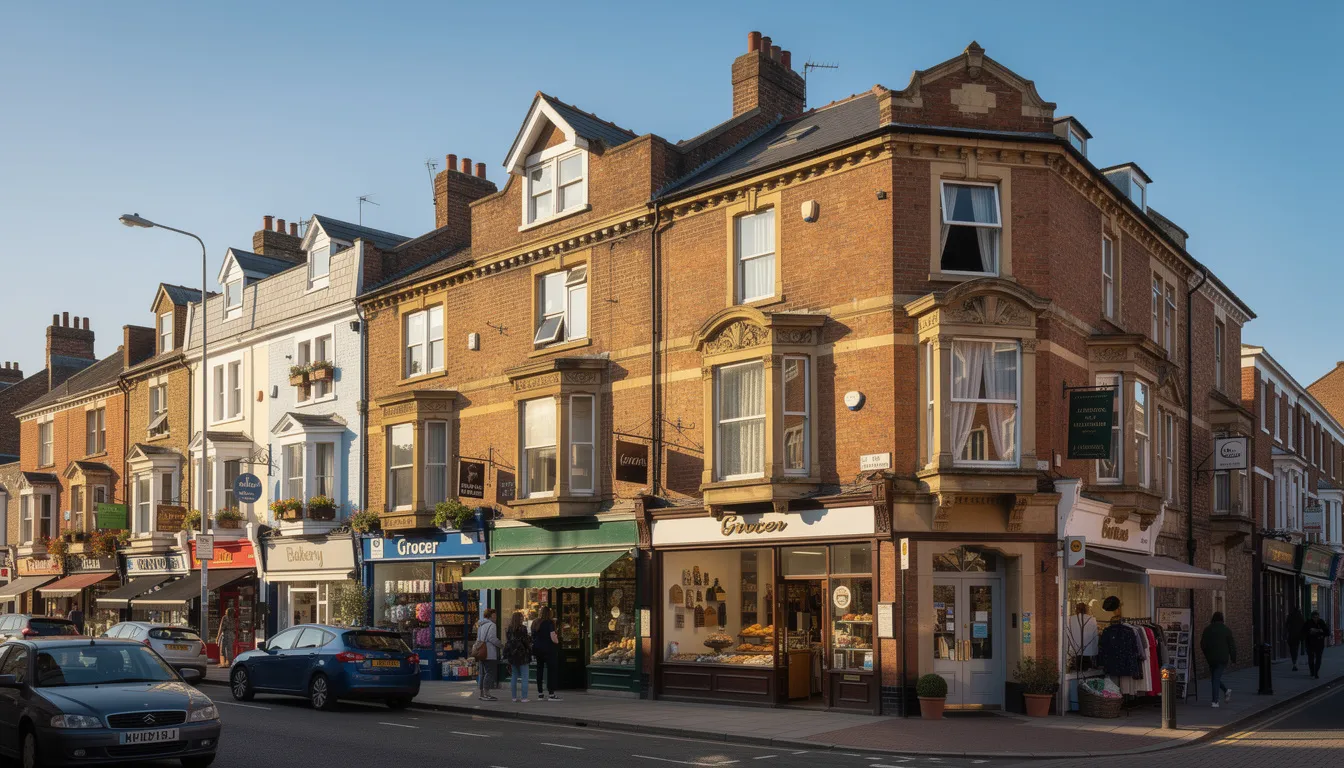
What is a Semi-Commercial Mortgage?
A semi-commercial mortgage, also called a “mixed-use mortgage”, is used to purchase or remortgage a property that contains both commercial and residential elements. For example, a shop with a flat above or a pub with owner accommodation.
A semi-commercial mortgage finances properties containing both residential and commercial elements. Common examples include:
- Retail units with one or more flats above
- Restaurants or takeaways with staff or owner accommodation
- Offices with self-contained flats attached or above
- Pubs, bars, or cafés with manager’s living space
- Small shopping parades with residential units on a single title
- Bed & Breakfasts or guesthouses with owner quarters
- Kennels or catteries with attached residential property
This mortgage type bridges the gap between purely commercial mortgages (for 100% business use properties) and standard residential or buy-to-let mortgages (for wholly residential properties). Semi-commercial mortgage interest rates generally fall between residential buy-to-let and fully commercial rates. In 2026, indicative rates range from mid-6% to high-8%, depending on LTV, tenant covenant strength, and loan term.
Finance is available for:
- Investment semi-commercial mortgages, where landlords rent out both commercial and residential units
- Owner-occupied semi-commercial mortgages, where the borrower operates a business from the commercial premises and may live in or rent out the residential part
Mortgage terms can be structured as repayment, interest-only, or part-and-part, with typical durations up to 25-30 years. Affordability assessments consider the property value and rental income from both commercial and residential elements.
Planning and Use Classes
UK planning regulations classify property uses into categories such as Class E (commercial, business, and service), Sui Generis (unique uses like pubs and takeaways), and C3 (residential). Lenders consider these classifications when assessing semi-commercial mortgage applications.
Certain commercial uses are considered higher risk and may limit lender options or require larger deposits. These include:
- Hot food takeaways
- Bars and nightclubs
- Gambling premises
- Night-time economy venues
Floor Area Rules
Most lenders define a property as semi-commercial when the residential element constitutes between approximately 20% and 80% of the total floor space. If more than 40% of the property is owner-occupied residential space, the mortgage typically becomes FCA-regulated, affecting lender availability and terms.
Category | Use | Typical Regulation | Notes |
|---|---|---|---|
Fully Commercial | 100% business use | Unregulated | Pure commercial mortgage |
Semi-Commercial | 20-80% residential | Usually unregulated | May be regulated if owner occupies 40%+ residential |
Standard BTL | 100% residential | Unregulated | Standard buy-to-let criteria apply |
Who Are Semi-Commercial Mortgages For?
Semi-commercial mortgages cater to a broad spectrum of borrowers, including:
- Property investors and landlords seeking higher yields than residential buy-to-let alone
- Business owners purchasing premises with accommodation above, such as dentists, accountants, café owners, and retailers (owner-occupied semi-commercial)
- Portfolio landlords diversifying holdings into mixed-use properties to spread risk and improve yields
- Developers refinancing completed mixed-use schemes for long-term hold
We arrange finance for:
- Individuals in personal names
- Special Purpose Vehicles (SPVs) and limited companies, including sole traders operating through limited companies
- Partnerships and Limited Liability Partnerships (LLPs)
- Trading limited companies purchasing their own business premises
Experience level impacts pricing and maximum LTV; however, lenders exist for both first-time commercial investors and experienced landlords.
Eligibility & Lender Assessment Criteria
Commercial mortgage lenders conduct thorough underwriting for semi-commercial applications. Understanding their criteria improves application success.
Key assessment factors include:
- Deposit/LTV: Maximum typically 75-80%, lower for higher-risk sectors like hospitality or leisure
- Income and affordability: Rental income and yield for investors; trading profits and EBITDA for owner-occupiers
- Credit profile: Personal credit history is important; some lenders accommodate bad credit at higher rates
- Experience: Preferred but not essential; first-time buyers may face stricter criteria
- Sector risk: Lower risk for convenience stores; higher risk for nightclubs or leisure venues
- Location: High street, secondary parades, coastal or tourist-dependent areas carry varying risk profiles
Stress testing requires:
- Investment semi-commercial: Debt Service Cover Ratio (DSCR) of 125-150%, meaning rental income must exceed mortgage payments comfortably
- Owner-occupied semi-commercial: Assessment based on trading accounts plus any additional personal income
Typical evidence required:
- Last 2-3 years’ certified or filed accounts
- SA302 tax forms and year overviews
- Lease agreements for commercial tenants
- Assured Shorthold Tenancies (ASTs) for residential tenants
- Rent schedules
- Details of planned works or improvements
- Business bank statements covering 3-6 months
Pre-screening with lenders and affordability calculations help reduce risk of declines or valuation downgrades. All carried out by Fox Davidson.
Criteria | Typical Requirement 2026 |
|---|---|
Maximum LTV | 75-80% (lower for high-risk sectors) |
Minimum loan | £250,000+ |
Experience | Preferred but not essential |
Trading history (owner-occ) | 2-3 years accounts |
Rental cover (investment) | 125-150% DSCR |
📞 Call for immediate expert advice. 💻 Complete our enquiry form 📧 Email outline your requirements
Semi-Commercial Mortgage Rates & Terms in 2026
Semi-commercial mortgage rates in 2026 are positioned above standard residential buy-to-let but below fully commercial rates. The Bank of England base rate has stabilised after recent volatility, contributing to more predictable pricing.
Current Rate Ranges (approx)
Scenario | Indicative Rate Range (2026) | Typical Term |
|---|---|---|
Investment semi-commercial @ 60% LTV | 5.25% – 7.00% | 5-25 years |
Investment semi-commercial @ 80% LTV | 5.85% – 8.50% | 5-25 years |
Owner-occupied @ 70% LTV | 5.15% – 7.75% | 5-25 years |
- LTV ratio: Lower LTV results in better rates
- Property type and tenant quality: Full Repairing and Insuring (FRI) leases with strong covenants reduce risk
- Lease length: Longer unexpired lease terms improve pricing
- Borrower profile: Experience, credit profile, and asset base impact rates
- Repayment structure: Interest-only mortgages typically have higher rates than capital repayment
- Term length: Shorter fixed terms generally have different pricing than longer terms
Fixed vs Variable Rates
- Fixed rates offer payment certainty for a set period (2, 3, 5, or sometimes 10 years), beneficial for budgeting and cashflow management.
- Variable or tracker rates move with the Bank of England base rate or SONIA, providing flexibility but with payment variability.
Deposit, LTV, and Borrowing Limits
Understanding deposit requirements and borrowing capacity is essential when planning a semi-commercial mortgage.
Deposit Requirements
- Typical minimum deposit: 20-25% of the property value
- Higher deposits may be required for pubs, restaurants, care homes, and leisure properties
- 20% deposits are accepted in many cases, especially with strong covenants and borrower profiles
- Larger deposits generally unlock better interest rates
Sources of Deposit
- Cash savings
- Equity released from other residential or commercial properties
- Director loans to SPVs (disclosed to lenders)
- Cross-charges on other properties as additional security
- Gifted deposits (subject to lender restrictions)
Loan Sizes
- Minimum loan size: £250,000
- No fixed maximum loan size, subject to security and covenant strength
- Large portfolio refinances and substantial commercial premises regularly financed funding lines to £100M
Borrowing Calculations
- Investment semi-commercial: Based on combined net rental income and DSCR; rental income must comfortably cover mortgage payments.
- Owner-occupied semi-commercial: Based on adjusted net profits/EBITDA plus any other personal income.
Regulation: FCA-Regulated vs Unregulated Semi-Commercial Mortgages
Most semi-commercial mortgages are unregulated because they are business or investment transactions secured against the property. Regulation status impacts lender availability and mortgage process.
When Regulation Applies
- If more than 40% of the property is owner-occupied residential space, the mortgage typically becomes FCA-regulated.
- FCA regulation requires adherence to Financial Conduct Authority rules, including documentation and advice standards.
Effects of Regulation
- Reduced lender pool offering regulated products
- More extensive documentation and advice requirements
- Possible differences in product features and terms
- Advice must be provided by an FCA-authorised broker
Costs and Fees Associated with Semi-Commercial Mortgages
Semi-commercial mortgages incur several costs beyond interest rates. These should be factored into budgeting.
Cost Type | Typical Range (2026) | Payee |
|---|---|---|
Lender arrangement fee | 1-2% of loan amount | Lender |
Valuation fee | £1,500 – £5,000+ | Valuer/Lender |
Legal fees (borrower) | £2,000 – £4,000+ | Borrower’s solicitor |
Legal fees (lender) | £1,000 – £2,500+ | Lender’s solicitor |
Broker fee | £0 (with our service) | N/A |
Early repayment charge | Varies by lender/product | Lender |
Mixed-use properties benefit from non-residential SDLT rates, which differ from purely residential purchases. This often results in significant savings.
SDLT Rates (2026)
- 0% on the first £150,000
- 2% on the next £100,000 (£150,001 to £250,000)
- 5% on the remainder above £250,000
Key Advantage
Purchases of mixed-use properties are not subject to the 3% additional dwelling surcharge applicable to most second residential properties. This can save portfolio landlords tens of thousands of pounds.
Purchase Price | Pure Residential BTL SDLT | Mixed-Use SDLT | Saving |
|---|---|---|---|
£750,000 | £50,000 (includes 3% surcharge) | £27,000 | £23,000 |
Application Process for Semi-Commercial Mortgages
Our streamlined process minimises your time input while maximising approval chances and securing competitive terms.
- Initial conversation: Discuss your plans, experience, and property details.
- Document review and pre-screening: Assess accounts, leases, IDs, and property information to identify suitable lenders.
- Terms and options: Obtain and explain indicative offers, including rates and fees.
- Full application: Package and submit your application to the chosen lender.
- Valuation and underwriting: Coordinate valuation, legal work, and lender underwriting; keep you informed.
- Offer and completion: Manage mortgage offer, liaise with solicitors, and assist through to completion and drawdown.
Typical timescales:
- Standard cases: 6-12 weeks from application to completion
- Complex cases: May take longer due to legal or valuation complexities
- Urgent or auction cases: Possible faster turnaround using lenders with in-house legal teams
Frequently Asked Questions (FAQs)
Can I get a semi-commercial mortgage with a 20% deposit in 2026?
Yes, a 20% deposit is accepted by many lenders, especially for lower-risk properties and borrowers with strong profiles. However, some lenders may require higher deposits for higher-risk sectors. Larger deposits typically result in better interest rates.
Are semi-commercial mortgages regulated by the FCA?
Most semi-commercial mortgages are unregulated as they are business or investment loans. However, if you occupy more than 40% of the residential part as your main residence, the mortgage becomes FCA-regulated.
Can I live in the residential part of my semi-commercial property?
Yes, many business owners live in the residential element. However, living in the property may trigger FCA regulation, limiting lender options and affecting terms.
How long does it take to arrange a semi-commercial mortgage?
Typically, 6 to 12 weeks from full application to completion. Complex cases or those requiring additional legal work may take longer.
What is the difference between semi-commercial and pure commercial mortgages?
Semi-commercial mortgages finance mixed-use properties with both residential and commercial elements, usually with residential space between 20% and 80%. Pure commercial mortgages are for properties used entirely for business purposes.
Are interest payments on semi-commercial mortgages tax deductible?
Yes, interest payments are generally tax deductible for investment properties. Consult your accountant for specific advice.
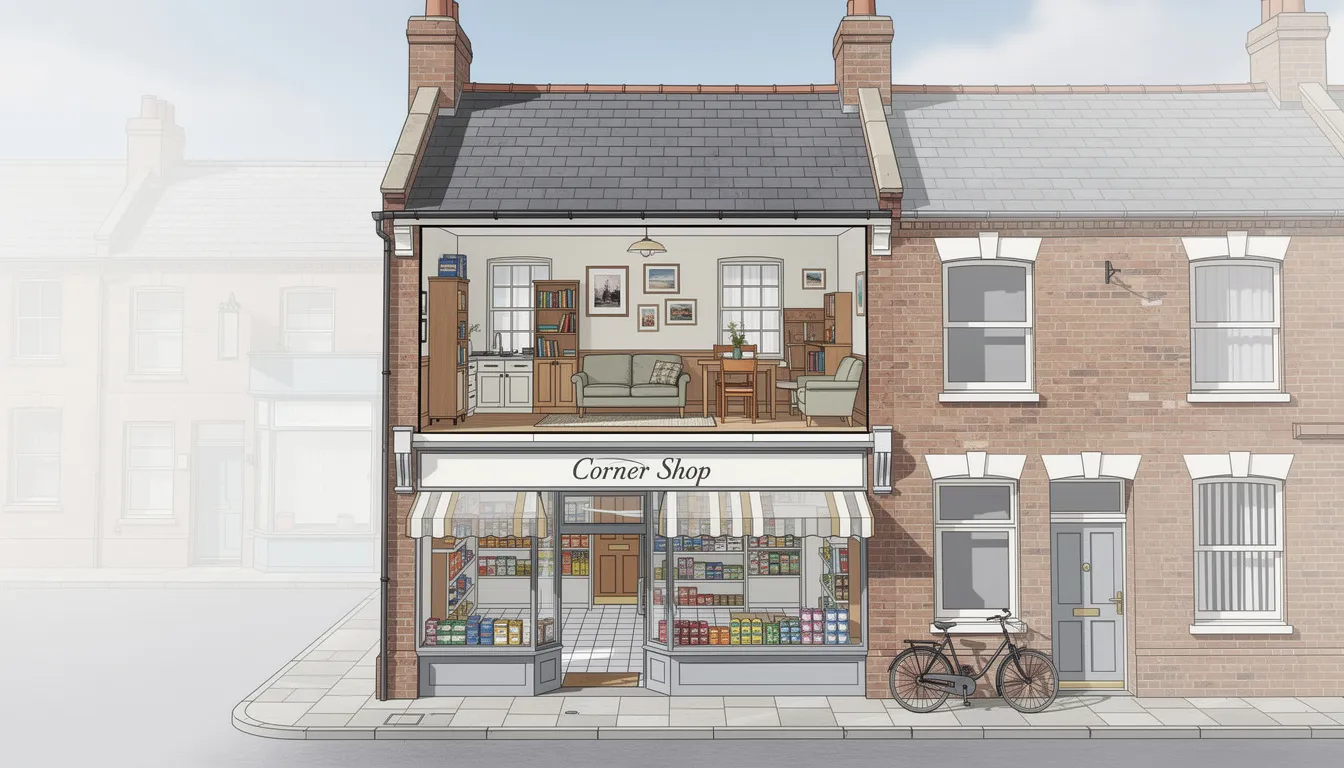
This guide reflects current market conditions and lender criteria as of 2026. For personalised advice tailored to your financial situation and property, consult our expert team specialising in semi-commercial mortgages. We are here to help you navigate the entire mortgage process efficiently and confidently.
📞 Call for immediate expert advice. 💻 Complete our enquiry form 📧 Email outline your requirements